


When to Fertilize Lawn in Spring?
Timing matters more than product hype. If you fertilize too early you waste money and invite weeds. Too late and your lawn misses the growing boost it needs. This guide explains when to fertilize lawn in spring, how to tell the right moment for your yard, what kind of fertilizer to use, and practical next steps you can take in Abilene and similar climates.
Contents
- Why timing matters
- How to tell when your lawn is ready
- Spring schedule by grass type
- What fertilizer to use and how much
- Step-by-step checklist
- Costs and when to call a pro
- Conclusion
Why timing matters
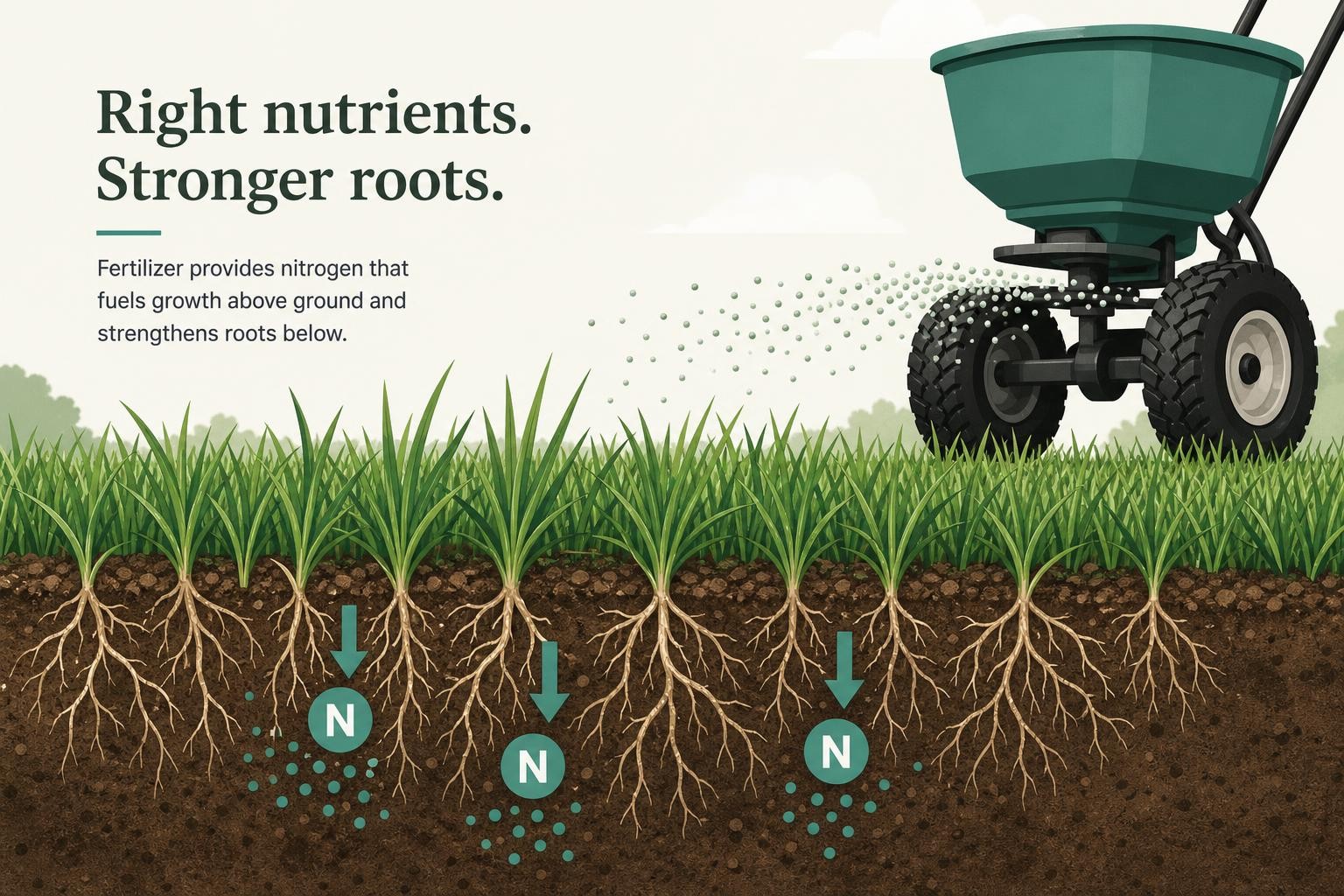
Fertilizer gives grass nutrients—mostly nitrogen—that drive green growth. Applied at the right time, fertilizer increases root growth and helps grass recover from winter damage. Applied too early, it feeds cool-season weeds and produces weak top growth that burns when temperatures climb. Applied too late, it boosts shallow growth that needs more water and mowing.
In Abilene, TX and other warm climates, spring timing also interacts with pre-emergent herbicides used to prevent crabgrass. If you apply both at the wrong interval you can block weed control or waste product. Knowing the right window saves money and improves results.
How to tell when your lawn is ready
Check soil temperature, not the calendar
Soil temperature is the most reliable signal. Warm-season grasses (Bermuda, Zoysia, St. Augustine) start active growth when soil temps are consistently in the mid-60s°F (around 65°F). Cool-season grasses (fescue, Kentucky bluegrass) green up earlier, when soil temperatures rise above about 50–55°F.
You can buy an inexpensive soil thermometer, or check local extension resources for soil temp forecasts. A practical rule: wait until you see steady green-up and consistent daytime highs—don’t react to a single warm week.
Look for visual cues
- Warm-season grasses: stems pushing up, the lawn feels springy when you walk on it, and small patches are actively greening.
- Cool-season grasses: leaf blades are visibly longer and greener after the first warm spells; growth resumes after winter dormancy.
Do a quick soil test
A simple soil test tells you pH and nutrient levels. Your fertilizer choice and rate should respond to that result. Many local extension offices provide low-cost testing. If you want to skip testing, use conservative fertilizer rates and choose a slow-release nitrogen product to reduce risk of overfeeding.
Spring schedule by grass type
Your lawn’s timing depends mainly on grass type. Abilene yards are typically warm-season, but some homeowners have cool-season lawns in shaded areas. Here’s a short schedule.
Warm-season grasses (Bermuda, Zoysia, St. Augustine)
Best window: when soil temps reach about 65°F and the lawn shows steady green-up—usually mid to late spring in West Texas. For many Abilene lawns that means late March through April some years, but watch soil temp and growth rather than the date.
Strategy: apply a light, balanced fertilizer at green-up if the lawn looks weak. Follow with one or two follow-up feedings through late spring and summer using a slow-release nitrogen every 6–8 weeks. Avoid heavy spring applications that produce tender top growth vulnerable to summer heat.
Cool-season grasses (tall fescue, bluegrass)
Best window: early spring as soil warms and growth resumes—often March in cooler areas. However, primary feeding for cool-season grasses is best in fall. In spring, apply a light, balanced feed only if the lawn needs a boost after winter.
Strategy: use light spring applications and plan a stronger fall program.
What fertilizer to use and how much
Choose slow-release nitrogen
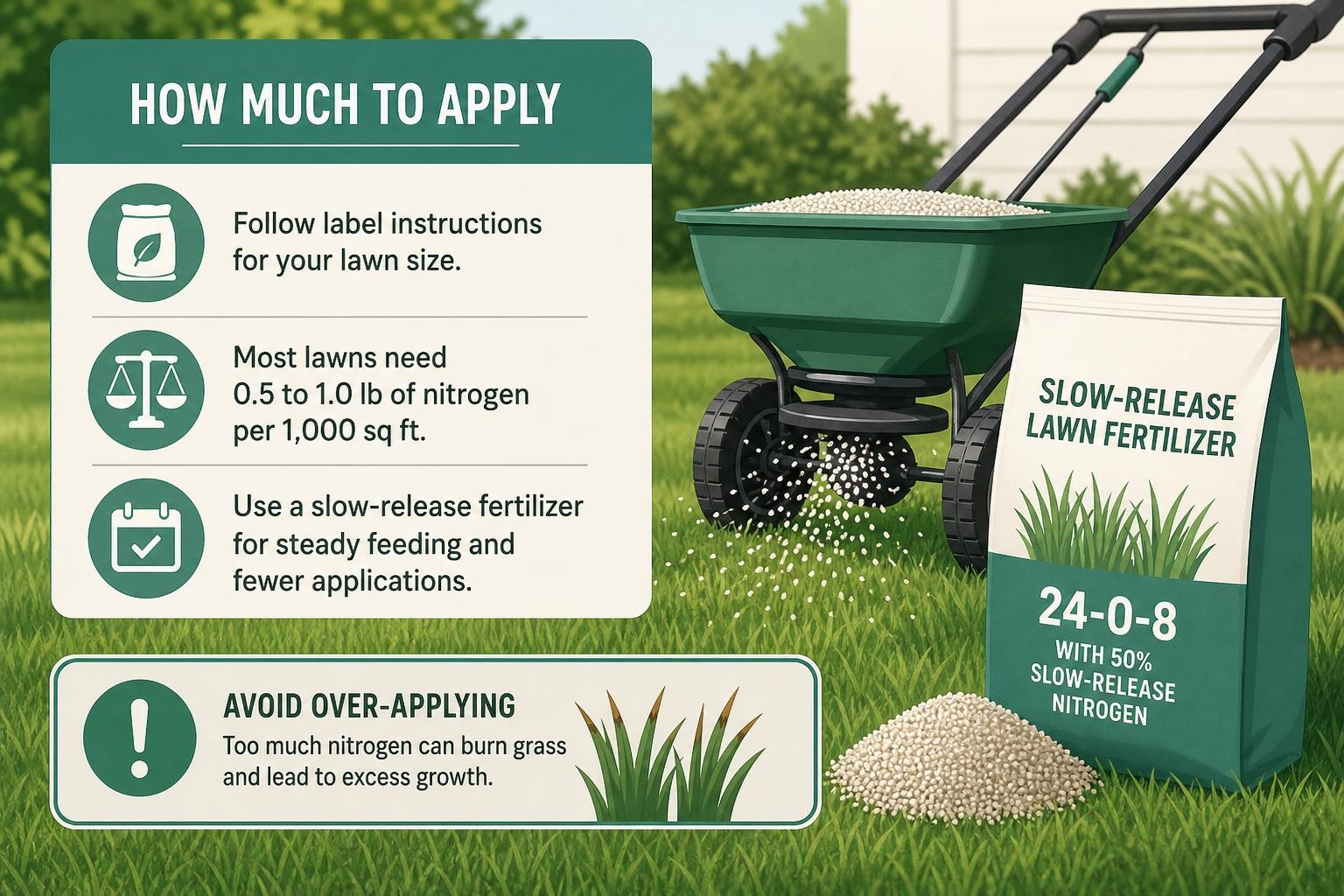
Slow-release (controlled-release) fertilizers feed grass over weeks to months. They deliver steadier growth, reduce burn risk, and need fewer applications. If you’re unsure which product to use, look for a fertilizer with at least 50–70% slow-release nitrogen on the label.
Check the N-P-K and rate
The numbers on the bag are N-P-K (nitrogen, phosphorus, potassium). For most established lawns the primary concern is nitrogen. A common spring formula is something like 16-4-8 or 20-5-10. Avoid high-phosphorus mixes unless your soil test shows phosphorus deficiency.
General rate: apply 0.5 to 1.0 pound of nitrogen per 1,000 sq ft at the first spring feeding. Follow label directions and do not exceed recommended rates. Overapplication causes runoff and lawn stress.
Starter fertilizer for new lawns
New sod or seeded lawns benefit from a starter fertilizer higher in phosphorus (the middle number). Apply at installation following package directions, then transition to regular feedings once the grass is established.
Step-by-step spring fertilizing checklist
- Confirm grass type and check soil temperature (goal ~65°F for warm-season, ~50–55°F for cool-season).
- Do a soil test if possible; amend based on recommendations.
- Mow at recommended height a few days before fertilizing and remove clippings if they are excessive.
- Choose a slow-release fertilizer and calculate how much you need from the label.
- Calibrate your spreader—test on a sidewalk to ensure even coverage.
- Apply fertilizer on a dry lawn when no heavy rain is forecast for 24 hours to avoid runoff.
- Lightly water after application (about 1/4 inch) to move granules off blades and into the soil, unless the product label says otherwise.
- Observe the lawn for two weeks; follow up with additional feedings if needed according to your program.
Costs and when to call a pro
DIY cost: a 25-pound bag of a slow-release lawn fertilizer typically covers 5,000 sq ft and costs $25–$60 depending on brand and analysis. That often equals one or two spring applications for a small yard.
Pro cost: hiring a lawn care service for spring fertilization runs roughly $30–$90 per treatment for an average residential yard, depending on product and service level. Seasonal programs with multiple visits cost more but deliver consistent results and save time.
Call a professional if:
- You’re unsure of your grass type or soil condition.
- Your lawn has large bare patches, pests, or disease—these may need diagnosis and a different approach.
- You prefer a seasonal program to coordinate fertilizing, weed control, and mowing for best results.
If you need help in Abilene, Abilene Home Services provides fertilization as part of full lawn care programs and can recommend a plan after a quick inspection. For tips on hiring a contractor, see the FTC’s guidance on hiring a contractor to protect your home and budget.
FTC guidance on hiring a contractor
Conclusion
So, when to fertilize lawn in spring? Wait for consistent soil temperatures and visual green-up, match timing to your grass type, use slow-release nitrogen at conservative rates, and follow simple application steps. For warm-season lawns common in Abilene, aim for the first feeding when soil temps approach 65°F and grass is actively greening—then follow with additional slow-release applications through summer as needed.
If you prefer not to guess, our technicians can test your soil, recommend the right fertilizer, and set up a seasonal program that fits your yard and schedule. Learn more about our services or schedule a visit: Lawn Care Abilene Tx and our Lawn Mowing page explain typical programs and what to expect. Ready now? Call (940)235-6789 to get tailored spring fertilization advice in Abilene, TX.
Safe note: always follow fertilizer label directions and keep products away from children and pets until applied and watered in. If you suspect contamination or over-application, contact a professional for an inspection rather than guessing at a fix.
Next steps: test soil, check local soil temperature, and plan your first application for the right window. That small extra care now makes your lawn stronger, greener, and easier to manage all season.