


When Should You Fertilize Your Lawn?
Timing is the single biggest factor that separates a green, healthy lawn from one that struggles. If you’ve been asking when should you fertilize your lawn, this guide breaks the timing by season, grass type, and practical next steps you can take today in Abilene, TX.
Contents
- Lawn fertilizing basics
- When should you fertilize your lawn: seasonal timing
- Fertilizer types and how to choose
- How to apply fertilizer safely
- Mowing, watering, and other care tips
- Cost, DIY vs pro, and when to call
- Next steps for Abilene homeowners
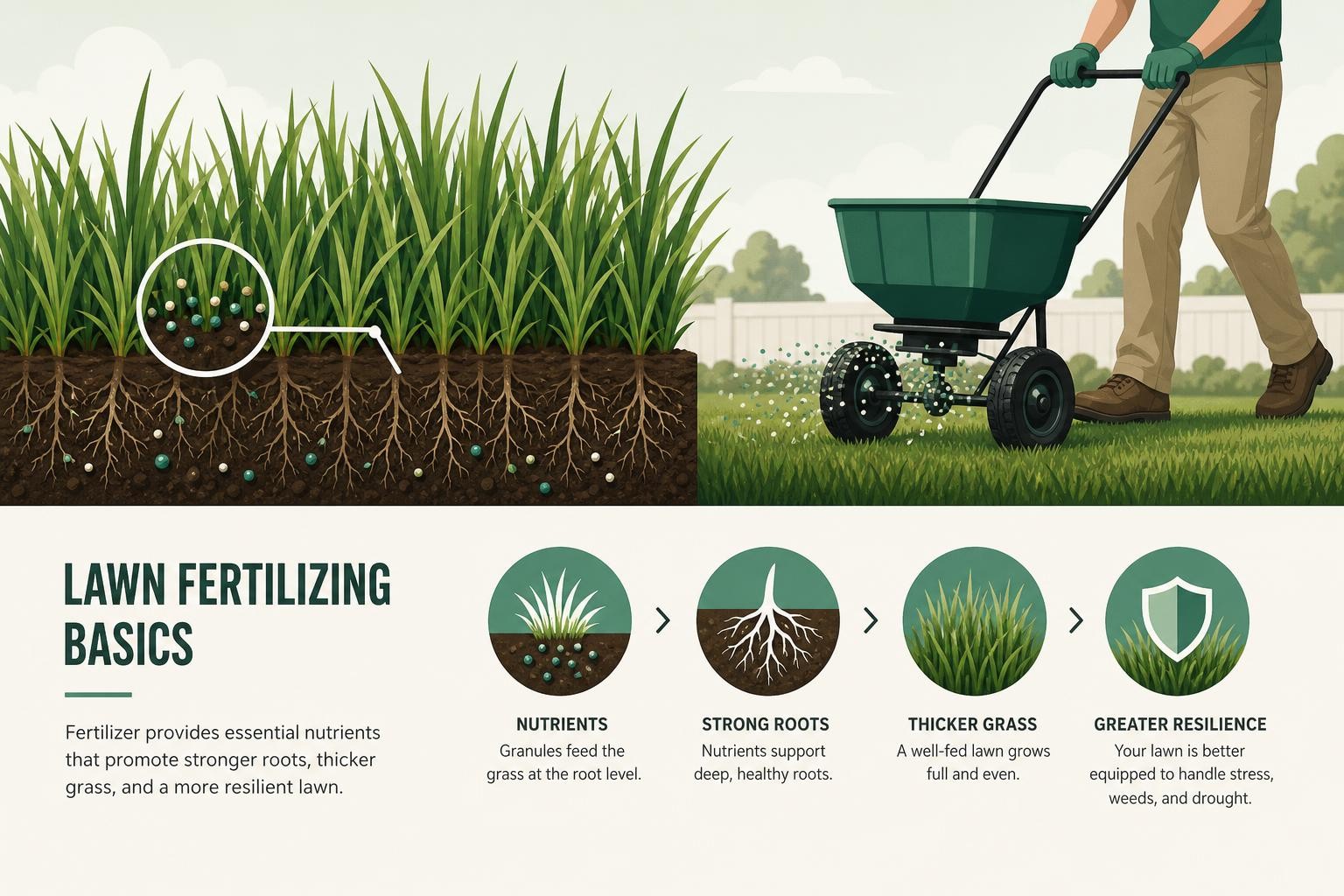
Lawn fertilizing basics
Fertilizer gives turf the nutrients it needs to grow strong roots and dense blades. The three nutrients listed on bags—N-P-K—stand for nitrogen, phosphorus, and potassium. Nitrogen fuels leaf growth and color. Phosphorus helps roots and establishment. Potassium supports stress tolerance. Most established lawns need nitrogen as the main driver.
Fertilizer timing matters because grass uses nutrients differently throughout the year. Feed too early or too often and you may force top growth at the expense of roots. Feed at the right time and you get better drought tolerance, improved color, and fewer weeds.
When should you fertilize your lawn: seasonal timing
There’s no single calendar date that fits every lawn. Instead, use season and grass type. In Abilene, TX, most lawns use warm-season grasses—Bermuda, Zoysia, St. Augustine—so the schedule below reflects that climate. If you have cool-season grass (rare here), timing shifts toward fall and spring.
Spring (active green-up)
Apply your first feeding when grass is fully out of dormancy and actively growing. For warm-season grasses in Abilene, that’s usually late March to May, depending on the year. A moderate application of a slow-release, nitrogen-focused fertilizer supports quick green-up without pushing weak, spindly growth.
Early summer (maintenance)
One lighter feeding in late spring or early summer keeps grass healthy during peak growth. If you applied a slow-release fertilizer in spring, you may not need a separate summer feed. Avoid heavy nitrogen applications in the hottest stretch—too much leaf growth stresses roots during heat.
Late summer to early fall (important)
Late summer through early fall is a key time for warm-season lawns. A final fertilization in late August to early October helps build carbohydrate reserves and root strength before cooler weather. Use a fertilizer that contains potassium to boost stress tolerance.
Winter (dormant period)
When turf enters dormancy, stop routine feeding. Avoid late fall high-nitrogen applications that encourage new growth vulnerable to cold snaps. For overseeding cool-season grasses, follow seed-specific recommendations—see guidance on when is the best time to plant grass seed below.
Fertilizer types and how to choose
Pick fertilizer based on release type and N-P-K balance:
- Slow-release (controlled-release): Releases nutrients gradually over weeks or months. Best for steady growth and fewer burn risks.
- Quick-release: Fast greening but short-lived. Use for rapid color improvement or correcting deficiencies, but combine with slow-release for balanced feeding.
- Starter fertilizers: Higher phosphorus blends for new sod or seed. Use only when establishing turf—and only where soil tests show a need.
Soil testing is the smart first step. A test tells you the pH and nutrient levels so you don’t apply what the soil already has. Local extension services can help with testing; a correct pH improves fertilizer uptake.
How to apply fertilizer safely
Follow label directions for rate and timing. Too much fertilizer causes burn, excessive growth, and can harm waterways. Use a broadcast or drop spreader for even coverage and overlap passes slightly to avoid stripes.
Key tips:
- Calibrate your spreader before you start.
- Don’t apply when heavy rain is expected—wait 24–48 hours after a big storm.
- Sweep any granules off sidewalks and driveways back onto turf to prevent runoff.
- Keep children and pets off the lawn until the product is watered in and dry per label instructions.
If you’re unsure about rates or handling, consider a professional application to reduce risk.
Mowing, watering, and other care tips
Fertilizing works best with consistent mowing and proper watering:
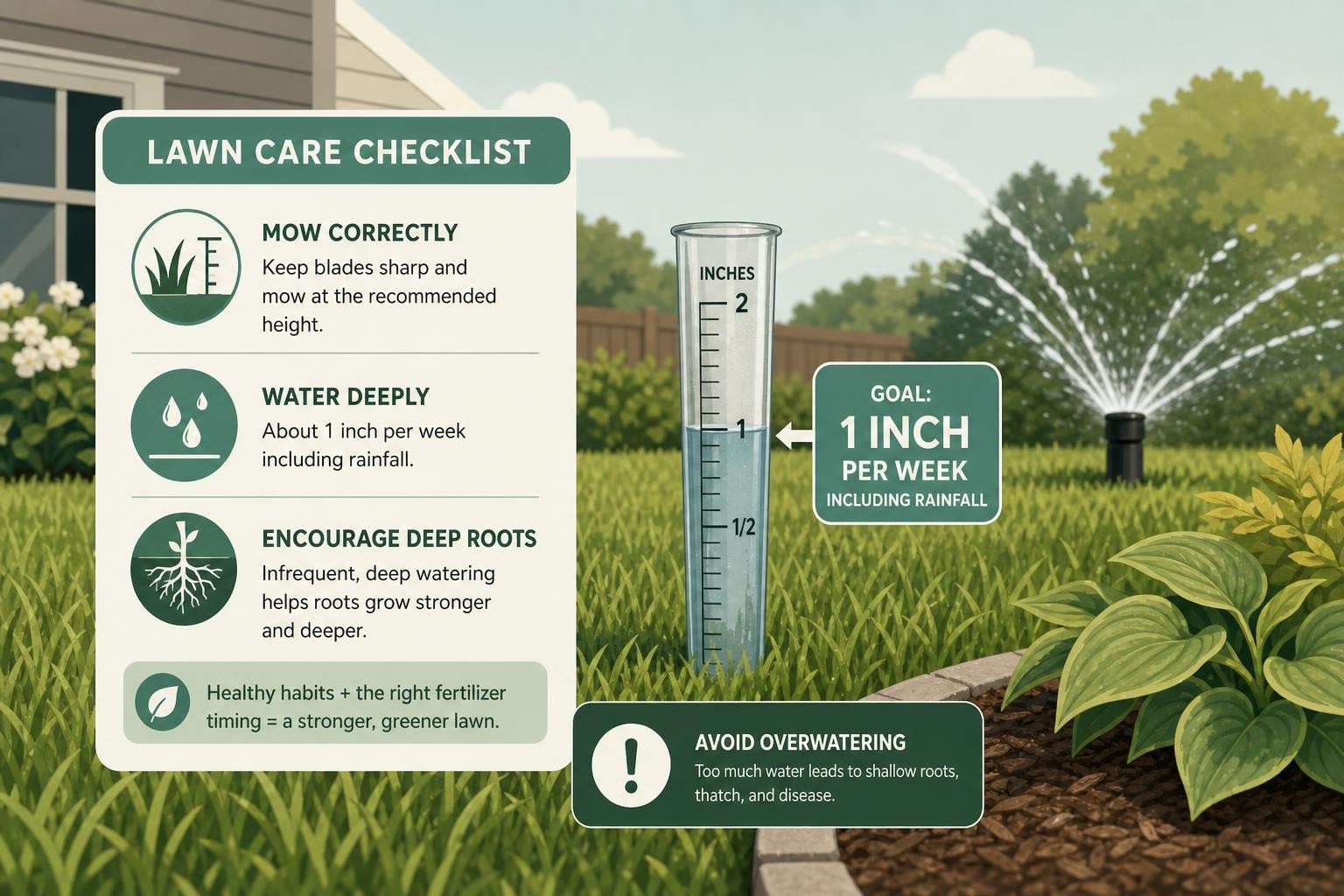
- Keep blades sharp and mow at the recommended height for your grass. Mowing too short stresses turf.
- Water deeply and infrequently—about 1 inch per week including rainfall—to encourage deep roots.
- Don’t fertilize right after a very short mow or an extreme scalping. Give grass a chance to recover.
- Regular mowing and care lets fertilizers do more with less product, and it reduces weed pressure naturally.
If you use a lawn service for mowing or regular maintenance, coordinate fertilizer timing with them. For local mowing help, see Abilene Home Services’ Lawn Mowing page.
Cost, DIY vs pro, and when to call a professional
DIY fertilizer materials typically run $30–$80 per application for an average yard, depending on product and bag size. Professional programs vary widely—seasonal packages often range from $200–$600 per year depending on property size and service level. Professionals bring calibrated equipment, scheduling, and experience with local pests and soil issues.
Call a pro if:
- You see uneven patches, persistent thinning, or widespread disease signs.
- Your soil test shows major nutrient imbalances or pH problems.
- You’re unsure about rates, fertilizer selection, or overseeding timing.
When hiring any contractor, follow basic precautions. The FTC offers clear guidance on hiring a contractor—review their tips before you sign any work agreement for lawn services.
If you want local help with a fertilization plan, reach out to Abilene Home Services’ Lawn Care Abilene Tx team. Call (940)235-6789 for estimates and to discuss a schedule tailored to your yard.
When is the best time to plant grass seed?
If you’re also planning to overseed or start a new lawn, timing depends on grass type. For warm-season lawns, late spring to early summer is best for sod or plugs. For cool-season grasses, early fall is ideal for seeding. If you must seed in the heat, provide extra water and shade protection. Starter fertilizer helps new seedlings; follow bag directions closely.
For more context, review Lawn Mowing and Do It Yourself Pest Control Com and FTC guidance on hiring a contractor before deciding what to do next.
Next steps for Abilene homeowners
Ready to act? Here’s a practical checklist:
- Identify your grass type (warm-season vs cool-season).
- Get a soil test if you haven’t had one in three years.
- Plan a spring feeding at active green-up with a slow-release product.
- Schedule a late-summer/early-fall application to build root reserves.
- Coordinate fertilizing with regular mowing and deep watering.
For hands-off convenience or a custom schedule, call Abilene Home Services. We handle fertilization, mowing, and seasonal care for homes across Abilene. Call (940)235-6789 to set up an inspection and seasonal plan today.
Conclusion
So, when should you fertilize your lawn? Time your feedings to the growth cycle of your grass: spring green-up, a light summer maintenance if needed, and a key late-summer/early-fall application for warm-season lawns. Combine proper timing with the right product, soil testing, and good mowing and watering habits for the best results.
If you’d rather not guess the timing—or want help for a larger property—call (940)235-6789 for local assistance. And remember to use trusted hiring practices; the FTC’s guide on hiring contractors can help you vet professional lawn care providers.