


Short answer
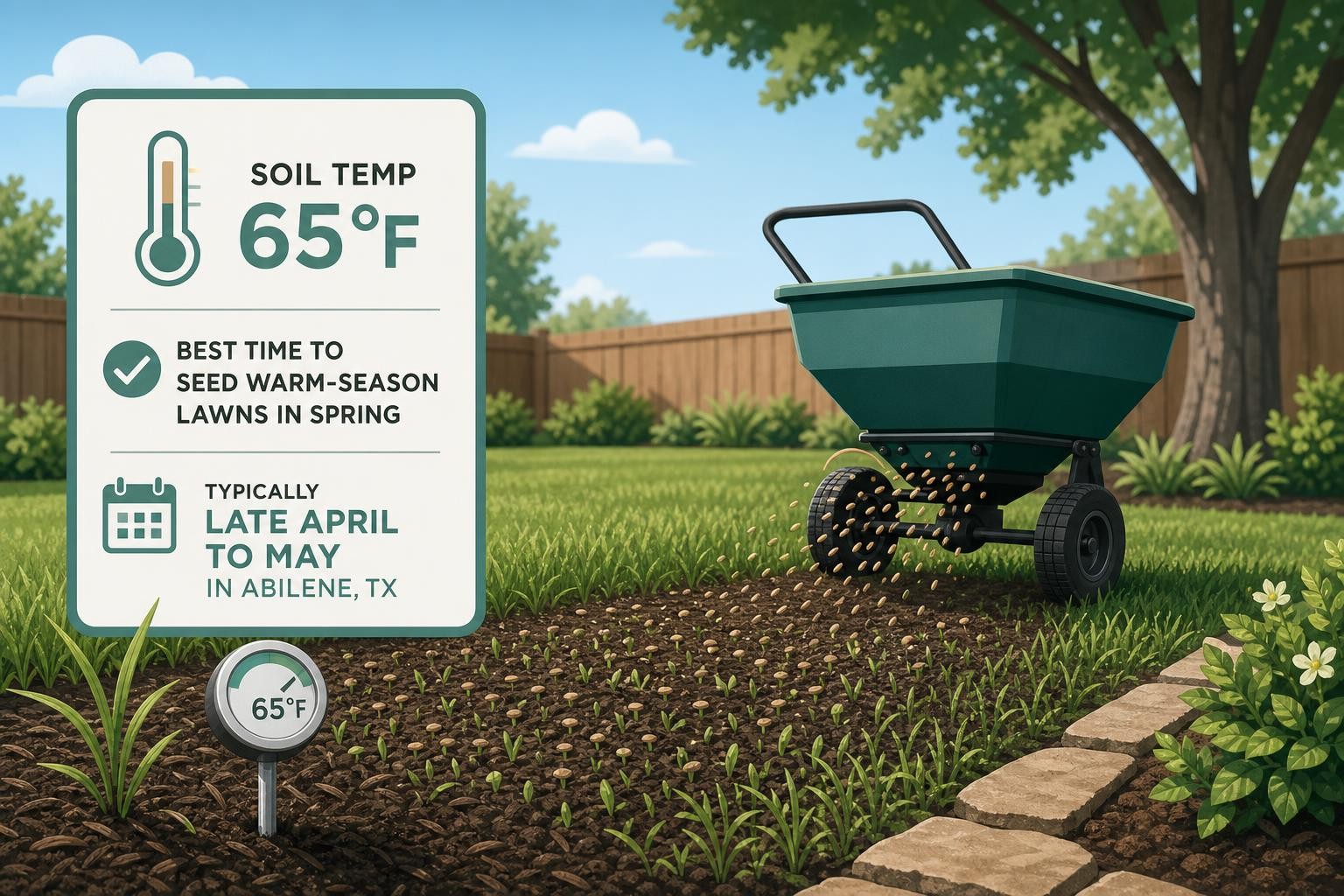
Seed warm-season lawns in spring after soil temperatures consistently reach about 65°F (typically late April to May in Abilene, TX). For cool-season grasses, spring seeding is a second-best option — early fall is usually better. If you plan to overseed or pair seeding with aeration, match the timing to your grass type and local weather, check soil moisture, and be ready to water often for the first 2–3 weeks.
Why timing matters
Seed at the right time so seedlings establish before heat, drought, or fall freezes. Grass seed needs warm soil to germinate, steady moisture to stay alive, and time for roots to thicken before stress periods. Plant too early and young grass can be killed by late cold snaps or outcompeted by summer weeds. Plant too late and seedlings won’t have time to develop before hot, dry weather.
Identify your grass type first
Knowing whether you have a warm-season or cool-season lawn is the fastest way to answer “when to seed lawn in spring.” Warm-season varieties common near Abilene include Bermuda and Zoysia. These do best when sown in late spring to early summer. Cool-season grasses such as tall fescue or Kentucky bluegrass do best when seeded in early fall; spring is only a backup if fall was missed.
Quick checklist to tell the type
- Warm-season: greenest in summer, goes dormant and straw-colored in winter.
- Cool-season: stays greener in winter, peak growth in spring and fall.
- When unsure, take a photo or sample to a local lawn care pro for ID.
Spring timing by activity (answering the main question)
Here’s how to match common spring tasks to timing so you get better results.
Seeding a warm-season lawn
Seed when soil temps stay around 65–70°F and nights are reliably above frost. In Abilene that usually falls in late April through May. That timing lets seed germinate quickly, roots establish through early summer, and the turf thicken before late-summer stress.
Overseeding
When to overseed lawn depends on your goal. If you’re overseeding a warm-season lawn with the same grass (to fill thin spots), late spring as the grass wakes up is fine. If you mean overseeding a warm-season lawn with a cool-season grass for winter green-up, that’s usually done in fall, not spring.
Pairing with aeration
“When is the best time to aerate lawn?” For warm-season lawns, aerate in late spring or early summer just before seeding. For cool-season lawns, aerate in early fall. Aeration loosens compacted soil and gives seed a better contact with soil, improving germination.
Soil amendments and lime
When to spread lime on lawn depends on a soil test. If soil pH needs correcting, plan lime application a few months before seeding so the pH begins to adjust. In practice that means testing now and applying lime in late winter or early spring if needed.
Practical homeowner checklist before you seed
Do these quick checks so you’re not wasting seed or time:
- Confirm grass type and local frost timing — Abilene typically sees last freezes in mid-April, but check current year forecasts.
- Measure soil temperature (digital probe) at 2–3 inches deep for several days.
- Do a soil test for pH and nutrients — many extension services or labs provide kits.
- Inspect irrigation and set a watering schedule for daily light watering until seedlings are established.
- Remove heavy thatch or debris and mow to the recommended height before aerating or seeding.
Seeding steps and timeline
Follow this sequence for best results:
- Aerate if soil is compacted. Seed binds better to loosened soil.
- Spread starter fertilizer if soil test shows low fertility.
- Apply seed at the recommended rate. Rake or lightly drag to ensure seed-to-soil contact.
- Mulch bare spots or use a light straw cover to retain moisture and reduce birds eating seed.
- Water lightly 2–3 times per day for 2 weeks, then taper to deeper, less frequent watering as roots develop.
Germination windows: Bermuda 7–21 days, Zoysia 14–28 days, fescue 7–21 days. First mowing: wait until grass reaches mowing height and remove no more than one-third of blade length.
What this means for homeowners
If you live in Abilene and want to seed in spring, start by identifying your grass and checking soil temps. For most warm-season yards here, late April to May is the sweet spot. That timing reduces the risk of late freezes and gives young plants warm weather to root.
Budget and time: DIY seeding of a typical front yard (materials + rental spreader) often runs a few hundred dollars. Professional services may cost more but include soil prep, aeration, accurate seed rates, and guaranteed establishment windows. If you want a strong, uniform lawn and limited time, hiring a pro makes sense.
When to call a professional
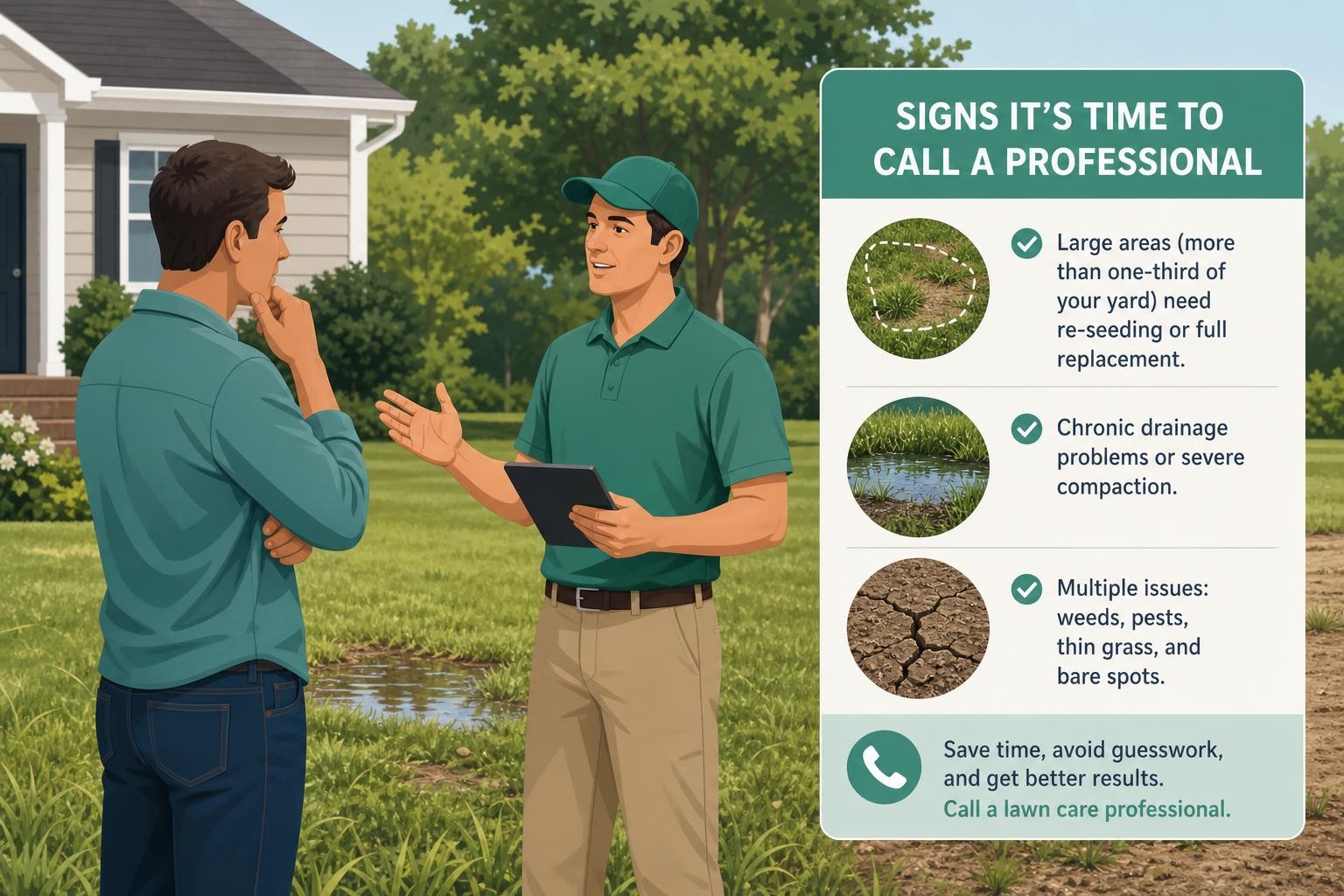
Call a lawn care professional if any of the following apply:
- Large areas (more than one-third of yard) need re-seeding or full replacement.
- Chronic drainage problems or severe compaction — these often need equipment and grading work.
- Multiple issues: weeds, pests, disease, and bare patches overlapping — a pro can diagnose and prioritize.
- You prefer a turnkey job: aeration, soil test, lime, seed, starter fertilizer, and irrigation setup handled together.
Abilene Home Services offers local lawn care and can help you decide the right seeding window and take care of the work. Learn more about our lawn work or apply to help maintain yards near you at our Lawn Maintenance Specialist Job Opening.
When this may not be the right service
Seeding is not always the answer. Skip seeding if:
- Problems are mainly pests or disease — those need diagnosis and treatment first.
- Irrigation is inadequate — seedlings need frequent moisture; without it, seeding will fail.
- Soil pH is badly off — correct pH before seeding; otherwise nutrient uptake and germination suffer.
- Site is heavily shaded — many grass types won’t establish in deep shade; consider shade-tolerant groundcovers instead.
Does Abilene, TX change the answer?
Yes. Abilene’s climate pushes most homeowners toward warm-season grasses. That means spring seeding is more useful here than in northern climates. Local heat and occasional drought also mean you must be realistic about water needs after seeding. If you’re unsure how your yard’s microclimate affects timing, a local pro can inspect and recommend species and timing suited to your lot.
Frequently asked questions
When should I call a professional for lawn care?
Call a pro if you have large-scale reseeding needs, persistent bare spots, drainage or compaction problems, or if you want a guaranteed, turnkey result. Professionals can also run soil tests and schedule seeding at the optimal time.
What can I check before scheduling lawn care?
Confirm grass type, test soil pH, check soil temperature, inspect irrigation, and note weed or pest issues. These checks will help your lawn technician recommend the right timing and prep work.
When to spread lime on lawn?
Spread lime only if a soil test shows the pH is low. Apply lime several weeks or months before seeding so soil chemistry begins to adjust. A local lawn pro can test and advise timing.
When to mow new grass?
Wait until new grass reaches the recommended mowing height for the species and then remove no more than one-third of the blade. For many warm-season grasses, that’s when shoots are 2–3 inches tall.
How does aeration fit in with seeding?
Aerate before seeding when soil is compacted. For warm-season lawns, late spring aeration followed by seeding is ideal. Aeration improves seed-to-soil contact and root growth.
Does Abilene have a different schedule?
Local climate matters. In Abilene, warm-season grasses dominate, so late-April to May seeding is usually best. If you need a specific date for your yard, contact a local lawn care specialist.
For more context, review Lawn Maintenance Specialist Job Opening and Best Time To Overseed Lawn and FTC guidance on hiring a contractor before deciding what to do next.
Next steps and resources
Ready to act? If you want a DIY approach, run a soil test, check soil temps, and plan to water frequently after seeding. If you prefer professional help, Abilene Home Services provides local lawn care and can manage soil testing, aeration, seeding, and follow-up care. Learn more or request service through our Lawn Maintenance Specialist Job Opening page, or call (940)235-6789 to discuss timing for your yard.
For guidance on hiring qualified contractors, see the FTC’s advice on hiring a contractor.