
It's one of the most disheartening sights for any gardener: aggressive weeds creeping in and strangling the life out of your beautiful flowers. If you're looking for the single most effective way to prevent weeds in flower beds, the answer is surprisingly simple: apply a generous layer of quality organic mulch. It's a fundamental step that smothers existing weeds and, more importantly, keeps sunlight from ever reaching new seeds.
A Proactive Plan for Weed-Free Flower Beds
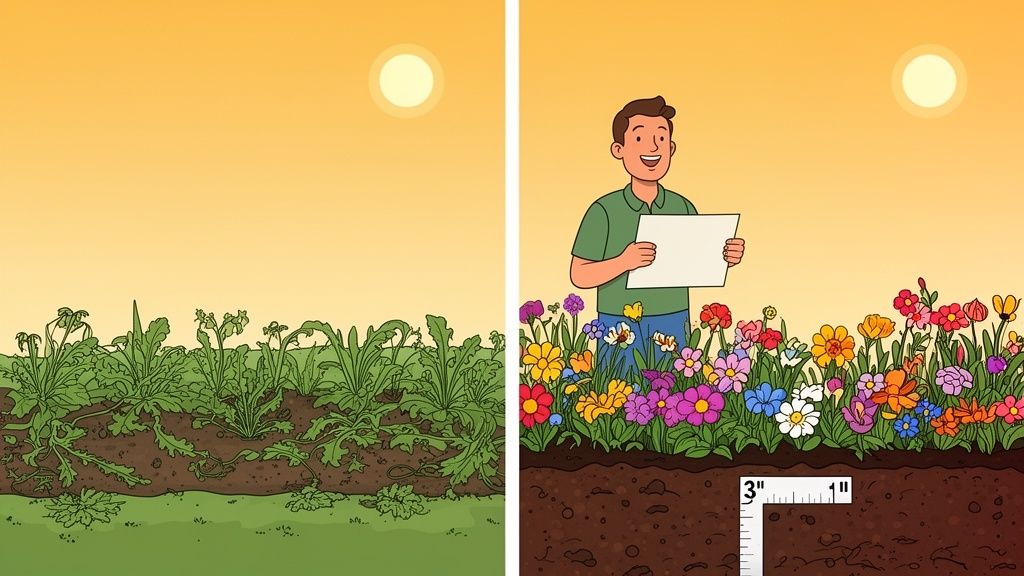
Winning the war against weeds isn't about spending every weekend on your hands and knees pulling them. As a landscaper right here in Abilene, I’ve helped dozens of homeowners get their gardens back. The real secret isn't brute force; it's a smart, proactive strategy that creates an environment where flowers flourish and weeds just can't get a foothold.
Think of this as your personal blueprint for a season of gorgeous blooms, not a constant battle. We'll start with the most powerful techniques and build a plan from there.
The Power of Prevention
One question I hear all the time is, "What can I do right now to stop these weeds?" My answer is always the same: cover your soil. Bare, exposed soil is basically a welcome mat for every opportunistic weed seed that blows across your West Texas yard.
I remember working with a client near Abilene Christian University whose stunning rose bushes were in a constant, losing fight with purslane and crabgrass. Their beds were a mess. We put a simple plan into action, starting with a deep, 3-inch layer of cedar mulch. The difference was immediate and, more importantly, it lasted.
Key Takeaway: The single most impactful thing you can do to prevent weeds is to create a physical barrier between the sun and the soil. This can be mulch, landscape fabric, or even dense planting—all methods we'll dive into.
Why Mulch is Your Best Friend
Question: Is mulch really that important for stopping weeds?
Answer: Absolutely. Mulch is so much more than just a decorative topping for your flower beds; it’s a hardworking, multi-tasking hero. It actively suppresses weeds, conserves precious moisture in our dry climate, helps regulate soil temperature, and even enriches the soil as it slowly breaks down.
For instance, applying a 2-3 inch layer of a good organic mulch, like shredded bark or wood chips, can block enough sunlight to cut down on weed seed germination by up to 90% in the first year alone. It really works. In fact, recent studies in Texas landscapes found that a proper mulch application slashed weed density by an incredible 92% in just six months. That saved homeowners an average of 15 hours of weeding for every 1,000 sq ft bed. You can explore the detailed findings on how mulch dramatically reduces weed growth.
Here’s a quick-reference table to help you compare some of the most effective prevention methods we'll be discussing.
Quick-Reference Weed Prevention Methods
Here's a summary of the most effective weed prevention techniques and their primary benefits for your Abilene flower beds.
| Technique | Effectiveness | Best For |
|---|---|---|
| Organic Mulch | High | Suppressing seeds, retaining moisture, and improving soil health over time. |
| Pre-Emergent Herbicides | High | Preventing germination of annual weeds like crabgrass before they sprout. |
| Landscape Fabric | Very High | Long-term weed suppression in beds with shrubs and established perennials. |
| Dense Planting | Medium-High | Shading out weeds naturally in mature beds; "living mulch." |
Each of these has its place, but as you can see, mulch provides a fantastic combination of effectiveness and added garden benefits.
Beyond its weed-blocking power, the moisture retention from mulch is absolutely critical in Abilene, where evaporation rates can be brutal. By keeping the soil cooler and slowing water loss, mulch helps your flowers stay healthier and more robust. A strong, vigorous plant is always your best first line of defense, making it that much harder for any stray weed to compete.
Building Your Defense from the Ground Up
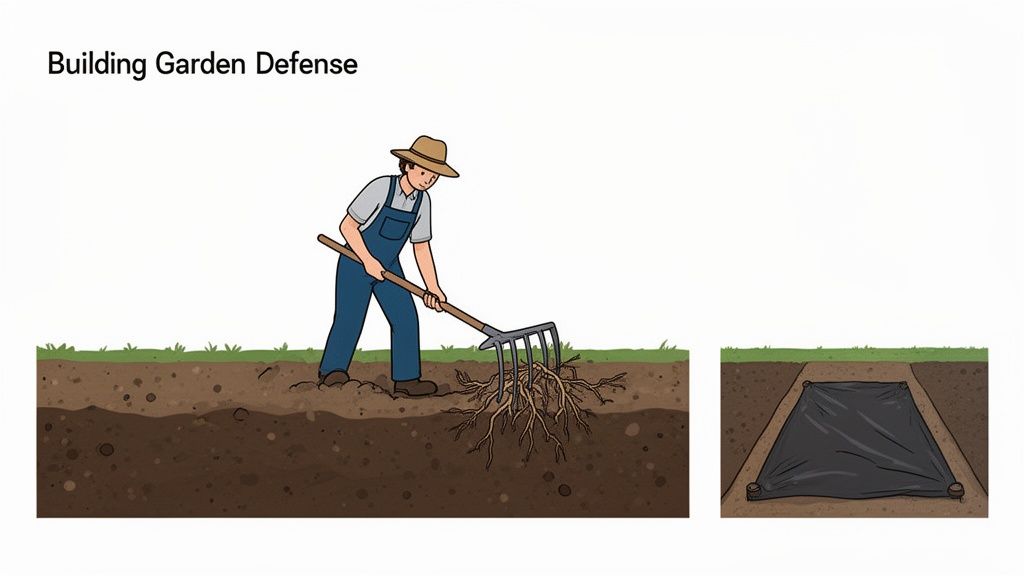
If you want to spend more time admiring your flowers and less time pulling weeds, the real work starts long before you plant a single seed. A truly weed-resistant flower bed is built from the soil up. This prep work is the single most important thing you can do to set yourself up for success.
I’ve seen it time and again: cutting corners at this stage guarantees you’ll be fighting a losing battle later. Simply turning existing weeds into the soil and hoping for the best is a recipe for disaster. They’ll be back, and they’ll bring friends. The first, non-negotiable step is to completely clear the area.
This means digging out every last weed and, crucially, its entire root system. Weeds like bindweed and nutsedge have incredibly persistent roots that will happily sprout from even a tiny fragment left behind. I always use a sturdy garden fork to loosen the soil around a clump before I pull—it’s the only way to get the whole thing.
Should I Till My Flower Bed Soil?
Question: Is tilling my flower bed a good idea to get rid of weeds?
Answer: This question comes up all the time with homeowners here in Abilene. A tiller might seem like a quick way to break up ground, but in our heavy clay soil, it often creates more problems than it solves.
Tilling can pulverize the soil’s natural structure. After the first good rain, that fluffy soil can turn into a compacted, concrete-like slab. Even worse, tilling acts like a blender for weed roots and dormant seeds, chopping them into hundreds of new pieces and spreading them everywhere. You're essentially planting next year's weed problem.
Instead, I almost always recommend a broadfork. This simple but effective tool lets you aerate and loosen the soil 6 to 12 inches deep without destroying its structure. You’re preserving the natural pathways for air and water, which helps your flowers establish strong, healthy roots that can outcompete any new weeds.
Enhancing Your Soil for Weed Resistance
Once the bed is clear and the soil is loosened, it's time to add amendments. Healthy soil grows vigorous plants, and a thriving canopy of flowers is one of your best defenses against weeds.
For the typical clay soil we have in Abilene, I’ve found this combination works wonders:
- Compost: Work in a 2- to 4-inch layer. It adds vital nutrients, improves drainage, and introduces beneficial microbes.
- Expanded Shale: This is a must-have for breaking up heavy clay. It creates permanent air pockets that help roots breathe.
- Leaf Mold: If you can get your hands on it, this stuff is garden gold. It dramatically improves soil texture and water retention.
By creating this rich, crumbly foundation, you’re giving your flowers a massive head start. They'll grow faster and fuller, shading the soil surface and preventing many weed seeds from getting the light they need to germinate.
A few years back, we were tackling a project near the Paramount Theatre where stubborn bermudagrass kept creeping into a new flower bed. Before planting, we used solarization. We soaked the soil, covered it tightly with a sheet of clear plastic for 6-8 weeks in the summer heat, and let the sun bake the grass and its seeds into oblivion. It worked like a charm.
After you’ve mixed in your amendments, rake the surface smooth. I also suggest raising the bed about 6 inches with the new soil mix. This slight elevation creates a simple physical barrier that helps keep lawn weeds from marching in—a small detail that makes a huge difference down the road.
Using Mulch and Landscape Fabric as Physical Barriers
With your beds prepped and ready, it's time to install the single most effective defense against weeds. I'm talking about physical barriers—mulch and landscape fabric. Think of this step as putting a suit of armor on your garden beds. It’s what stops most weeds dead in their tracks before they even see the light of day.
Honestly, this is the secret to a low-maintenance garden. For my clients, a proper installation of fabric and a thick layer of mulch isn't just a nice add-on; it's the core of our strategy. The whole point is to make your garden a source of joy, not a constant chore.
Choosing the Right Mulch for Our Climate
Question: What kind of mulch is best for the windy Abilene weather?
Answer: Here in Abilene, with our dry heat and notorious wind, your choice of mulch really matters. You need something with enough weight and texture to stay put, block the sun, and lock in precious moisture.
Here are a few of my go-to choices for West Texas gardens:
- Shredded Cedar Mulch: This is my top pick, hands down. It smells great, has a rich reddish-brown color, and its fibrous texture makes it knit together, so it's less likely to blow away. Plus, it breaks down slower than most other types.
- Hardwood Mulch: A solid, long-lasting alternative. It's heavier than cedar, which is a huge advantage during our gusty spring and fall days.
- Pine Straw (Pine Needles): While you don't see it as often here, it's a fantastic, lightweight option that interlocks to form a weed-suppressing mat. It’s especially great if you’re growing acid-loving plants like azaleas.
I’ll never forget a project we did for a family near Dyess Air Force Base, where the wind just howls. They were completely fed up with spending their weekends pulling weeds. We put down a heavy-duty layer of cedar mulch, and it was a total game-changer for them.
When you're spreading it, aim for a consistent depth of 2-3 inches. That’s the sweet spot for blocking sunlight from reaching weed seeds without suffocating your plant's roots. Just be sure to pull the mulch back and leave a small, one-inch gap around the base of your plants to prevent stem rot.
Is Landscape Fabric Worth It?
Question: Is landscape fabric a good idea, or does it cause more problems?
Answer: This is probably the most common question I get, and the honest answer is: sometimes. When it's used correctly, it’s an incredible tool. When it's not, it can create a bigger mess than you started with.
So, when does it make sense? I’m a big fan of professional-grade landscape fabric for permanent plantings—think shrub borders or perennial beds where you won’t be digging around every year. It creates a nearly impenetrable barrier. For Abilene homeowners looking to boost curb appeal, a quality fabric application makes flower beds look pristine.
The data backs this up. One North American study found that using fabric slashed weeding labor costs by 70% compared to just hand-weeding. In our Texas climate, trials have shown fabric-covered beds can have 89% less weed density after a single year, which gives your flowers a much better chance to thrive. You can find more data on the effectiveness of weed control methods in this industry report.
But I'll also be the first to tell you when to skip it. I never use it in annual beds or vegetable gardens where you’re constantly digging and replanting. The fabric just gets torn to shreds. Worse, over time, dirt and organic matter build up in the mulch on top of the fabric, creating a perfect new place for weeds to sprout.
How to Install Landscape Fabric Like a Pro
The number one reason landscape fabric fails is a shoddy installation. If you're going to bother with it, you have to do it right.
Here's how we ensure a bulletproof installation for our clients:
- Overlap Generously: Weeds are masters of finding the weak points. Always overlap your seams by at least 6-8 inches to leave no gaps.
- Pin It Down: Use landscape staples every few feet, especially along all the seams and outer edges. This keeps the fabric from shifting and prevents weeds from popping up around the sides.
- Cut Smart: When it’s time to plant, don’t cut a big, round hole. A simple X-shaped slit is all you need. You can peel back the four triangles to place your plant, then fold them right back against the stem, minimizing the amount of exposed soil.
Taking the time to do it this way from the start is what separates a frustrating experience from years of weed-free success. If you're in the Abilene area and want a professional touch to guarantee your flower beds stay beautiful and low-maintenance, our team has it down to a science. You can see more about our full range of landscaping services in Abilene, TX and let us handle the hard work for you.
How Smart Planting and Watering Prevents Weeds
Believe it or not, the way you plant and water can either roll out the red carpet for weeds or shut them down completely. After years of designing and maintaining gardens here in Abilene, I’ve seen firsthand how a few smart choices can create an environment where your flowers thrive and weeds just don't stand a chance.
Many gardeners accidentally give weeds the upper hand. Let's turn your gardening habits into your strongest defense.
Create a Living Mulch with Dense Planting
One of the most common questions I get is, "How should I space my plants to keep weeds out?" My answer usually catches people by surprise: plant them closer together than you think. Forget those sparse beds where you can see every inch of soil. The goal is a lush, thick canopy of foliage that covers the ground.
I call this strategy "living mulch," and it’s incredibly effective. The leaves from your flowers and shrubs cast a shadow over the soil, blocking the sunlight that dormant weed seeds need to sprout. No light, no growth. It’s like putting up a leafy "No Vacancy" sign for invaders like crabgrass and purslane.
- Follow the Tag, but Tightly: Look at the plant tag's spacing recommendation, but always lean toward the closer end of the range. If it says 12-18 inches, go with 12.
- Fill the Gaps: Tuck low-growing groundcovers like creeping thyme or sweet alyssum between taller plants. This fills in any open spots where sunlight might peek through.
- Group for Success: Plant species with similar sun and water needs together. This helps them all grow vigorously, forming a dense, uniform shield.
For busy military families and property owners in Abilene, this is a game-changer. Simply spacing flowers 12-18 inches apart creates a living barrier that can outcompete invaders by as much as 80%. In fact, one study showed that this method cut weed emergence by 76% in flower beds while boosting blooms by a staggering 40%. Combine this with a spring application of corn gluten meal, and you can stop an additional 60-85% of grassy weeds before they even start. You can discover more insights about these advancements in weed control from recent studies.
Water the Plants, Not the Weeds
Question: Does it matter how I water my flower beds?
Answer: Yes, it’s absolutely critical. A lot of gardeners unknowingly help weeds by using overhead sprinklers that drench the entire flower bed. Sure, it waters your flowers, but it also gives every single weed seed near the surface a drink.
I once worked on a garden in one of Abilene's historic neighborhoods where the owner was just fed up with constant weeding. We made two simple changes: we filled in the sparse beds with more perennials and swapped their sprinkler for a drip irrigation system. The next season, their weeding time was cut in half, and the garden looked healthier and fuller than ever.
The secret is targeted watering. You want to deliver water directly to the base of your plants—and nowhere else.
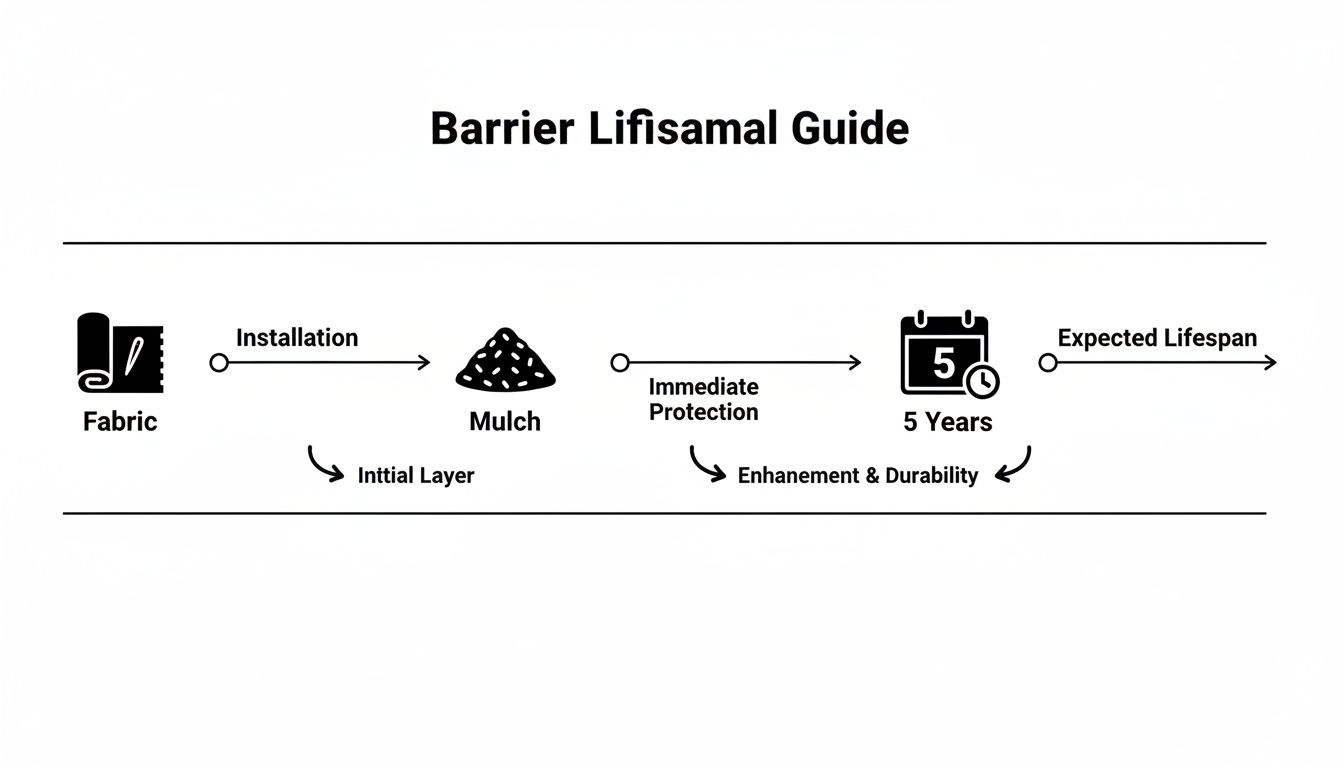
As you can see, layering your defenses—like combining a physical barrier with mulch—offers immediate protection and long-term results, lasting up to five years. Smart watering works on the same principle, creating a dry barrier on the soil surface.
Why Drip Irrigation Is Your Best Friend
In our hot, dry West Texas climate, drip irrigation is a non-negotiable for serious gardeners. Here’s why it’s so good at fighting weeds:
- Precision Delivery: Emitters release water slowly, right at the root zone where your flowers need it.
- Dry Soil Surface: The ground between your plants stays dry, creating a mini-desert where weed seeds can't germinate.
- Water Conservation: You lose far less water to evaporation, which saves money and is crucial for our region.
By keeping the surrounding soil dry, you deny weed seeds the moisture they need to sprout. It's a simple, passive method that works around the clock. While this is perfect for flower beds, watering your lawn correctly is just as important. For tips tailored to our local turf, take a look at our guide on watering Bermuda and St. Augustine grass.
When You Might Need Professional Weed Control
Let’s be honest, there's no shame in admitting defeat in the war against weeds. Even with all the right intentions, some weeds are just relentless. I’m talking about the truly tough ones, like nutsedge with its deep, persistent tubers or bindweed that seems to wrap around everything overnight. If you feel like you’re spending every weekend on your knees pulling weeds only to see them return, it might be time to bring in a professional.
Sometimes the problem is bigger than just a few stray weeds. I’ve walked properties where the flower beds were so completely choked out that you could barely see the soil, let alone the plants. When an infestation gets that bad, a complete overhaul is often the only path forward, and that’s a massive job for any homeowner to face alone.
Is Hiring a Professional Worth the Cost?
This is usually the first thing people ask me, and it’s a fair question. It’s easy to see a professional service as just another bill, but I encourage homeowners to think of it as an investment—an investment in your time, your property's curb appeal, and frankly, your sanity.
I have a great example. One of my clients is a property manager here in Abilene who was burning through her maintenance budget trying to keep the flower beds at her rental homes looking decent. After we came in and implemented a targeted weed control plan, she told me she saved thousands of dollars in labor costs in the first year alone. More importantly, she got her own time back.
What you're really paying for with a professional service is expertise and consistency. You get access to commercial-grade products, perfect application timing, and a solid plan that gets your beds back to beautiful. It lets you actually enjoy your yard again.
Scenarios for Calling a Pro
Still on the fence? Here are a few common situations where calling in a professional is almost always the best move:
- You're Overwhelmed: The weeds have completely taken over, and you genuinely don't know where to begin.
- You're Battling Tough Weeds: You’re up against stubborn invaders like nutsedge, bermudagrass, or bindweed that just won't die with store-bought products.
- You Just Don't Have the Time: Life is busy. Effective weed control requires a consistent, season-long effort that you might not be able to commit to.
- You Need Guaranteed Results: Maybe you're selling your home and need perfect curb appeal, or you simply want your landscape to look pristine without the trial and error.
If any of these sound like your current situation, it’s worth exploring your options. To get a handle on the unique challenges posed by West Texas weeds, you can learn more about our dedicated weed control services in Abilene, TX and let us take on the fight for you.
A Few Common Questions About Weed Prevention
After years of landscaping work here in Abilene, I’ve heard just about every question you can imagine about keeping weeds out of flower beds. The funny thing is, the best answers are usually simpler than people expect. I’ve gathered a few of the most common ones I hear to help you get ahead of the game.
What Is the Single Most Effective Way to Prevent Weeds?
Everyone wants to know the secret weapon, the one thing that works best. And honestly, it’s not a secret at all. The most powerful move you can make is to apply a thick, 2- to 3-inch layer of quality organic mulch.
That simple layer does one crucial thing: it blocks sunlight from ever reaching the weed seeds hiding in your soil. No sun means no germination for most of them.
Now, for my clients who want the gold standard, we'll lay down a layer of professional-grade landscape fabric first, then put the mulch on top. That combination of fabric and mulch is a knockout punch for weeds. It creates an incredible physical barrier that can slash your weeding time by over 90%.
Can I Use Vinegar or Salt in My Flower Beds?
I get this question a lot, especially from folks looking for a more "natural" approach. While I appreciate the thinking, I always advise against using household items like vinegar or salt as weed killers in your beds. It almost always backfires.
Here's the problem:
- They Don’t Discriminate: Vinegar is a non-selective killer. It has no idea what’s a weed and what’s a prize-winning rose. It will burn your flowers and ornamental plants just as quickly as it burns the weeds.
- Salt Is Just Plain Destructive: Salt is even more damaging. It accumulates in the soil, creating a toxic environment where nothing—not even the toughest plants—can grow for years to come. It effectively poisons your soil.
My best advice for the few weeds that manage to pop through your mulch is simple: pull them. The moment you see one, get it out of there before it has a chance to drop seeds and create a hundred more headaches for you down the road.
When Is the Best Time to Apply Pre-Emergent in Abilene?
This is a fantastic question, because with pre-emergent herbicides, timing is everything. If you apply it too late, you've completely missed your window. For our climate here in Abilene, you really need to plan for two key applications each year.
The first round should go down in early spring—think late February to early March. You're trying to get it applied before the soil temperature consistently hits 55°F. This is what stops summer weeds like crabgrass and purslane in their tracks.
Your second major application comes in the fall, usually around September or October. This one is all about preventing the winter weeds, such as henbit and chickweed, from taking over when everything else goes dormant.