


Yes, you can absolutely clean your gutters without a ladder. It's not just possible; it's what I recommend to every homeowner I talk to. With the right tools—like specialized pressure washer wands, leaf blower kits, or powerful gutter vacuums—you can get the job done from the safety of the ground. These methods are a game-changer, often proving faster and more thorough than scooping muck by hand.
Why You Should Clean Gutters From The Ground
I’ll be honest, the thought of climbing a wobbly extension ladder, especially with those unpredictable West Texas winds we get in Abilene, used to fill me with dread. For years, I did the precarious balancing act: one hand on the ladder, the other scooping gunk into a bucket. It was slow, messy, and frankly, nerve-wracking.
Turns out, I wasn't just being cautious; I was right to be worried. The statistics on ladder accidents are genuinely startling. Every year, more than 500,000 people in the U.S. end up in the ER with ladder-related injuries. And get this—about 40% of those accidents involve the exact type of extension ladders we all use for gutter cleaning. That staggering number is why so many of us are finally ditching ladders for safer, ground-based tools. You can get more insights on the safety of these tools by checking out this guide on ladder-free cleaning.
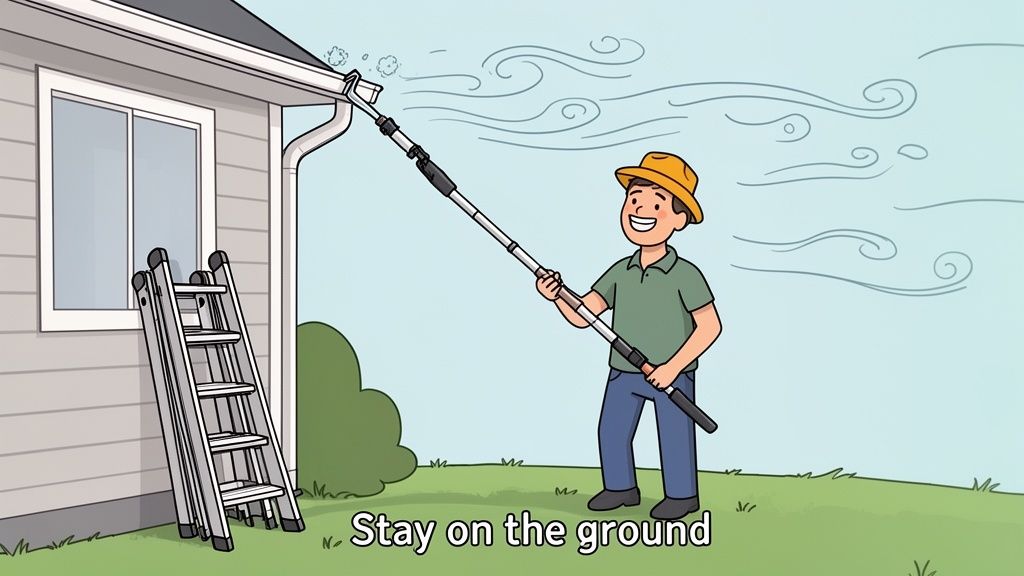
Let's take a quick look at why moving away from the ladder is such a smart decision.
Ladder vs Ladder-Free Gutter Cleaning At a Glance
| Factor | Traditional Method (With Ladder) | Modern Method (Without Ladder) |
|---|---|---|
| Safety | High risk of falls and serious injury. | Extremely low risk; feet stay on the ground. |
| Efficiency | Slow; requires constant repositioning of the ladder. | Fast; allows continuous movement around the house. |
| Manpower | Often requires a second person to act as a spotter. | Easily a one-person job. |
| Reach | Limited to arm's length; tough clogs may be out of reach. | Extended reach can clear deep or compacted clogs. |
| Mess | Awkwardly managing a bucket of sludge from a height. | Debris falls to the ground for easier cleanup with a tarp. |
As you can see, the modern approach wins on almost every front. It's not just about avoiding an accident—it's about making the entire chore less of a hassle.
My Experience Ditching the Ladder for Good
My "aha!" moment came after a particularly windy fall day. I finally invested in a telescopic gutter cleaning wand, and it completely changed my perspective. What used to be an anxiety-ridden, three-hour chore became a simple, one-hour task I could do safely from my lawn.
The switch was about more than just avoiding a fall. It was about reclaiming my weekend and my peace of mind. Keeping your feet firmly on the ground just makes sense.
- Safety Above All: This is the big one. You completely eliminate the risk of a fall, which is the leading cause of injury for this type of home maintenance.
- Work Smarter, Not Harder: You're not constantly climbing up, moving the ladder a few feet, and climbing back up. You can walk the entire perimeter of your house, cleaning as you go.
- A True Solo Job: No more bugging your spouse or neighbor to hold the ladder steady. This makes it a perfect task to tackle whenever you have a spare hour.
How Does This Work in the Real World?
People often ask me a few key questions when they're thinking about making the switch.
Question: Is it really as effective as cleaning by hand?
Answer: Honestly, for most situations, it's even better. The tools designed for this job, like high-pressure wands or vacuums, can blast out debris that’s hard to reach with just a trowel. The first time I used a telescopic wand, I flushed out a compacted clog that I had missed for two seasons straight because it was stuck just out of my reach from the ladder.
Question: Doesn’t it make a huge mess on the ground?
Answer: It can, but it’s completely manageable. I just lay a tarp down beneath the section I'm working on to catch the falling leaves and muck. Cleanup becomes as simple as folding up the tarp and dumping the debris in a yard waste bag. It’s far less messy than trying to balance a bucket of sludge from 15 feet in the air.
My personal rule of thumb is simple: if a home maintenance task involves a two-story ladder and me working alone, there has to be a better, safer way to do it. Learning how to clean gutters without a ladder was that better way.
Picking Your Ladder-Free Gutter Cleaning Tools
Alright, so you're committed to keeping your feet on solid ground while tackling your gutters. Smart move. Now for the fun part: picking the right tool for the job. There's a whole cottage industry of gadgets out there designed for this exact purpose, and your best bet depends on your house height, what kind of debris you're dealing with, and your budget.
I’ve gotten my hands on just about every type of ladder-free cleaner over the years, both for my own home and on jobs. I can give you the real-world rundown on what actually works and where each one falls short. They generally fall into three main camps.
Gutter Flushing Wands for Hoses and Pressure Washers
This is where most people start, and for good reason—it's often the most affordable entry point. These are basically long, rigid wands with a hook on the end that you attach to a garden hose or pressure washer. From the ground, you can blast debris out of the gutters. I started with a simple garden hose attachment myself, and it did a decent job clearing out light shingle grit and the thin layer of grime that builds up over time.
The limitation, though, is power. For the thick, heavy sludge of wet leaves we get from the oaks and pecans here in Abilene, a standard hose just doesn't have the muscle. That's where a pressure washer attachment really shines. Imagine standing safely on your lawn and using a pressure wand to do all the work. These tools, which have been getting better since they first appeared around 2015, can now handle up to 2,000 PSI to obliterate clogs in seconds. For a two-story home, it can easily cut your cleaning time by 50%. You can see how the latest models stack up by checking out some recent safety and performance comparisons.
Of course, it’s not a perfect system. The biggest downside is the mess—it can spray dirty water and gunk all over your siding, windows, and, well, you. It also uses a fair bit of water. The other concern is potential damage; a high-PSI stream aimed carelessly can get under shingles or even damage siding.
Question: Is a pressure washer wand too powerful for my gutters?
Answer: My advice is always the same: start on the lowest possible pressure setting and work your way up. I've found it's less about raw power and more about the angle. Aim the spray down the channel of the gutter, not up at your roof or fascia board. That's how you avoid forcing water where it doesn't belong.
Blower and Vacuum Attachments
If you already have a decent leaf blower or a shop vac in your garage, this is an incredibly efficient route to take. You can buy kits with a series of plastic tubes that connect to your machine, ending in a U-shaped hook you simply point into the gutter. From there, you can either blow the debris out or vacuum it up.
Question: Should I choose a blower or a vacuum attachment?
Answer: My experience tells me it depends entirely on the debris. For the dry, fluffy leaves of early fall, a blower is king. It’s incredibly fast and can clear a whole section in minutes. But if you’re dealing with heavier stuff like twigs, pine needles, or damp clumps, vacuuming is the way to go. It’s neater and ensures you capture everything without blasting it all over your landscaping. I learned the hard way that a blower on wet leaves just creates a soupy, splattered mess. If there's any moisture in those gutters, stick with the vacuum function.
All-In-One Telescopic Gutter Vacuums
This is the top-tier option, and frankly, it's worth it. These are dedicated machines that bundle a powerful wet/dry vacuum with a set of lightweight, interlocking poles, letting you easily reach second-story gutters without breaking a sweat. Many of these systems even come with a small camera you can mount on the pole, feeding a live video to a monitor or your phone so you can see exactly what you're doing up there.
The first time I used one, the camera immediately spotted a tennis ball wedged deep in a downspout opening—something I never would have found with a blower or flushing wand. Its powerful suction pulls out everything: wet leaves, packed-in dirt, pine needles, and even the occasional kid's toy.
While the initial cost is higher, it’s by far the cleanest and most thorough method. For a two-story home or if you consistently battle heavy, wet debris, this tool is your best bet for a truly professional, ladder-free clean. It can absolutely pay for itself by helping you avoid a service call to a pro like Abilene Home Service for those really stubborn clogs.
A Practical Guide to Cleaning Gutters From The Ground
Alright, you've got your tools. Now for the part that really matters—the technique. This is where a little bit of know-how can save you a ton of time and mess. Before you even think about turning on a blower or a hose, let's talk about setting yourself up for success.
A few minutes of prep work makes the cleanup afterward so much easier. Trust me, I learned this the hard way.
- Protect Your Eyes: Gutter gunk is nasty stuff. Twigs, dirt, and mystery sludge can come flying out, so always wear a good pair of safety glasses.
- Lay Down a Tarp: Spreading a tarp directly underneath the gutter you're working on is a game-changer. It catches all the falling debris, so you can just fold it up and dump it when you're done.
- Clear the Deck: Move your patio chairs, planters, and anything else you don't want covered in grime. Create a clear "splash zone."
Getting the Technique Right for Each Tool
Every ground-based tool works a little differently. Over the years, I've found that the key to a clean gutter isn't raw power, but using the right approach for the tool you have. Whether you're using water, air, or suction, the method is what separates a clean sweep from a frustrating mess.
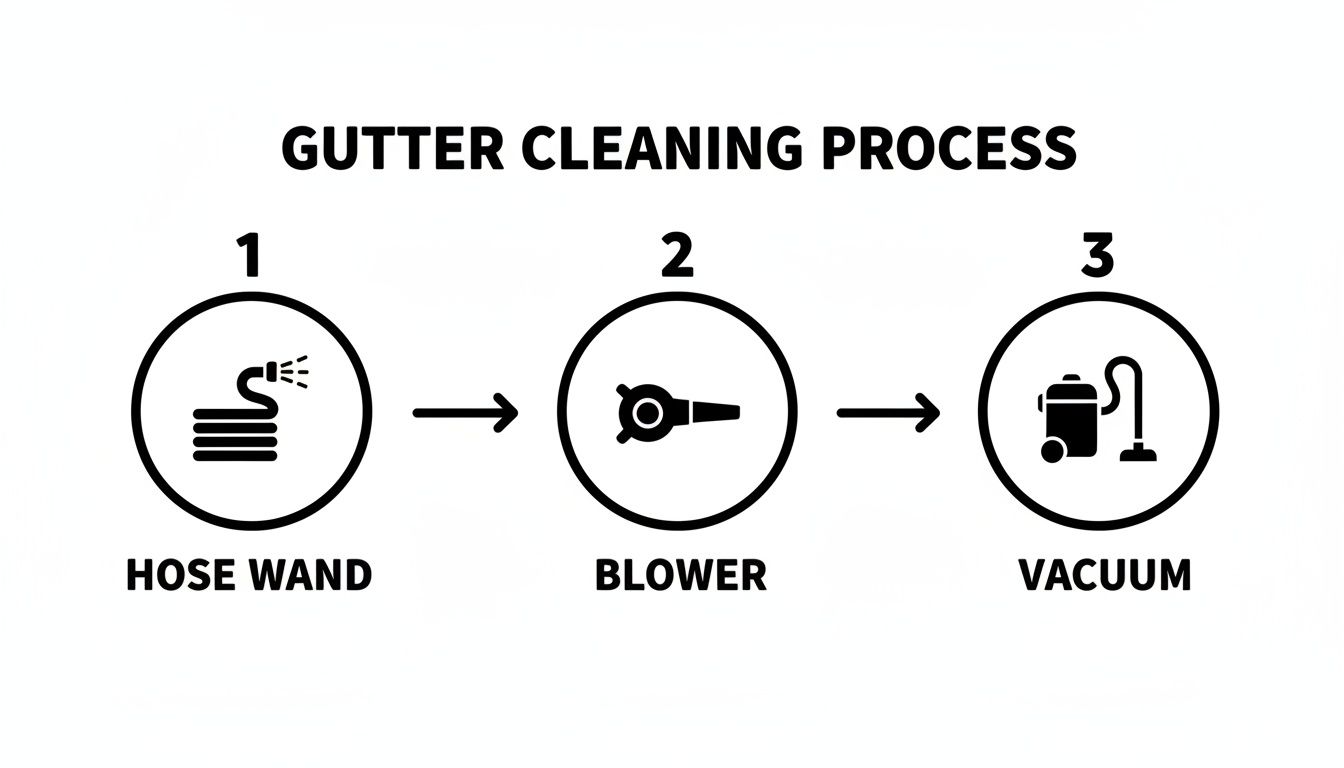
As you can see, each tool tackles the job with a unique action. That's why you can't just use them all the same way.
Using a Gutter Flushing Wand
If you're using a hose or pressure washer attachment, here’s my number one piece of advice: always work from the downspout opening and move backward.
Start spraying the debris toward the downspout. This clears a path for all the water and gunk to flow out properly. If you start at the far end, you’ll just push a giant, soggy dam of leaves toward the downspout, creating a bigger problem than you started with. I've been there. It’s not fun.
Working With Blower and Vacuum Kits
For blower or vacuum systems, the challenge is handling that long, rigid pole. It can feel a bit like you're trying to wrestle an octopus at first.
My strategy is to go after the heaviest-looking clogs first, while you’re still fresh. Use short, controlled bursts and movements instead of trying to sweep long sections at once. If your vacuum has a camera, that’s your secret weapon. Use it to navigate around corners and find those hidden clogs you can’t see from the ground. It makes a huge difference.
If you’ve been dreading this task and the blockages seem overwhelming, it might be time to call in the pros. We have a lot of experience with the stubborn clogs common to our area; you can learn about our approach to cleaning gutters in Abilene, TX.
So, How Do I Know They’re Really Clean?
Question: How can I be sure the job is done when I can't see into the gutter?
Answer: It's a fair point, and there are a couple of reliable ways to check your work without ever leaving the ground. My go-to method is the "flow check." After I think I'm finished, I grab the garden hose (without any high-pressure attachment) and run a gentle stream of water into the gutter at the end farthest from the downspout. If the water runs clear and smooth all the way out the bottom, you’ve nailed it.
Question: What about that really thick, packed-in sludge? How do I clean that without making a huge mess on my siding?
Answer: For that thick, compacted gunk, a gutter vacuum is your best option. It sucks the debris straight out, so there's almost no splatter. If all you have is a flushing wand, use the lowest pressure that still does the job and aim the nozzle down the length of the gutter, not at an angle toward the house. Go slowly. This will help keep the mess contained in the channel and off your walls.
Here are a few other ways to verify you got everything:
- An Inspection Mirror: You can find small mirrors on telescoping poles at any hardware store. They're perfect for quick spot-checks, especially near corners.
- A Camera Attachment: If your tool kit didn't include one, a cheap "endoscope" camera that pairs with your phone works wonders. Just tape it securely to a pole and you've got a high-tech inspection tool.
Moving from Gutter Cleaner to Gutter Preventer
There's a certain satisfaction in clearing out a huge, stubborn clog, I'll admit. But you know what's even better? Making sure that clog never gets a chance to form in the first place. That’s the real secret to healthy gutters and, frankly, my own peace of mind. It’s about shifting your mindset from a reactive cleaner to a proactive homeowner, which often means looking at tools like gutter guards.

It also means getting into the habit of inspecting your gutters regularly. Catching small issues before they snowball into big, expensive repairs is the best defense you have against blockages and the water damage that inevitably follows.
Are Gutter Guards Actually Worth It in Abilene?
Question: I hear this constantly: "With our pecan and oak trees, are gutter guards a waste of money here in Abilene?"
Answer: My honest, experienced answer is a definite yes—if you choose the right kind. Those cheap plastic screens you see at the big-box stores can sometimes create more headaches than they solve. A quality system, however, is a fantastic investment. Here in West Texas, a good set of micro-mesh guards might run you $6 to $8 per foot, but they can block up to 99% of debris. This is a game-changer, potentially cutting your cleaning frequency by a whopping 80%. You can get a sense of how pros approach this by checking out the latest trends in the gutter business.
At Abilene Home Service, we often bundle gutter guard installation with other exterior services for property managers or folks prepping a house for sale. It’s a proactive strategy that saves time down the road and adds instant curb appeal—a true win-win.
If you're already thinking about your home's exterior, see how staining and cleaning outdoor structures can boost your home value.
How to Inspect Your Gutters from the Ground
Even the best gutter guards need a quick check-up now and then. The great thing is, you don’t need a ladder to do it. Learning how to clean gutters without a ladder goes hand-in-hand with learning how to inspect them safely from the ground.
My go-to, low-tech method is a solid pair of binoculars. I'll do a slow walk around my house, especially after a good rain, and scan the entire gutter line. You'd be amazed what you can spot.
Here's what I’m always looking for during an inspection:
- Sagging or Pitch Issues: Gutters need a very subtle slope toward the downspouts to drain properly. If you see pools of standing water a day or two after it rains, that's a red flag for a pitch problem.
- Loose Hangers: These are the brackets that secure the gutter to the fascia board. I look for any that seem to be pulling away from the house, even slightly.
- Debris on Top: Even top-tier guards can get a "blanket" of fine debris like pine needles or shingle grit. Usually, it just needs a quick brush-off with an extension pole.
For a more high-tech view, I’ve actually borrowed my son's drone. Flying it slowly along the roofline gives an unbelievably clear picture of the gutters and roof, revealing things I'd never see from the ground.
Creating a Gutter Maintenance Schedule That Works for You
Putting gutter care on a schedule takes all the guesswork out of it. What was once a dreaded, unpredictable chore becomes a simple, manageable routine. This is the personal schedule I've fine-tuned for our unique Abilene seasons.
My Personal Seasonal Gutter Checklist:
- Late Spring (Post-Pollen): After the oak pollen and maple "helicopters" have dropped, I do a quick visual check and a flush with a hose wand. It clears out all that fine gunk in under an hour.
- Mid-Summer (Post-Thunderstorm): A heavy summer downpour can wash shingle grit and stray leaves into the system. I use my binoculars to make sure the downspout openings are clear.
- Late Fall (The Main Event): Once the pecan and oak trees have dropped most of their leaves, I break out the gutter vacuum for a full, thorough cleaning.
- Early Winter (Final Check): I do one last inspection before winter truly sets in. This ensures everything is flowing perfectly and helps prevent ice dams if we get one of those rare Texas freezes.
By sticking to this simple plan, I probably spend only a few hours a year on my gutters, and I never have to panic about an overflow during a surprise downpour.
Knowing When to Call a Professional Gutter Cleaner
Learning to clean your gutters from the ground is a fantastic skill, but even the best DIYer needs to know when to call for backup. Some jobs are just too big, too stubborn, or too risky to tackle yourself, no matter how great your tools are. Knowing when to put down the extension pole and pick up the phone is a critical part of home maintenance.
I learned this the hard way a few years back. After a string of nasty spring storms, a gutter over my garage was packed solid with a heavy, almost cement-like mix of shingle grit and soggy leaves. My trusty gutter vacuum couldn't make a dent. After an hour of wrestling with it and getting nowhere, I realized I was close to damaging the gutter itself.
I swallowed my pride and called in the pros. They showed up with an industrial-grade system and cleared the blockage in under 15 minutes. That experience taught me to recognize the tell-tale signs that a job is better left to an expert.
Red Flags That Point to a Pro
Sometimes, your gutters are trying to tell you something. If you spot any of these issues from the ground, it's a signal to call for a professional opinion before a small problem becomes a major repair.
Gutters Pulling Away: See a gap between your gutter and the fascia board it’s mounted to? That's a dead giveaway the hangers are failing, usually from the sheer weight of waterlogged debris.
Visible Water Damage: Look for dark stains, peeling paint, or soft, rotting wood on the fascia behind the gutters. This is a classic sign of a long-term overflow problem that a simple cleaning won't fix.
Signs of Pest Infestations: Birds nesting in your gutters or wasps buzzing around are more than just a nuisance. Professionals have the right gear and know-how to safely remove nests and pests without anyone getting hurt.
Persistent Clogs in the Same Spot: If you're constantly clearing the same section, there might be a bigger issue. It could be an improper slope or a damaged section that only a pro can properly diagnose and repair.
Is Hiring a Service More Cost-Effective Than Buying Equipment?
Question: Is it smarter to drop a few hundred dollars on a high-end gutter vacuum, or just pay for a service twice a year?
Answer: Let's break down the numbers. A quality, all-in-one gutter vacuum system can run you anywhere from $200 to $500. Meanwhile, professional cleaning for an average Abilene home usually costs between $150 and $250 per visit. On paper, the tool seems to pay for itself after just a couple of uses. But the real math involves more than just money. You have to factor in your time, the hassle, and where you'll store a bulky tool. If you're short on time or space, the value of a recurring service with a team like Abilene Home Service starts to look much better.
Ultimately, calling a professional isn't admitting defeat—it's making a smart call to protect your home. They bring powerful equipment, the trained eye to spot hidden issues, and full insurance coverage. That peace of mind alone is often worth the cost.
Answering Your Top Gutter Cleaning Questions
Even when you're committed to staying off the ladder, a few questions always pop up. It’s smart to think through the "what-ifs" before you're halfway through the job. Over the years, I've heard just about every question in the book, so I’ve pulled together the most common ones I get from homeowners right here in Abilene.
Question: How effective are ladder-free tools on wet, compacted leaves?
Answer: This is a great question, especially after one of our big Texas storms turns everything into a soupy mess. Honestly, how well these tools work really comes down to which one you’re using. A pressure washer wand is a beast for blasting through that heavy, wet gunk, but it can get messy. My personal go-to for the really stubborn, wet stuff is a dedicated gutter vacuum. The suction is powerful enough to pull out that thick, sludge-like muck without splattering it all over your siding.
Question: Can I damage my gutters or roof with these tools?
Answer: It’s a valid concern. If you’re using a high-PSI pressure washer, you have to be careful with your aim. Pointing the stream up at the wrong angle could force water under your shingles or even dent older aluminum gutters. I always tell folks to start with the lowest pressure setting and only increase it if you absolutely need to. For the vacuums and blowers, the main risk is just being a bit clumsy. Just take your time and be aware of your surroundings.
Question: How do I know if my downspouts are clogged?
Answer: This is a critical step. A clean gutter is useless if the downspout is plugged. Once you’ve cleaned the main runs, run a garden hose into the gutter right next to the downspout opening. If water backs up, you have a clog. You can often clear it from the ground with a pressure washer wand or a special "drain bladder" attachment for your hose. Feed it down into the downspout from the top and the pressure usually dislodges the clog.
Question: What's the average cost of professional gutter cleaning in Abilene?
Answer: If you decide the DIY approach isn't for you, it helps to have a ballpark idea of the cost. Based on our experience here at Abilene Home Service, professional cleaning for a typical single-story home usually runs between $100 and $180. For a two-story home, that range is closer to $150 to $275. Factors like gutter length, how clogged they are, and whether you have gutter guards can influence the price.
Remember, clogged gutters create standing water, which is a perfect breeding ground for pests. If that’s a problem, you might find our guide on how to get rid of mosquitoes useful.