



When someone in Abilene asks how often they should clean their gutters, my answer is almost always the same: at least twice a year. It's a simple bit of upkeep, but it's your absolute best defense against the kind of water damage that can cost a fortune to fix. Think of it as non-negotiable for protecting your West Texas home.
The Gutter Cleaning Rule for Abilene Homes
It’s easy to think of your gutters as just simple channels for rain, but that’s like saying your roof is just for shade. The reality is that your gutter system is a critical network protecting your foundation, siding, and landscaping from thousands of gallons of water. When it gets clogged, a classic Abilene thunderstorm can turn into a homeowner’s nightmare.
I learned this one the hard way. A few years back, I figured I could skip a spring cleaning since we’d had a mild winter. Big mistake. The first real storm of the season sent water sheeting over the edges, pooling right next to my foundation. The culprit? A dense, muddy dam of oak tassels and leaves from the fall that had compacted over the winter.
That kind of oversight is more common than you'd think. Only about 25% of homeowners actually clean their gutters the recommended twice a year. Unfortunately, those unmaintained systems have a 300% higher failure rate, leading to water damage claims that can easily hit $11,605 to $14,000.
But Why Is It So Important in Abilene?
I hear it all the time from my neighbors and clients. A common question is: "My neighbor says he only cleans his gutters once a year. Why should I do it twice?"
The simple answer is that Abilene’s unique environment is practically designed to clog gutters. We have a special mix of oak and mesquite trees, plenty of dust from those windy days, and intense, sudden downpours. This means our gutters don’t just fill with light, fluffy leaves—they fill with a heavy sludge of dust, pollen, and decaying debris that creates a far more stubborn blockage.
A proactive, twice-a-year cleaning isn't just about making your house look tidy. It's a fundamental part of protecting your investment. When you maintain clean outdoor structures, you’re not just boosting curb appeal; you’re preventing expensive, long-term damage. Clearing out that debris ensures water flows freely away from your home, exactly like it's supposed to.
What Affects Your Gutter Cleaning Schedule?
While cleaning your gutters twice a year is a great starting point, it's far from a hard-and-fast rule for every home in Abilene. The honest answer to "how often?" really depends on your specific property. A few local factors can easily shift your schedule from a simple twice-a-year task to something more frequent.
It's a tale of two houses. My own home, for example, is in one of Abilene's newer developments with hardly any mature trees. A good, thorough cleaning in late spring and again in late fall works perfectly for me. On the other hand, I have a long-time client whose beautiful property near Wylie is shaded by several massive live oaks. For them, twice a year is a recipe for disaster. We're out there quarterly to keep the constant downpour of leaves and spring tassels from turning into a solid, stubborn dam.
Abilene's Unique Gutter Cloggers
Living in West Texas means dealing with a few specific culprits that are experts at clogging gutters. If you know what to look for, you can build a much smarter maintenance plan.
- Heavy Tree Cover: This is, without a doubt, the number one reason to clean your gutters more often. Oak trees are notorious for it, dropping heavy pollen tassels in the spring and a mountain of leaves in the fall. Even our tough mesquite trees drop fine leaves that mix with dust to form a thick, sludgy mess.
- West Texas Dust Storms: Those famous "haboobs" do more than just coat your car in a layer of dirt. All that fine dust settles on your roof, and the very next rain washes it straight into your gutters. This creates a heavy, mud-like paste that stops water in its tracks.
- Roof Type and Age: The material your roof is made of, and its condition, absolutely plays a role. Older asphalt shingle roofs naturally shed granules over the years, and that sediment builds up in your gutters. A slicker metal roof, by contrast, might let debris slide right off, meaning you might get by with fewer cleanings.
This simple chart really drives home how just one factor—trees—can completely change your game plan.
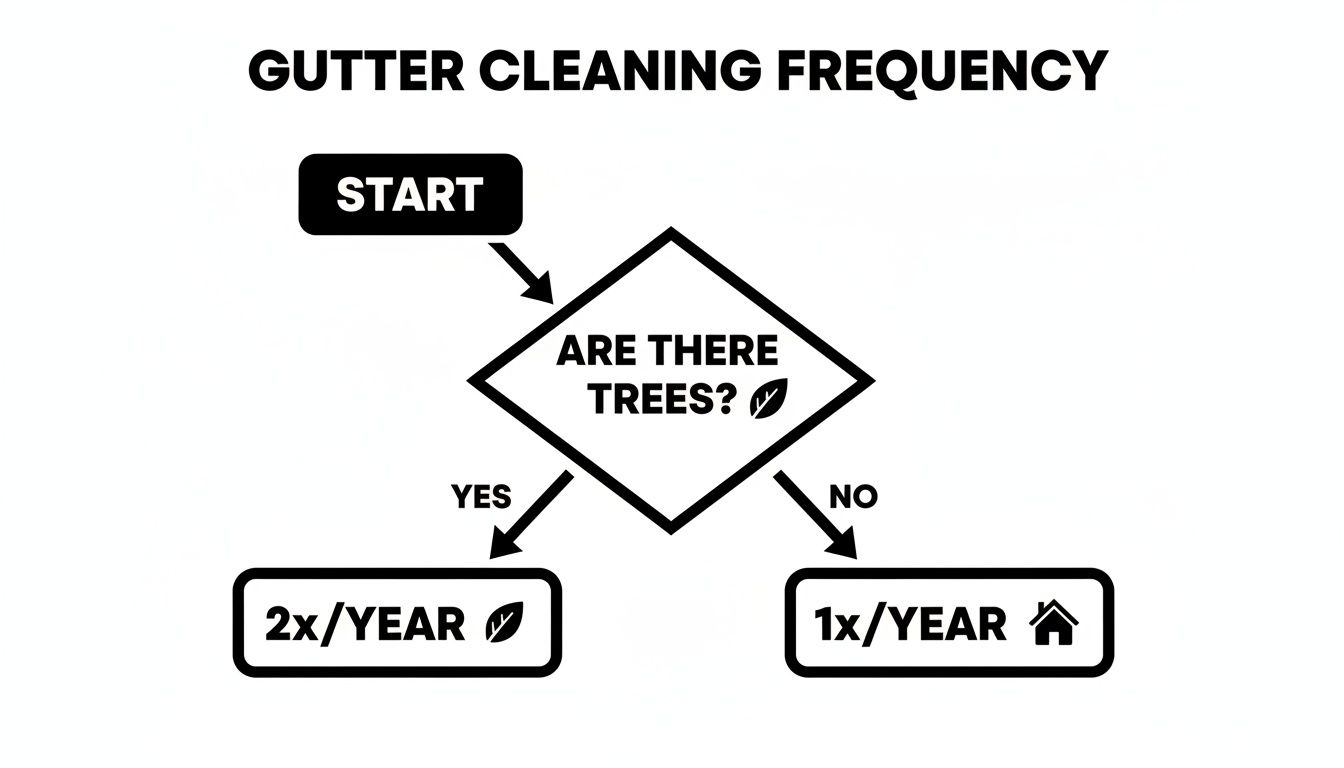
As you can see, the moment trees enter the picture, the recommended cleaning frequency doubles from once to twice a year, at a minimum.
Answering Your Common Questions
It's completely normal to have questions when you're trying to figure out what’s best for your home. Here’s a common one I hear from folks around Abilene.
Question: I only have a couple of small mesquite trees in my yard. Do I really need two cleanings a year?
Answer: That's a fair question. While a few small trees won't dump the same amount of debris as a huge oak, they still contribute to clogs—especially when their fine leaves mix with our local dust. For homes with just a little tree cover, one very thorough annual cleaning after the fall might be enough. Still, I always recommend a quick second inspection after the spring pollen season. It's a wise and cheap bit of prevention. It's always better to check and find them clear than to skip it and risk a messy overflow.
Signs Your Gutters Are Crying Out for Help
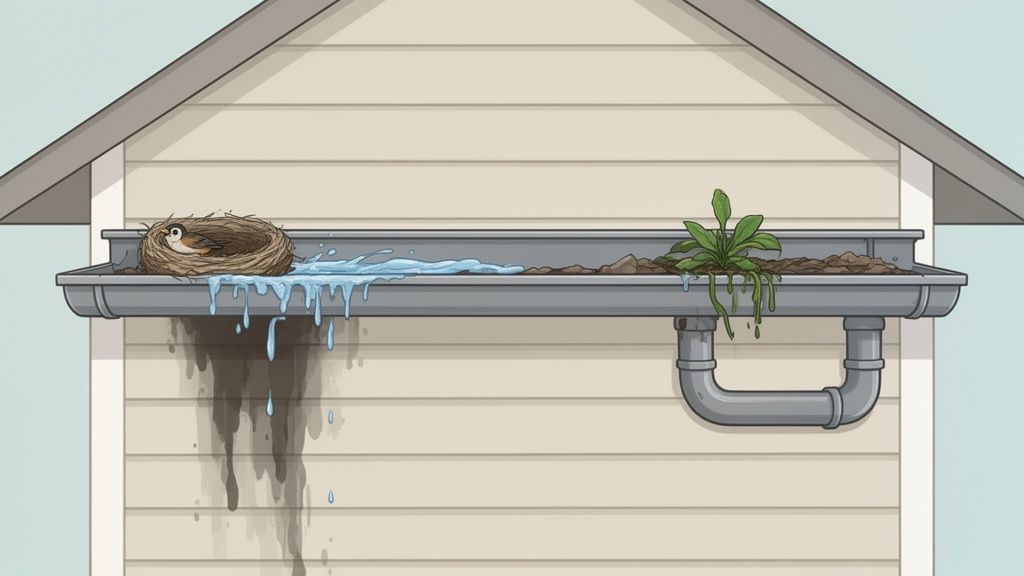
While having a cleaning schedule is great, your house has its own way of telling you when things are past due. If you learn to spot these signals early, you can jump on a small clog before it turns into a massive headache.
I learned this the hard way. A few years back, I noticed some faint, dark streaks on my siding and just figured it was dirt from a West Texas storm. A month later, I discovered a huge clog was forcing water to cascade over the edge. That "dirt" was actually the beginning of wood rot eating away at my trim. That experience taught me to pay close attention to what my house is telling me.
What Your House Is Trying to Tell You
Let's go over some of the most common red flags I see on homes right here in Abilene. Recognizing them is the first step in preventing serious water damage.
A question I get all the time is about wildlife. So, "Should I be worried if I see birds or squirrels on my roof?"
My answer is, yes, if they’re making frequent trips to your roofline, you should be concerned. Gutters packed with leaves and twigs are the perfect sheltered spot for them to build a nest. It might seem innocent, but these nests create dense, stubborn blockages that can stop water flow completely.
Another critical warning sign is seeing your gutters sag or pull away from the house. Gutters are only meant to handle flowing water, not hold it. When they get clogged, they fill up with debris and standing water, becoming incredibly heavy. A single gallon of water weighs over 8 pounds, and that immense weight will tear gutters right off the fascia board, leading to expensive repairs for both the gutter system and your roof.
Your home gives you clear visual cues long before a catastrophic failure happens. Learning to read these signs—from water stains to sagging sections—is the most effective way to stay ahead of expensive repairs.
More Telltale Signs of a Clog
Beyond wildlife and sagging, a few other obvious signs mean it's time to get the ladder out or make a call.
- Plants Sprouting from Your Gutters: If you see little green shoots peeking over the edge, it means enough dirt and gunk have collected to support plant life. That’s a sure sign of a deep, well-established clog.
- Water Stains on Your Siding: Dark streaks or patches of discoloration on the siding right below your gutters are a dead giveaway that water is overflowing instead of draining where it should.
- Water Pooling at the Foundation: Puddles forming around your home’s foundation after a rainstorm usually mean the downspouts are blocked. Water isn't being channeled away from the house, and it's collecting right where you don't want it.
This standing water is more than just a muddy mess; it’s an open invitation for pests. If you're fighting a losing battle with mosquitoes, clogged gutters are often a primary breeding ground. You can find out more in our guide on how to get rid of mosquitoes.
Your Seasonal Gutter Maintenance Calendar for Abilene
Knowing why you need to clean your gutters is one thing, but knowing when is the real key. To make it easy, here’s a simple rhythm to follow that’s built specifically for our West Texas weather. This is the schedule I stick to for my own home, and it’s perfect for keeping ahead of problems, even for busy families over at Dyess AFB.
Late Spring Cleaning (May – June)
Your first big clean-out of the year should land right after our spring storm season wraps up. More importantly, you need to wait until the local oak trees are completely done dropping their pollen tassels. Those things are a nightmare in Abilene, mixing with spring rain to form a thick, stubborn sludge that clogs everything.
I learned this the hard way one year. I cleaned my gutters in early April, thinking I was being proactive. A week later, a huge storm rolled through right as the live oaks let go of their tassels. Just like that, my gutters were backed up all over again. Waiting until late May or early June means you only have to do the job once.
Late Fall Cleaning (October – November)
The second, and arguably most critical, cleaning happens in the fall. You'll want to get this done after most of the leaves are down but before winter truly arrives. The goal is to clear out all the leaves, twigs, and dust that have piled up over the summer and fall.
Why is a pre-winter cleaning so vital in Texas? We don't get massive snowfalls, but we do get ice. Even a little bit of water left in your gutters from a fall shower can freeze overnight. When water freezes, it expands by about 9%. That expansion exerts incredible force, easily cracking gutters or ripping them right off your fascia boards.
Think of this fall cleaning as your number one defense against expensive ice damage.
But What About Our West Texas Dry Spells?
I get this question all the time: "It hasn't rained in months. Do I really need to worry about my gutters?"
The answer is a definite yes. During those long, dry, and windy stretches, our gutters don't fill with water—they fill with dust, dried leaves, and fine dirt. This creates a bone-dry pile of debris that’s essentially tinder. The moment we get a good downpour, that dry mess instantly turns into a heavy, mud-like dam, causing an immediate blockage. Sticking to a schedule means you’re clearing that debris out long before it has a chance to become a problem.
DIY Gutter Cleaning vs. Hiring a Professional
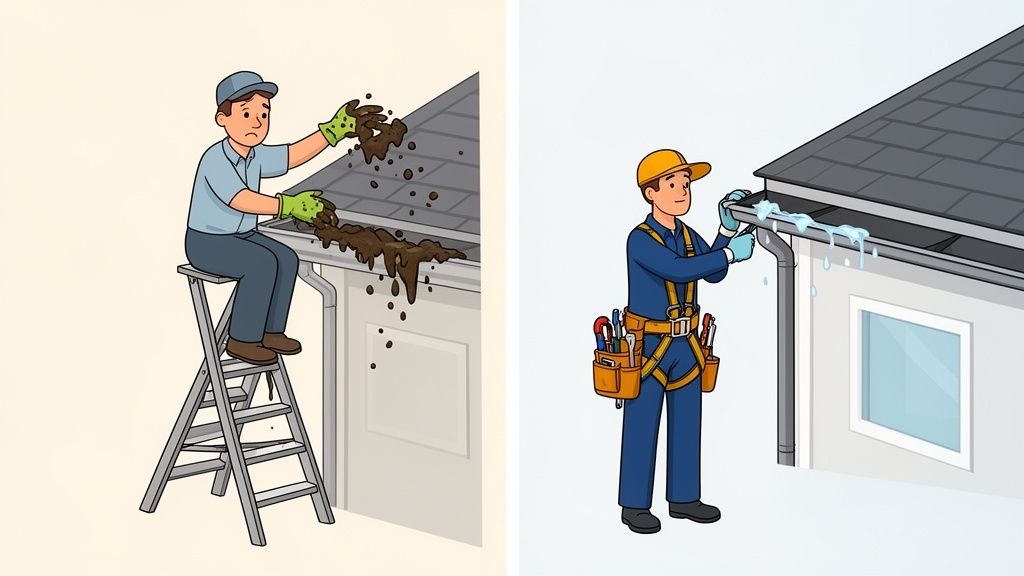
Alright, so you know your gutters need cleaning. The big question now is: who's going to do it? The DIY route can look tempting—a way to save a few bucks on a Saturday. But it’s critical to be realistic about what the job actually involves. It’s often a much bigger, messier, and riskier project than most Abilene homeowners anticipate.
I’ll admit, I tried it myself. Once. I burned an entire afternoon teetering on a ladder, getting coated in a foul mix of wet leaves and grit. I thought I did a great job, but I missed a clog hidden deep in a downspout. The very next rainstorm sent a waterfall cascading over the edge, making it painfully clear my hard work was for nothing.
That one experience was enough for me. I quickly decided my time and, more importantly, my safety were worth more than the cost of calling in a pro. It’s a lesson many of us in West Texas learn the hard way.
The Gritty Reality of DIY Gutter Cleaning
Thinking of tackling this yourself? It takes more than just a ladder and some work gloves. Before you commit, you really need to weigh the downsides.
- Serious Safety Risks: Ladder accidents are one of the top causes of injuries around the house. All it takes is a wobbly leg, an unseen wasp nest, or reaching just a little too far to cause a serious fall.
- The Mess is Real: That stuff in your gutters isn't just a few dry leaves. It’s a heavy, wet, and often smelly sludge of decomposed muck, dirt, and shingle granules that gets absolutely everywhere.
- How Effective Are You, Really?: Without professional tools and a trained eye, it's incredibly easy to miss a stubborn blockage. This leaves you with a false sense of security right up until the next storm rolls through.
Is Hiring an Abilene Pro Actually Worth It?
This comes up all the time, and my answer is always a firm "yes." When you hire a professional, you're not just paying for someone to scoop out leaves. You're investing in safety, true effectiveness, and expert knowledge.
A good technician will spot problems you'd never see from a ladder. They can identify things like an improper gutter pitch that causes water to stand still, hidden rot in the fascia boards, or the first subtle signs of roof damage. Catching these things early can save you from huge repair bills down the line.
Hiring a professional service isn’t just about cleaning. It's about peace of mind. You’re paying for the assurance that the job was done safely and completely by someone who knows exactly what to look for.
The numbers back this up. The professional gutter cleaning market is on track to become a $9.1 billion industry by 2033. That kind of growth happens when homeowners realize that professional maintenance isn't a luxury—it's essential for protecting their biggest investment.
In the end, it really comes down to a simple cost-benefit analysis. For a relatively small investment, a service like ours saves you time, keeps you safely on the ground, and guarantees your gutter system is working exactly as it should. You can learn more about our professional gutter services in Abilene and let us take this chore off your hands for good.
Common Questions We Hear Around Abilene
After walking through all the details of gutter care, you might still have a few things on your mind. That's perfectly normal. In fact, we tend to hear the same great questions from homeowners all over town, so let's tackle them head-on.
Are Gutter Guards Worth It in West Texas?
This is a question we get all the time. Gutter guards can be a huge help, especially for blocking the big stuff like oak leaves and twigs that constantly seem to find their way onto our roofs. They do a solid job with that.
But they aren’t a magic, one-and-done solution out here. The real challenge is our fine West Texas dust and the heavy spring pollen. When that mixes with rain, it creates a thick sludge that can easily slip right through the mesh or slots in most guards, eventually building up a solid layer of muck underneath.
So, while you’ll still need to have your gutters checked, installing guards can often stretch your need for a full, professional cleanout from twice a year to just once every 1-2 years.
What Does Gutter Cleaning Typically Cost in Abilene?
The price really comes down to a few key factors: the size of your home, whether it's one or two stories, and just how packed the gutters are.
For a standard single-story home here in the Abilene area, you can generally expect the cost to land somewhere between $150 and $250. A two-story home will naturally cost more, as it requires taller ladders, extra safety gear, and more time. When you think about it, it's a pretty small investment to head off water damage repairs that can easily run into the thousands.
Do Clogged Gutters Actually Attract Pests?
Absolutely, and it's a bigger problem than most people realize. That standing, murky water trapped in clogged gutters is the perfect breeding ground for mosquitoes—something we all deal with enough as it is.
It goes beyond that, too. The damp, decaying leaves and gunk create an inviting home for ants, roaches, and even rodents looking for a safe place to nest. I was at a client's house once where we found a massive wasp nest that had completely blocked a downspout. Keeping your gutters clean is a surprisingly effective part of your home’s overall pest control strategy.
Don’t underestimate what happens when you ignore your gutters. It’s a chain reaction of expensive damage, starting with water spilling over, eroding your landscaping, and pooling against your home's foundation.
From there, the overflow soaks your siding and fascia boards, inviting wood rot and mold. Before you know it, the sheer weight of the water and debris can bend the gutters themselves or even pull them away from your house entirely. That’s when you’re looking at a full replacement—a whole list of problems that are completely preventable with simple, routine maintenance.