


Navigating the Abilene real estate market can feel like a whirlwind, whether you’re buying your first home or selling your fifth. Before you get swept up in the excitement, the single smartest move you can make is scheduling a professional home inspection in Abilene, TX. It’s your best line of defense against surprises that could cost you thousands down the road.
Why a Home Inspection Is Your Smartest First Move in Abilene
I still remember the mix of excitement and anxiety when I bought my first place here. The list of unknowns felt a mile long, but my best decision by far was hiring a great inspector. In a market like Abilene's, this isn't just a box to check—it’s a powerful tool that protects your investment and gives you real leverage.
For me, that inspection near the Abilene Christian University campus uncovered an HVAC system on its last legs. Replacing it would have set me back thousands right after moving in. With that report in hand, I had the power to go back to the seller and negotiate a much better deal.
What Is a Home Inspection Anyway?
A question I get asked all the time is, "So, what exactly is a home inspection?"
Think of it as a top-to-bottom physical for the house. A licensed, impartial inspector will visually examine the home’s major structures and systems—everything from the foundation right up to the shingles on the roof. Their job is to give you a detailed, objective report on the property's condition on the day of the inspection.
A home inspection isn't a simple "pass" or "fail" test. It’s an unbiased evaluation that paints a clear picture of the home's overall health, letting you make a final decision based on facts, not just feelings.
This guide is designed to walk you through exactly why this step is so crucial, especially right here in our local market.
Before we dive deeper, here's a quick snapshot of the current inspection landscape in Abilene.
Abilene Home Inspection At a Glance 2026
This table summarizes the key numbers you need to know as you plan your inspection.
| Metric | Abilene Average |
|---|---|
| Average Cost | $350 – $550 |
| Inspection Time | 2 – 4 hours |
| Report Delivery | Within 24 hours |
| Market Pace | Homes pending in 13 days |
These figures show just how quickly things move here, reinforcing why having a trusted inspector ready to go is so important.
Why Is an Inspection So Important in Abilene Specifically?
First-time buyers often ask me, "Is a home inspection really that big of a deal in a fast market?" The answer is a resounding yes. In fact, it's more important when things are moving quickly.
The Abilene market doesn't wait for anyone. In early 2026, the average home value shot up to $206,199, a 4.1% increase in just one year. With homes going under contract in an average of 13 days and median sale prices hitting $250,500, you have almost no time to spot serious issues on your own. You can see these fast-moving trends for yourself by exploring current Abilene market data on Zillow.
A professional inspection gives you four huge advantages in this fast-paced environment:
- Uncover Hidden Problems: An inspector is trained to see what you can't, from the subtle signs of foundation trouble common in West Texas to outdated wiring hidden behind the walls.
- Gain Serious Negotiating Power: That inspection report is your leverage. It gives you a factual basis to ask the seller for repairs, a credit toward closing costs, or a reduction in the sales price.
- Get a Homeowner's Manual: The final report is more than just a list of problems; it’s your personalized roadmap for future maintenance, helping you budget for what needs attention now and what can wait.
- Secure Your "Out": If the inspection uncovers a deal-breaker—like a cracked foundation or a failing roof—your contract's inspection contingency clause typically lets you walk away from the purchase and get your earnest money back.
Getting Down to Brass Tacks: What an Abilene Home Inspector Really Looks For
One of the first questions I always get from buyers is, "So, what does a home inspector actually check?" It's a fantastic question, because a professional inspection is a world away from just casually walking through a property. Every licensed inspector in Texas has to follow a detailed process laid out by the Texas Real Estate Commission (TREC).
You can think of a standard home inspection in Abilene, TX as a thorough physical for the house. The inspector is checking the home's five core systems—its fundamental anatomy, if you will. These are the major components that really determine if a house is safe, livable, and a sound investment.
The Five Core Systems on the Checklist
An inspector moves through a home with a practiced eye, evaluating hundreds of different components. But their main focus always comes back to these five key areas:
- Foundation: This is a big one for us in West Texas. Our expansive clay soil can be tough on foundations, so inspectors are trained to spot tell-tale signs of stress and movement. They’re looking for cracks in the brick outside, fissures in interior walls, and floors that are no longer level. Even doors and windows that stick can be a red flag.
- Roof: The inspector will get a good look at the condition of the shingles, the flashing around chimneys and vents, and the gutters. They're hunting for any signs of hail damage, advanced wear and tear, or shoddy installation that could eventually cause a leak.
- Plumbing: This part of the inspection involves checking the water pressure throughout the house, scanning for active leaks under every sink and around toilets, and making sure all drains are working properly. They’ll also check out the water heater to note its age and see if it's functioning as it should.
- Electrical: Here, the inspector tests a representative number of outlets (including safety GFCIs and AFCIs), opens up the main electrical panel to look for hazards like old wiring or overloaded circuits, and confirms that switches and light fixtures are working correctly.
- HVAC System: With our brutal Abilene summers, this is non-negotiable. The inspector will run both the air conditioning and the heating to make sure they are operational and assess the general age and condition of the units.
A friend of mine was under contract for a house over near Dyess Air Force Base that looked absolutely perfect on the surface. But the inspector’s trained eye caught some faint wall cracks and a master bedroom door that didn't shut quite right. These were subtle clues pointing to early-stage foundation issues, a discovery that likely saved them from a $15,000 repair down the line.
This visual really sums up how the technical details of an inspection lead to what every buyer truly wants.
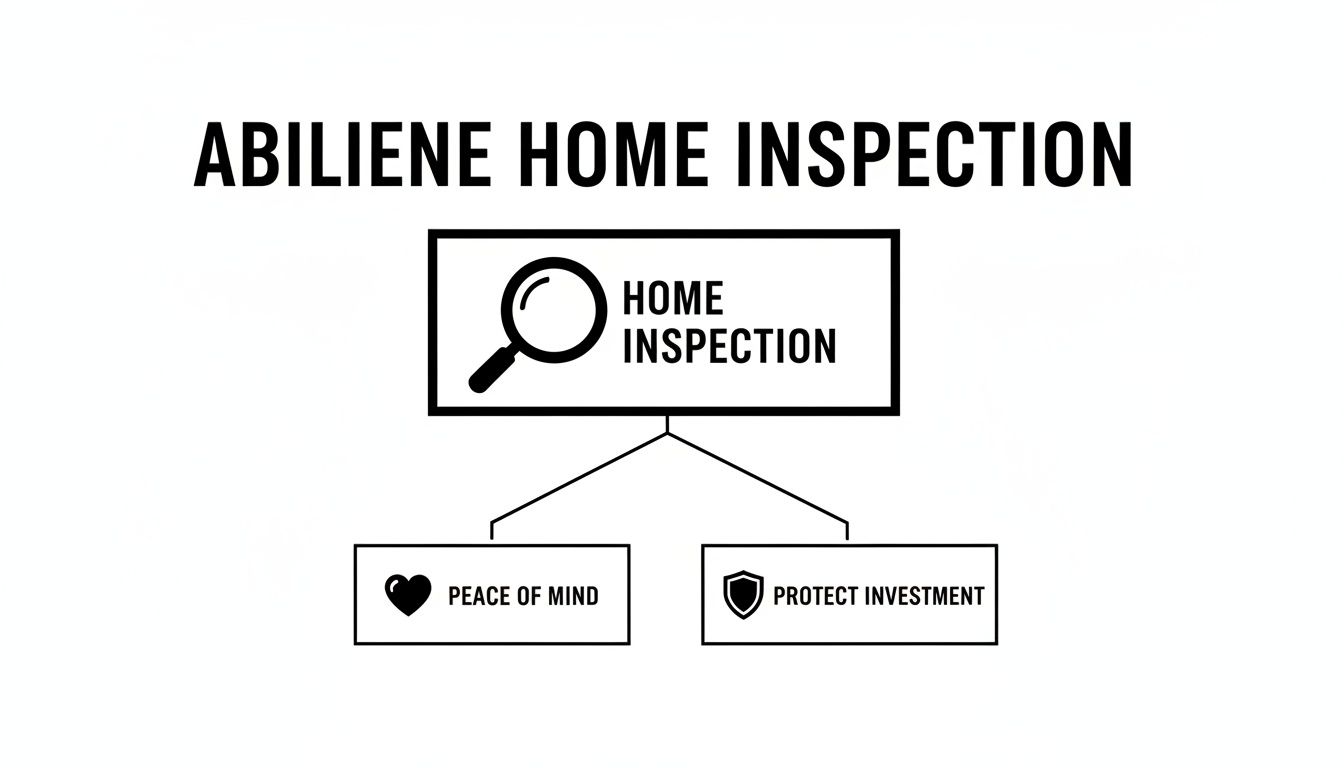
It all flows from one thing to the next. The technical process gives you the knowledge, which in turn gives you peace of mind and protects your financial investment.
What a Standard Inspection Doesn't Cover
A common question that follows is, "So the inspector checks everything?" Not quite. Knowing what an inspection includes is only half the battle; you also need to understand its limitations. The inspector's job is to assess the home's core functions and structural safety, not to nitpick its cosmetic condition.
So, what kinds of things are left out of a standard report?
A general home inspection is a non-invasive, visual examination of the home's accessible areas. It is not technically exhaustive and does not include items that are purely cosmetic or require specialized testing.
This means you shouldn't expect your report to list every little imperfection. Here are a few things that typically fall outside the scope of a standard home inspection in Abilene, TX:
- Cosmetic Issues: Things like scuffed paint, worn-out carpet, or minor dings in the drywall won't make the report.
- Outbuildings: Detached garages, sheds, and workshops usually aren't included unless you specifically ask for them to be added to the inspection.
- Specialized Items: Things like swimming pools, hot tubs, septic systems, and private water wells all require their own separate, specialized inspections from a qualified pro.
- Environmental Hazards: A standard inspection doesn't test for things like mold, asbestos, radon, or lead-based paint. These all require specific environmental tests.
- Pest Infestations: While an inspector will absolutely note any visible wood damage or signs of critters, a formal Wood-Destroying Insect (WDI) report is a completely separate inspection. For any Texas homebuyer, looking into dedicated pest control services in Abilene is an essential step.
Understanding the scope from the get-go helps you manage your expectations. It lets you read the final report with clarity, knowing exactly what was checked so you can focus on the issues that genuinely impact the safety, function, and value of your potential new home.
Common Problems Found in Abilene Homes
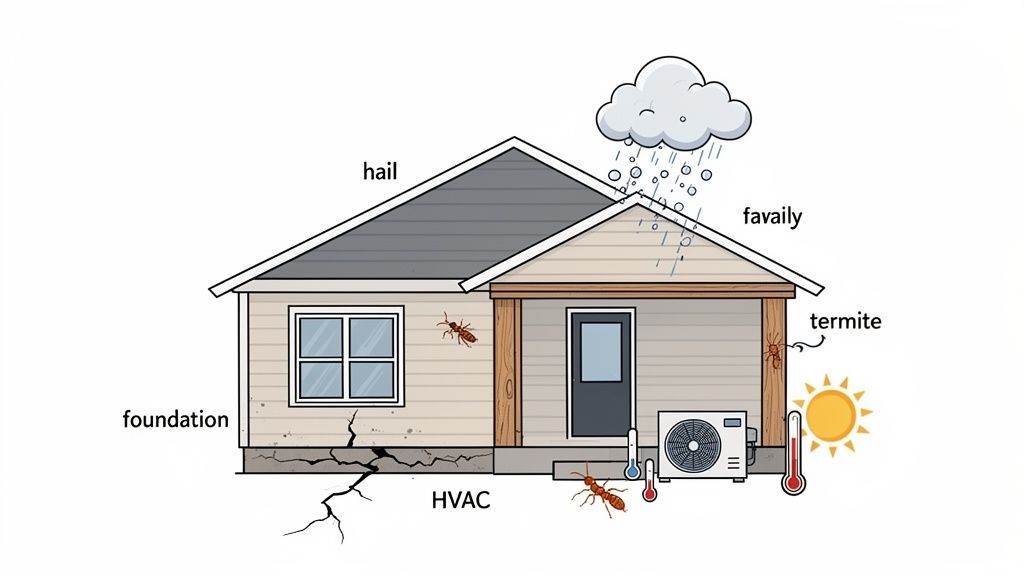
One of the first things people ask me is, "What kind of problems are specific to homes around here?" Every town has its quirks, and the houses built there reflect that. West Texas is certainly no different. A seasoned local inspector knows exactly what regional red flags to watch for, but as a buyer or seller, you should know them, too.
Knowing the answer gives you a huge advantage. It turns a standard home inspection in Abilene, TX into a focused investigation, making sure you don't miss the issues that really matter in our corner of the country.
The Ground We Stand On: Foundation Issues
The single biggest headache for homeowners in the Big Country lies right under our feet. Abilene is built on expansive clay soil, which acts like a giant sponge. It swells up when it gets soaked and shrinks dramatically when it dries out. This constant push and pull puts tremendous stress on a home's foundation.
An inspector's trained eye will scan for the tell-tale signs of foundation stress. These can be surprisingly subtle at first. They’re looking for things like:
- Stair-step cracks running through the exterior brick or stone.
- Doors and windows that stick, jam, or won’t latch anymore.
- Cracks that suddenly appear in interior drywall, especially over doorways.
- Floors that feel noticeably sloped or uneven as you walk across them.
These aren't just cosmetic issues. They're often the first warnings of significant structural movement that can be incredibly expensive to fix down the road.
Keeping Your Cool: HVAC System Strain
Another make-or-break item on any Abilene inspection report is the HVAC (Heating, Ventilation, and Air Conditioning) system. Our summers aren't just hot; they're long and brutal. That puts a punishing workload on air conditioning units for months on end.
A good inspector will put the HVAC system through its paces, confirming it’s cooling properly, checking for strong airflow, and taking note of the unit's age and overall condition.
I can speak to this from experience. The inspector for my first Abilene home noted that the AC unit, while working, was too small for the house and showing its age. That single observation let me negotiate a credit from the seller, which covered most of the brand-new system I had to install the very next year. It saved me from a miserable first summer and an unexpected $8,000 bill.
Unwanted Guests: Termites and Other Pests
West Texas has its share of critters, but the most destructive by a long shot are subterranean termites. These pests can cause devastating damage, often silently and completely out of sight. While a general home inspector will point out any visible signs of pests or wood damage, they don't perform a specialized pest inspection.
This brings up a critical question I always encourage buyers to ask: "Should I get a separate termite inspection?"
Here in Abilene, the answer is almost always yes. A formal Wood-Destroying Insect (WDI) report is done by a licensed pest control pro. They have the specific training to spot the subtle evidence of an active or past infestation that a generalist might overlook. For a small extra cost, it buys you an enormous amount of peace of mind.
Damage From Above: Roofs and Water Intrusion
Finally, our wild Texas weather creates its own set of challenges, especially for a home's roof. Abilene gets hit with everything from punishing high winds to hailstorms that can absolutely shred roofing materials.
During the inspection, the roof gets a close look. The inspector is searching for:
- Missing, cracked, or "bruised" shingles left behind by hail.
- Damaged flashing around pipes, vents, and chimneys.
- Any evidence of water stains or leaks inside the attic.
Proper water management is also vital. Gutters that are clogged or damaged can send water cascading down right next to the foundation, which only makes those soil expansion problems worse. To see why this is so important, you can learn more in our guide on maintaining gutters in Abilene.
Finding the Right Home Inspector in Abilene
When you've got so much on the line, just Googling "home inspection abilene tx" and picking the first result is a recipe for disaster. So a common question is, "Where do you even begin?" Finding a top-notch inspector who will genuinely have your back takes a little detective work, but it's a step you simply can't afford to skip.
I learned this firsthand when buying my own house. A friend gave me a great recommendation, but I didn't stop there. I treated the process like I was hiring for a critical job—because that's exactly what it is. I checked their credentials, scoured every review I could find, and asked to see examples of their work. That extra effort made all the difference.
First Things First: Licensing and Certifications
Before you do anything else, you need to verify an inspector's license. This is non-negotiable.
In Texas, the Texas Real Estate Commission (TREC) is the governing body for home inspectors. You can, and should, go directly to their website and use their licensee search tool. It's a quick way to confirm their license is active and in good standing. If you can't find them there, it's an immediate red flag. Move on.
Beyond the state license, look for certifications from major national organizations. These aren't required, but they show an inspector is committed to ongoing education and a higher standard of practice. The two big ones you'll see are:
- InterNACHI: The International Association of Certified Home Inspectors
- ASHI: The American Society of Home Inspectors
Seeing these logos on an inspector's website tells you they’re serious about their craft.
Beyond the Paperwork: How to Really Vet Your Inspector
Once you have a shortlist of licensed, certified pros, it's time to dig a little deeper. This is where you separate the good from the great. The speed of Abilene's market adds a layer of urgency here. With only 1.9 months of housing supply and over 65% of listings going under contract in a flash, you need an inspector who is not only thorough but also incredibly responsive. You can see more on these fast-moving trends in our latest market report.
A great inspector is also a great communicator. When you call for the first time, do they take the time to answer your questions, or do you feel like you're being rushed off the phone? That initial conversation tells you a lot about how they'll explain the actual inspection findings.
An inspector's true value isn't just finding problems—it's explaining them in a way you can actually understand. A 50-page report is useless if it's packed with technical jargon that leaves you more confused than when you started.
The Four Questions You Must Ask
Before you hire anyone, get them on the phone and have a conversation. A confident, experienced inspector will have no problem answering these questions. In fact, they should welcome them.
Here’s my go-to list:
- How many years have you been inspecting homes right here in the Abilene area? You want someone who knows our area. Local experience is invaluable for spotting the unique foundation and weather-related issues we see all the time.
- Can I come to the final walkthrough of the inspection? The answer should be an enthusiastic "Absolutely!" This is your single best opportunity to see potential issues with your own eyes and ask questions on the spot.
- How quickly will I get the full written report? In a market this fast, you can't afford to wait a week. The industry standard is within 24 hours, and you shouldn't settle for less.
- Can you send me a sample report? This might be the most telling question of all. A sample report shows you exactly what you're paying for. Is it clear, detailed, and loaded with high-quality photos? Or is it just a vague checklist that leaves you guessing?
Choosing the right inspector in Abilene isn't just about checking a box. It's about finding a true advocate who will give you the clear, unbiased information you need to make one of the biggest financial decisions of your life.
Making Sense of Your Home Inspection Report
So, it's arrived. That massive, 50-page document lands in your inbox, filled with technical jargon and photos of things you never knew existed in a house. For many homebuyers, this is where the anxiety kicks in. But take a breath. The report from your home inspection in Abilene, TX isn't a list of reasons to run away; it's your new home's instruction manual.
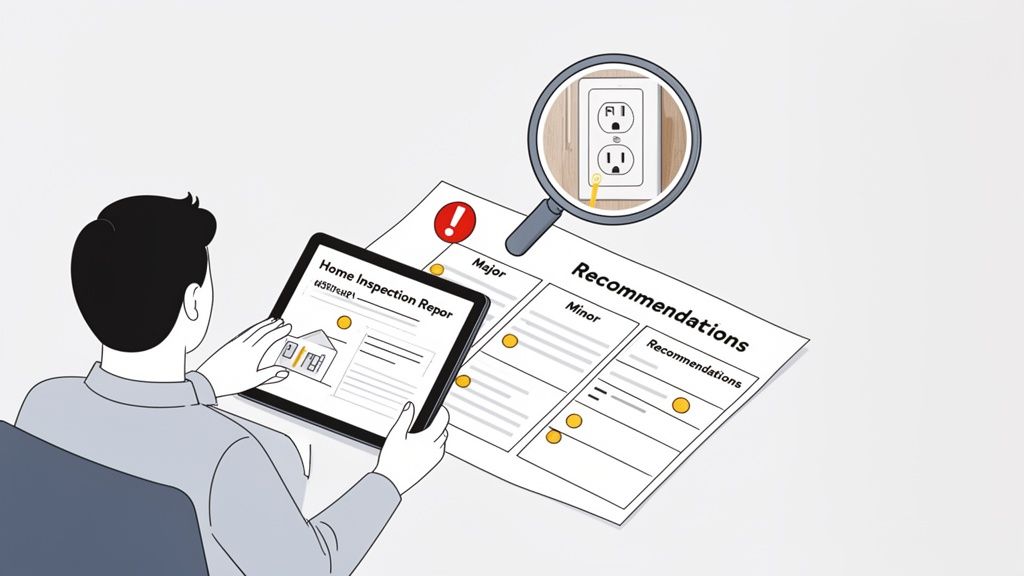
The best first step is to go through it page by page with your real estate agent. They've seen hundreds of these and know how to translate the inspector's findings into a clear action plan. Together, you’ll start sorting everything into three simple piles: the big problems, the small stuff, and the future to-do list.
Major Issues vs. Minor Fixes
One of the first questions I always get is, "How do I know what's a big deal and what's not?" It's all about perspective. Not every item flagged on a report is a five-alarm fire.
Here’s how I encourage clients to think about it:
- Major Defects: These are the showstoppers. We're talking about issues that affect the home's safety or structural integrity—a failing foundation, a roof on its last legs, an overloaded electrical panel, or an HVAC system that simply doesn't work. These are the non-negotiables.
- Minor Repairs: Think of these as the "nuisance list." They're things that need to be addressed but aren't immediate hazards. A drippy faucet, a toilet that won't stop running, a window that’s lost its seal, or a cracked floor tile all fall into this bucket.
- Future Maintenance: These are the "heads-up" items. The component is working right now, but it's getting on in years. That 15-year-old water heater or aging air conditioner is a perfect example. They're not broken, but you need to start budgeting for their eventual replacement.
I remember my own home inspection flagging a missing GFCI outlet in a bathroom. My first thought was, "It's just one outlet, how bad can it be?" My agent immediately set me straight, explaining it was a serious electrocution risk. It was a simple, inexpensive fix, but it was a critical safety upgrade we successfully negotiated for the seller to handle before closing.
What Repairs Should I Ask the Seller to Cover?
Ah, the million-dollar question. The right answer really depends on the specific deal, the seller's willingness to negotiate, and the current market conditions. As a rule of thumb, you want to focus your energy on the major defects and safety hazards.
The point of the negotiation isn’t to have the seller hand you a perfect, brand-new house. The goal is to ensure the home you’re buying is safe, structurally sound, and that its major systems are functioning as they should be.
It's entirely reasonable to ask a seller to repair a faulty electrical subpanel or fix a significant plumbing leak. It’s usually not reasonable to ask them to touch up scuffed paint or replace an appliance that works perfectly fine just because it's not the latest model.
This principle is just as crucial for investors. With Abilene's tight rental market, keeping a property safe and habitable is non-negotiable. Average rents have soared to $1,758—a staggering 33.9% increase year-over-year—and that means maintenance costs and insurance premiums are also on the rise. A thorough inspection helps a landlord get ahead of expensive surprises and ensure their property meets all safety codes. You can learn more about the pressures facing Abilene's rental market on YouTube.
Your real estate agent is your best ally here. They will help you put together a reasonable repair request, which can look like one of three things:
- Ask the seller to complete the repairs with licensed contractors before the closing date.
- Ask for a credit at closing, allowing you to get the work done yourself with contractors you choose.
- Ask for a price reduction on the home to compensate for the cost of the needed repairs.
And remember, if the inspection uncovers problems that are just too big or the seller won't budge, the report is your exit strategy. It gives you the power to walk away from the deal and get your earnest money back. It's your ultimate safety net.
Your Printable Home Inspection Checklist
Walking into a potential new home can feel overwhelming. After you’ve seen a few properties, the details start to blur. Which one had the new roof? Which one had that strange smell in the basement?
To help you stay organized and focused, we've put together a simple checklist you can print and take with you to showings. While it's no replacement for a professional home inspection in Abilene, TX, it’s a fantastic tool for making the most of your initial walkthroughs and spotting obvious red flags right away.
How to Use This Checklist
Think of this checklist as your personal notepad for comparing properties. It helps you look beyond the staging and paint colors to the things that really matter.
For buyers, it’s a way to ask smarter questions and jog your memory later. For sellers, it's a chance to get ahead of the game and see your home through a critical eye before the official inspector ever shows up.
For Sellers: Get Proactive
As a seller, walking through your own home with this list is a powerful exercise. It lets you spot the little things that a buyer will notice, like a running toilet, a sticky door, or a dirty air filter.
Fixing these minor issues beforehand does more than just clean up the final report. It shows the buyer that you've cared for the property, which builds a tremendous amount of trust. Once you’ve handled the small fixes, getting rid of any accumulated clutter can make your space feel bigger and more inviting. If you need a hand with that, our team offers professional junk removal in Abilene to make it a quick and painless process.
For Buyers: A Tool for Comparison
This checklist will help you keep your thoughts organized as you tour different homes. Use the "My Notes" section to jot down anything that stands out—good or bad. Here is a simplified version to get you started.
Home Inspection Preparation Checklist
Use this table during your initial walkthroughs to keep track of each property's condition. For sellers, use it to identify and fix minor issues before your official inspection.
| Area/System | What to Check | My Notes |
|---|---|---|
| Exterior | Look for cracked siding, peeling paint, or signs of foundation issues. | |
| Roof | Check for missing/damaged shingles or signs of water stains on ceilings. | |
| Plumbing | Run faucets and flush toilets. Look for leaks under sinks. | |
| HVAC | Note the age of the unit. Turn it on to see if it works. Check the filter. | |
| Electrical | Test light switches and outlets. Look for exposed wiring or an old panel. | |
| General | Note any unusual odors, signs of pests, or deferred maintenance. |
This list gives you a great starting point for evaluating a home's overall condition. For a more detailed, printable version you can take with you, download our complete PDF checklist.
[Click Here to Download Your Printable Home Inspection Checklist – PDF]
Answering Your Questions About Abilene Home Inspections
Even the most thorough guide can leave you with a few lingering questions. It’s completely normal! I've been helping folks navigate the Abilene real estate market for years, and these are the questions that come up time and time again, whether you're a military family PCSing to Dyess or a lifelong Texan buying your next home.
How Much Does a Home Inspection Cost in Abilene TX?
Let's get right to it—the question I get asked most often. For a standard home inspection here in Abilene, you should budget somewhere between $300 and $500.
Now, that's a general ballpark. The price can tick up for a much larger or historically older home, simply because the inspector needs more time to be thorough. Also, keep in mind that specialized inspections, like a termite or pool inspection, will be separate line items. Given our West Texas climate, I almost always tell my clients that a wood-destroying insect (WDI) inspection is money well spent.
Do I Have to Be There for the Whole Inspection?
You don't, but I really think you should try to be there for the end of it. The full inspection can take a good 2-4 hours, and you don't need to shadow the inspector the entire time.
But showing up for that final walkthrough? That’s gold. I did it when I bought my own house, and it was invaluable. The inspector can physically point to what they found, explain its significance, and answer your questions on the spot. It makes the report come to life in a way that words and pictures alone just can't.
What Happens if the Inspection Finds Big Problems?
Finding a major issue can feel like a punch to the gut, but it rarely means the deal is dead. It simply means it's time to talk. This is where your real estate agent becomes your key negotiator. You've got a few solid options:
- Ask for Repairs: You can ask the seller to have the specific issues fixed by a qualified pro before closing.
- Negotiate a Credit: Sometimes it's easier to ask for a credit at closing. This gives you the cash to oversee the repairs yourself with your own chosen contractors.
- Lower the Price: You can ask the seller to reduce the sale price to compensate for the future repair costs.
- Walk Away: Your contract’s inspection contingency is your safety net. If the problems are too big or you can't reach an agreement, you can walk away from the deal and get your earnest money back.
Can a House "Fail" an Inspection?
This is a huge misconception. A house can't actually "pass" or "fail" an inspection because it's not a test.
Think of an inspector as a reporter, not a judge. Their job is to provide an objective, detailed account of the home's condition on that specific day. The report lists the facts—the good, the bad, and the so-so. It's up to you to read their report and decide if the home is right for you.
Do I Really Need an Inspection for a Brand-New House?
Absolutely! I hear this one a lot: "It's new construction, so it must be perfect, right?" I always pump the brakes on that assumption.
Even the most reputable builders are human, and subcontractors make mistakes. An independent inspection on a new build is your final quality control check. It's a chance for a neutral expert to confirm everything was done right before you sign on the dotted line and the builder's warranty period starts ticking.
An inspector might spot anything from missing attic insulation and poorly sealed HVAC ducts to small but important drainage issues. Catching these things early saves you from discovering them years later when the fix is more complicated and comes directly out of your pocket.