


That big oak or mesquite in your yard is a beautiful West Texas landmark, but if you're not careful, it can quickly turn into a liability. Professional tree trimming in Abilene, TX, isn't just about keeping things looking tidy; it’s a crucial investment in your home's safety, your property's value, and the long-term health of your landscape.
Why Invest in Professional Tree Trimming in Abilene
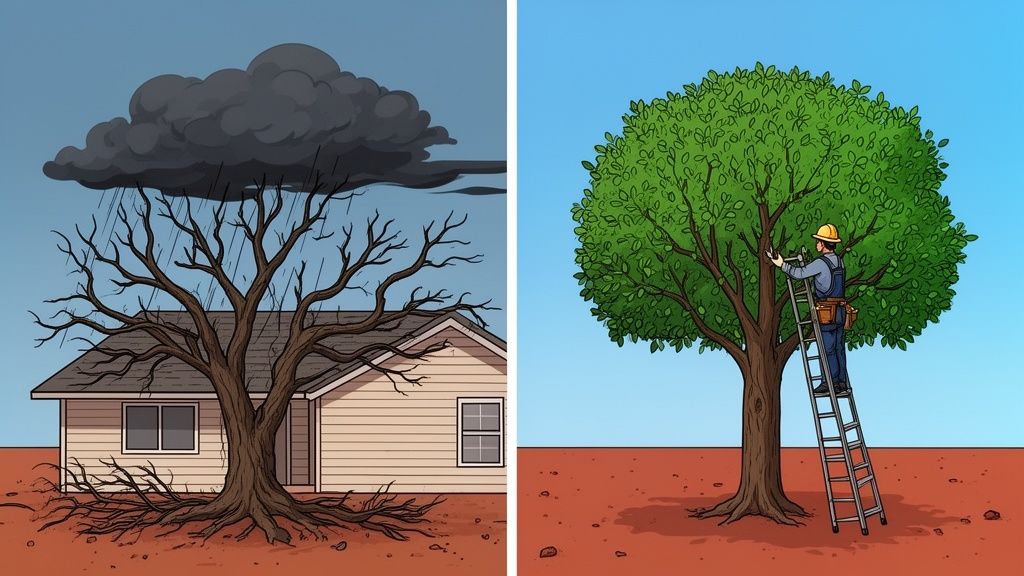
It’s a fair question many homeowners ask: Is paying for a professional tree service really worth it? After all, you can pick up a chainsaw at any local hardware store. But the gap between a few DIY cuts and an expert’s strategic pruning is enormous.
Is professional tree trimming really necessary?
Absolutely. I learned this lesson the hard way a few years back. We had a gorgeous, mature oak in our front yard that I’d pretty much ignored for years. Then, one of those surprise West Texas windstorms blew through in the middle of the night. I was jolted awake by the unmistakable crack of a heavy limb breaking. I spent the rest of the night just waiting for it to come crashing through our roof. Thankfully, it only clipped the gutter on its way down, but it was a sobering wake-up call. That experience taught me that being proactive about tree care isn't optional around here. An arborist later pointed out that the limb was already weak and diseased—something a professional would have spotted and safely removed months earlier.
How does tree trimming protect my home?
A neglected tree isn't just a potential mess; it's a liability. Overgrown branches can tear up your roof, fall on cars, or even become a nuisance that gets you into trouble with your neighbors or the city. A professional arborist doesn’t just show up and start sawing away. They make specific, deliberate cuts designed to:
- Improve Tree Structure: By removing weak, crossing, or poorly attached branches, an expert helps the tree build a stronger frame. This is essential for it to hold up against the high winds and ice storms we sometimes get in Abilene.
- Boost Tree Health: Thinning out the canopy lets more sunlight and air reach the inner branches. This simple step drastically lowers the risk of fungal diseases and insect problems, which is critical for helping trees survive our brutal summer droughts.
- Protect Your Property: A pro knows exactly which limbs pose a threat. They'll strategically remove branches hovering over your house, garage, or—most importantly—power lines, preventing thousands of dollars in potential damage.
Ultimately, putting your trees in professional hands is an investment in your peace of mind. For a beautiful yard that is also safe and well-maintained, explore our guide on Abilene landscaping services to see how it all fits together.
How Much Does Tree Trimming Cost in Abilene?
Let's get straight to the question every Abilene homeowner asks: "What's this going to cost me?" When you're trying to budget for home maintenance, you need real numbers, not vague estimates. The truth is, there’s no single price tag for tree trimming.
Think of it this way: you wouldn't expect a simple paint touch-up to cost the same as repainting your entire house. The same logic applies to trees. A quick shape-up for a small decorative tree is a completely different job than wrangling a massive pecan tree whose branches are looming over your roof.
What goes into a tree trimming quote?
So, when a professional from a tree trimming service in Abilene, TX, walks your property, what are they looking for? It's more than just a glance at the tree's height, though that's a huge part of it.
-
Tree Size and Height: This is the biggest factor. A tree under 30 feet is one thing. A 60-foot oak that requires a climber with specialized rigging is a whole other ballgame in terms of time, risk, and equipment.
-
Accessibility: Can a crew pull a bucket truck right up to the tree in your front yard? Or is it tucked away in a tight backyard space, squeezed between the house and a fence? If they can't use heavy equipment, the job becomes more labor-intensive, which is reflected in the price. I once had a tree in a backyard that was completely inaccessible by truck. The crew had to do everything by climbing, which took more time and skill, and the quote reflected that.
-
Tree Health and Condition: A routine trim on a healthy tree is pretty straightforward. But if you're dealing with a tree riddled with disease or dead, decaying limbs (we call those widow-makers for a reason), the job gets more dangerous. Working around power lines also adds a layer of complexity and risk, which naturally influences the cost.
What are the average tree trimming prices in Abilene?
To give you a solid starting point for your budget, we can look at what your neighbors are typically paying. Local data shows the average cost for tree pruning in our area is right around $400. Most homeowners find their final bill lands somewhere between $180 and $650. If a company charges by the hour, you can expect to see rates around $127.23 per hour for a standard two-person crew. You can dig into the numbers yourself and explore these local Abilene tree care costs.
As a personal example, I recently had a crew out to my own place. Two of my mesquite trees were getting out of control, with branches starting to scrape cars in the driveway. The final invoice was right in that average range. It was a relief because it meant no surprises, and I could plan my other landscaping projects for the season.
One last tip: always clarify what's included. A standard quote should cover the trimming labor and basic cleanup. But services like hauling away every last branch or grinding a stump down are often add-ons. Asking about this upfront ensures the number on the estimate is the number on the final bill.
The Best Time of Year to Trim West Texas Trees
Here in the Big Country, timing is everything. That’s especially true when it comes to taking care of your trees. Abilene’s climate is no joke, and knowing when to trim is just as important as knowing how. It’s the difference between a healthy, thriving tree and one that’s stressed out and vulnerable to disease.
When is the best time to trim my trees?
For most of our trees, particularly the live oaks we all love, the ideal time for any major pruning is during the coldest part of the year. Think November through February. When a tree is dormant, trimming is far less stressful for it. More importantly, the fresh cuts are much less likely to attract the pests and diseases that are active in warmer weather.
I learned this the hard way years ago. I decided to trim my own live oaks in late spring and spent the next few months absolutely terrified about oak wilt. It's a deadly fungal disease spread by tiny beetles drawn to fresh sap, and I had basically put out a welcome mat for them. Now, I won’t touch a live oak for major work outside of the cold winter months when that risk is practically zero.
What about other types of trees or different goals?
While winter is the go-to for big jobs, that doesn't mean it's the only time you can prune. Different trees and different goals call for different timing. Let's break it down for some of our most common local trees.
-
Live Oaks and Pecans: Schedule their heavy structural pruning for the winter. This is your best defense against oak wilt and other nasty fungal issues that thrive in the heat and humidity of our warmer seasons.
-
Crape Myrtles: Everyone loves their summer-long blooms. To get the best show, prune them in late winter or very early spring, right before you see new growth starting to pop. And please, avoid "crape murder"—that's the severe topping that butchers the tree's natural form and leads to weak, spindly growth.
-
General Shaping and Clearance: Need to trim a few branches off the roof or out of the driveway? Light touch-ups like that can be done pretty much any time of year without harming the tree.
Of course, if you see a dead, broken, or clearly hazardous limb, don't wait. That's a safety issue, and it needs to be addressed immediately, no matter what the calendar says. Demand for tree care in Abilene really ramps up in the spring and early summer, with March through June being the absolute busiest months. If you’re planning work during that peak, you’ll want to book well in advance. You can see more on these trends by checking out the seasonal tree service demand data for Abilene.
Warning Signs Your Trees Need a Professional Trim
While your trees can't exactly speak up, they’re constantly sending out signals when something is wrong. Knowing how to read these signs is the key to getting ahead of a problem. A little proactive care now can save you from a massive headache—and a much bigger bill—down the road.
If you know what to look for, you can call for professional tree trimming in Abilene, TX, long before a minor issue turns into a major hazard.
What are the obvious signs of trouble I should look for?
Some of the most common red flags are easy to spot if you just take a moment to look up. These are the kinds of issues that need attention sooner rather than later.
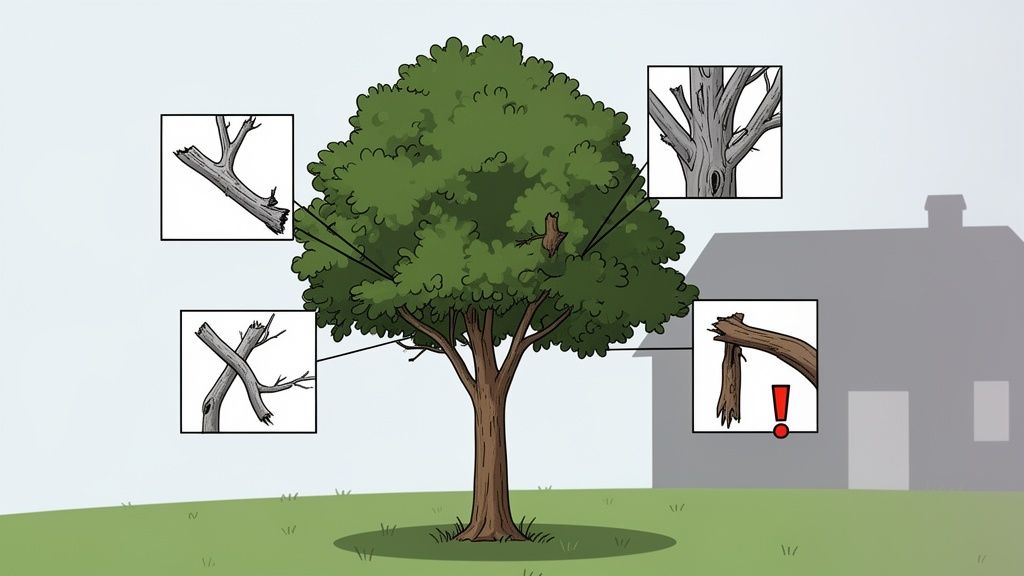
- Dead Branches: Scan the canopy. See any limbs that look brittle, have no leaves, or show peeling bark while the rest of the tree is thriving? Arborists have a grim name for these: "widow-makers." They can snap and fall at any moment, with or without warning.
- Crossing or Rubbing Limbs: When two branches grow into each other, they scrape away their protective bark every time that West Texas wind kicks up. That open wound is an engraved invitation for pests and disease.
- An Overly Thick Canopy: I once had a huge pecan tree that created so much shade, my lawn underneath was just a sad, patchy mess. An arborist explained that the canopy was too dense for sunlight or even rain to penetrate. After a good thinning, the tree looked healthier, and my grass finally had a fighting chance.
What are some more subtle clues that my tree needs help?
Beyond the obvious deadwood, other, more subtle clues can indicate your tree is stressed and needs professional help. These issues can escalate quickly if they aren't handled correctly.
Look for branches that connect to the trunk in a tight "V" shape. These weak joints are prone to splitting, especially under the weight of ice or during high winds. You might also notice signs of decay or cavities forming in the trunk itself, which points to internal weakness.
Sometimes, a pest problem isn't just a pest problem—it's a symptom of a stressed tree. A tree that needs proper trimming has a weakened defense system, making it an easy target for insects. If you're worried that pests are already moving in, our guide on Abilene pest control can help you figure out the next steps. Catching these signs early is step one. Step two is calling in an expert who can fix the problem safely, ensuring your trees stay healthy and beautiful for years to come.
Do I Need a Permit to Trim My Trees in Abilene?
Alright, let's talk about the red tape. Before we fire up the chainsaws and start trimming, there’s a crucial step that can save you a massive headache and a surprising amount of money: checking the rules. When it comes to tree trimming in Abilene, TX, you’re really dealing with two separate sets of regulations—the city's and, if you have one, your HOA's.
It’s easy to assume you can do whatever you want on your own property, but a quick check beforehand is always worth the effort.
Do I need a permit from the City of Abilene?
This is one of the first questions people ask me, and thankfully, the answer is usually a simple one. For the vast majority of tree trimming jobs on private property, the good news is you do not need a permit. If you’re just thinning out the canopy, clearing dead branches, or pruning limbs back from the house, you’re in the clear.
The big exception? Trees in the public right-of-way. That little strip of grass between the sidewalk and the street is a classic example. Any major work on those "street trees" typically requires you to coordinate with the city first. When in doubt, a quick call is cheap insurance.
What about my HOA rules?
This is the one that trips up so many homeowners. Even if the city doesn’t require a permit, your Homeowners Association almost certainly has its own set of rules about what you can and can't do with your trees. These covenants aren't just suggestions; they're legally binding. I can't say this enough: always check your HOA covenants before scheduling any significant tree work.
I had a friend over in a south Abilene neighborhood learn this lesson the hard way. He took down a big, mature tree without checking his HOA rules and got slapped with a nasty fine. A simple five-minute email to the board would have saved him hundreds of dollars and a ton of stress. Common HOA rules often include:
- Approval for Removals: Most will require you to get written permission before taking down any tree over a certain size.
- Species Restrictions: Many have an approved list of tree species you're allowed to plant if you have to replace one.
- Maintenance Standards: Some can even require you to keep your trees trimmed to a certain standard, ensuring they don't become a safety hazard.
What to Expect When You Hire a Tree Trimming Service
Deciding to bring in a professional for tree trimming in Abilene, TX, is a great call for the health and safety of your property. But if you've never hired a tree service before, you might be wondering how it all works. What actually happens between your first call and the final cleanup?
What happens during the initial consultation?
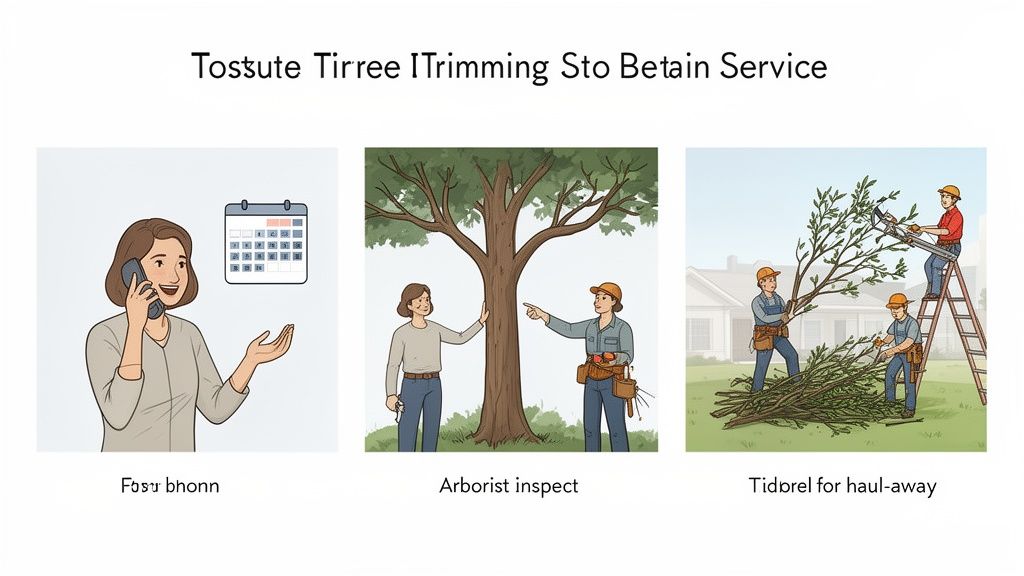
A true professional will schedule a free, on-site visit to give you a proper assessment. Be wary of anyone who gives you a firm price over the phone without seeing the trees first. During this visit, the arborist will:
- Walk the property with you and listen to what you want to achieve.
- Inspect your trees for signs of disease, weak limbs, or structural problems.
- Figure out the safest, most effective way to tackle the job.
- Give you a detailed, written estimate that clearly explains the work and the total cost.
Once you’ve reviewed the quote and given the thumbs-up, the company will get you on the schedule. We find that a clear, step-by-step process works best for all exterior home services, including keeping your gutters clear. You can see how we handle that in our complete guide to professional gutter cleaning.
What happens on the day of service?
When trimming day arrives, the crew will show up with all the necessary equipment, ready to get to work. This is where you can really see the difference between a handyman and a professional arborist crew.
I learned this firsthand when I hired a team for my own property. They called ahead to confirm their arrival, walked the yard with me one last time to review the plan, and were incredibly careful to protect my wife’s flower beds. When they left, you couldn't even tell they'd been there—except for the beautifully trimmed trees.
A professional crew follows a tried-and-true game plan:
- Final Walkthrough: The crew leader will check in with you before a single cut is made, confirming the work order to make sure nothing gets lost in translation.
- Site Prep: They'll create a safe zone by moving patio furniture, garden gnomes, or anything else that could get in the way or be damaged.
- The Work: Certified climbers and ground crew will get to work, using specialized gear to safely trim the trees according to the plan.
- Immaculate Cleanup: This is a big one. After the work is done, the crew will chip the branches, haul away the logs, and rake up every last leaf and twig, leaving your yard spotless.
Frequently Asked Questions About Abilene Tree Trimming
When you're thinking about professional tree care, a lot of questions come up. It's only natural. Let's tackle some of the most common ones I hear from folks right here in Abilene so you can feel confident about taking care of your property.
Is It Cheaper to Trim My Own Trees?
On the surface, grabbing a ladder and a saw seems like a great way to save a few bucks. But from my experience, it almost always ends up costing more in the long run. Without professional-grade safety gear and a deep understanding of tree biology, you're opening the door to serious injury or property damage.
I’ve seen it happen. A homeowner tries to take down a big limb to save some money, only to end up with a trip to the ER and a smashed fence. The final bill was easily double what a professional crew would have charged in the first place. Hiring an insured pro is really about buying peace of mind—it protects you, your property, and your wallet from those expensive "what ifs."
How Often Should My Trees Be Trimmed?
There's no one-size-fits-all answer here; the right timing really comes down to the tree’s age, species, and what it needs to stay healthy.
For West Texas, here’s a good general guideline:
- Mature Trees: For your big, established oaks and pecans, a good structural trim every 3-5 years is usually enough to maintain their health and keep them safe.
- Younger Trees: Those faster-growing trees, like crape myrtles or redbuds, really benefit from a little shaping every 1-2 years. This helps guide their growth and build a strong framework for the future.
Of course, hazards don't wait for a schedule. If you ever spot a dead, broken, or sketchy-looking branch, it needs to come down immediately, no matter what time of year it is.
Will You Haul Away the Branches and Debris?
Yes, absolutely. A thorough, complete cleanup is a non-negotiable part of any professional tree trimming job we do. When the work is done, you shouldn't have to lift a finger.
I always tell people to confirm this when getting a quote from any service. A true professional crew will bring a chipper for the smaller branches, haul away the larger logs, and finish by raking up every last bit of sawdust and leaves. The goal is simple: leave your yard looking even better than when we arrived.