


If you’ve ever found yourself staring at a patchy, yellowing lawn, wondering what you’re doing wrong, I can tell you from years of experience in West Texas: it’s probably not you, it’s the dirt. The real secret to a lush, green lawn that can handle our climate isn’t just about watering or fertilizing—it’s about fixing the very ground your grass is trying to grow in.
Transforming that hard, compacted clay into healthy soil is the single most important thing you can do for your yard.
The Real Reason Your Abilene Lawn Is Struggling
Let's be honest, getting grass to thrive here is tough. You can throw all the water and expensive fertilizer you want at it, but if the foundation is broken, you're just wasting time and money. I've been there myself, staring at a sad-looking lawn and feeling completely frustrated.
This guide is my roadmap for fellow Abilene homeowners. It’s built from my own trial-and-error and the successes I've seen in yards all over town. We’re going to get our hands dirty and build a healthy foundation from the ground up.
Is My Soil Really the Problem?
When a homeowner tells me their lawn is struggling, the first thing I ask about is the soil. Here in the Big Country, the answer is almost always a resounding "yes." Our local soil is the root cause of most lawn care headaches.
Here’s what we’re up against:
- High Alkalinity: Our soil naturally has a high pH. Think of it like a locked pantry—the nutrients your grass needs, like iron, are in the soil but the high pH keeps them locked away. This is why grass turns yellow even after you fertilize.
- Heavy Clay and Compaction: Abilene is known for its dense clay. This heavy soil packs down like concrete, making it nearly impossible for grass roots to dig deep. Compacted soil also blocks water and air from getting to the roots, leading to weak turf that just can't survive a Texas summer.
- Low Organic Matter: Our native soil is seriously lacking in the good stuff—decomposed organic material. This is what helps soil hold moisture, provides a steady food source for your grass, and supports the beneficial microbes that create a healthy soil ecosystem.
The bottom line is simple: a healthy lawn starts below the surface. If you want a truly green yard that can withstand our environment, you have to focus on improving the soil first.
I learned the hard way that just throwing more seed or fertilizer on poor soil is a losing battle. The moment I started feeding the soil instead of just the grass was when everything changed. Poor soil is also an open invitation for weeds. By improving its health, you make your weed control efforts far more effective. If you're in a constant battle with weeds, our guide on how to handle common weeds in Abilene and how to kill them can give you an extra edge.
Let's Talk About Your Dirt: The All-Important Soil Test
Before you spend a dime on fertilizer or seed, you have to know what you're working with. I can't tell you how much time and money I wasted trying to fix my lawn by just guessing. A few frustrating seasons taught me a hard lesson: the single most important first step is a soil test. It’s a complete game-changer.
Think of it as a report card for your yard. Instead of just throwing stuff at the problem and hoping for the best, a soil test gives you a clear, data-driven action plan to improve your soil quality for lush, green grass.
Where can I get a soil test done?
You can get soil test kits from your local AgriLife Extension office or purchase one online. For my first test, I just used a kit I bought from a local garden center. It came with a bag and instructions for mailing my sample to a lab. The process was surprisingly simple and the report I got back was incredibly detailed.
How do I get a good sample?
You don't need any fancy equipment. I just use a simple hand trowel and a clean bucket. To get a sample that truly represents your whole lawn, walk around in a zigzag pattern and grab about ten small scoops from different spots.
Make sure you dig down 4 to 6 inches—that’s where the grass roots are really living. Toss all those scoops into the bucket and mix them together. Now you’ve got a composite sample that gives you the big picture of your lawn's health.
How to Read the Results Without Getting Overwhelmed
When that report comes back, it can look pretty intimidating with all its numbers and charts. For those of us dealing with Abilene soil, you can usually cut right to the chase by focusing on three key things:
- Soil pH: This tells you how acidic or alkaline your soil is. Our local West Texas soil is almost always too alkaline, which is a major problem because it "locks up" vital nutrients, making them unavailable to your grass.
- Nutrient Levels: The report will show you exactly which essential nutrients are missing. In our area, low iron and nitrogen are common culprits behind that sad, yellow look in struggling lawns.
- Organic Matter: This number, shown as a percentage, reveals how much rich, life-giving material is in your soil. Low organic matter means your soil can't hold water well and has a poor, compacted structure.
My very first soil test, for instance, showed a pH of 8.0—that's highly alkaline. It was a huge "aha!" moment. It explained exactly why my grass was yellow and weak, even though I was regularly fertilizing it. The high pH was literally preventing the grass from eating the food I was giving it.
A soil test isn't just data; it's a roadmap. It turns you from a frustrated homeowner into a lawn care strategist, allowing you to apply exactly what your soil needs, right where it's needed.
This targeted approach isn't just more effective; it's also smarter for your wallet. Applying only what’s needed can slash your fertilizer costs by 25-50%. It also has huge environmental benefits, like providing 30% better erosion control—a massive plus during those sudden West Texas downpours. You can learn more about these benefits in this detailed lawn care report from Culpeper SWCD.
Once you have your soil report, this chart will help you decode the numbers and figure out your next steps.
Interpreting Your Abilene Soil Test Results
This table breaks down the most important metrics on a typical soil report, what they mean for your West Texas lawn, and the common ways to address them.
| Metric | Ideal Range for Grass | Common Abilene Issue | What It Means | Quick Fix |
|---|---|---|---|---|
| Soil pH | 6.0 – 7.0 | High (7.5+) | Nutrients like iron and zinc are "locked up" and unavailable to the grass, causing yellowing. | Apply soil sulfur or products with elemental sulfur. |
| Organic Matter | 3% – 5% | Low (<2%) | Soil is compacted, drains poorly, and can't hold onto nutrients or water effectively. | Topdress with high-quality compost. |
| Nitrogen (N) | Medium to High | Low | The key nutrient for green, leafy growth is deficient, leading to weak, pale grass. | Apply a balanced, slow-release fertilizer. |
| Phosphorus (P) | Medium | Often Adequate | Essential for root development. Deficiencies are less common here but can stunt new growth. | Use a starter fertilizer for new seeding. |
Understanding these key metrics is the first step. Once you know what's wrong, you can start making targeted fixes instead of just guessing.
This flowchart is a great visual for how to approach common lawn problems. Notice where it starts.
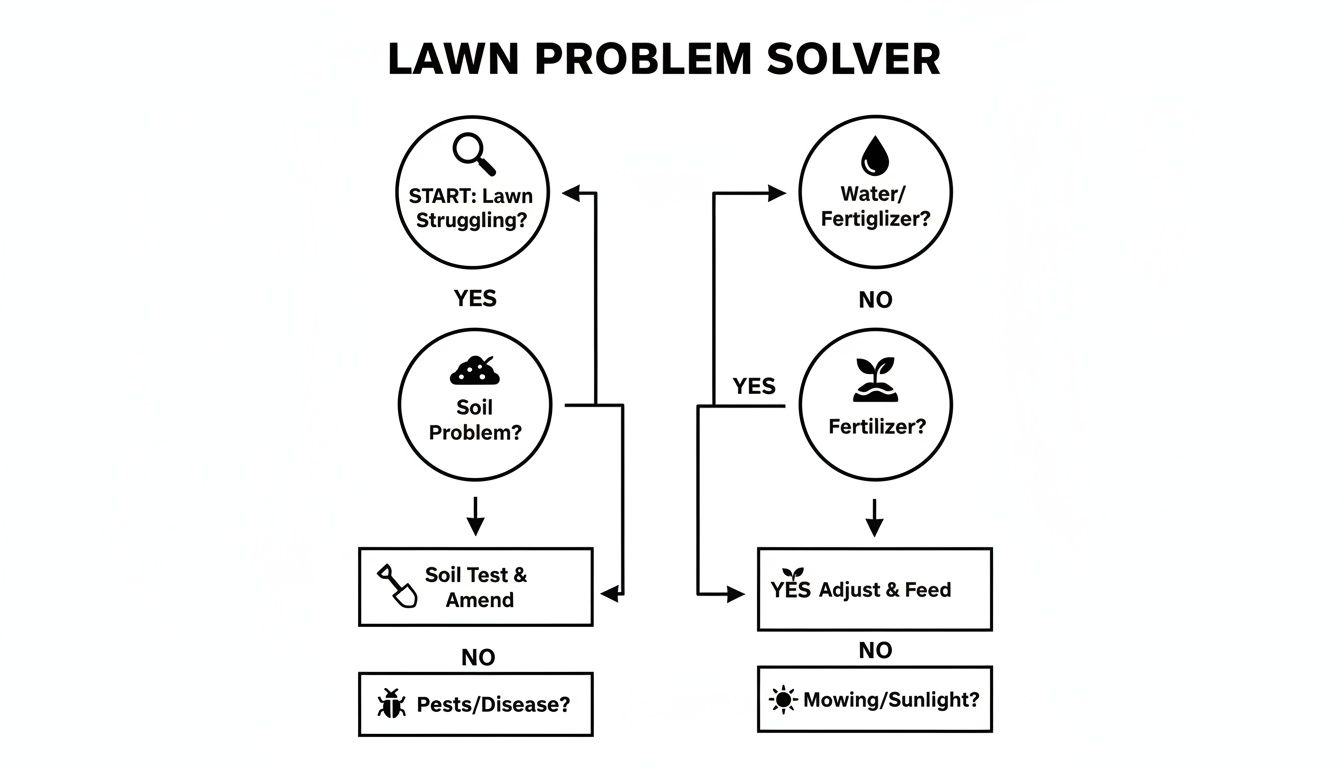
As you can see, before you start questioning your watering schedule or blaming pests, the most logical first step is always to check the foundation: your soil. Getting that right solves a surprising number of lawn headaches.
Building a Healthy Foundation With Soil Amendments
Alright, you've got your soil test results. Now for the fun part: actually building a better foundation for your grass. For most of us here in Abilene, our dense clay soil is practically crying out for some organic matter. Adding the right amendments is how we start to break up that compaction, improve drainage, and make nutrients available to our lawns.
This isn't just about grabbing a random bag of soil from the store and tossing it around. It’s about being strategic. Think of it as giving your soil the specific ingredients it needs to support a tough, resilient lawn that can actually handle a West Texas summer.
What are the best amendments for Abilene soil?
If there's one thing you can do to improve your soil, especially our local clay, it's adding high-quality organic matter. This is the secret weapon for breaking up that dense, concrete-like ground. I saw this firsthand on my own lawn. After a particularly rough, dry season, I decided to topdress the whole yard with a thin layer of rich compost. The change wasn't just noticeable; it was dramatic. My soil held onto water so much better, and the grass came back greener and stronger than ever.
Based on my experience, these are what work best here:
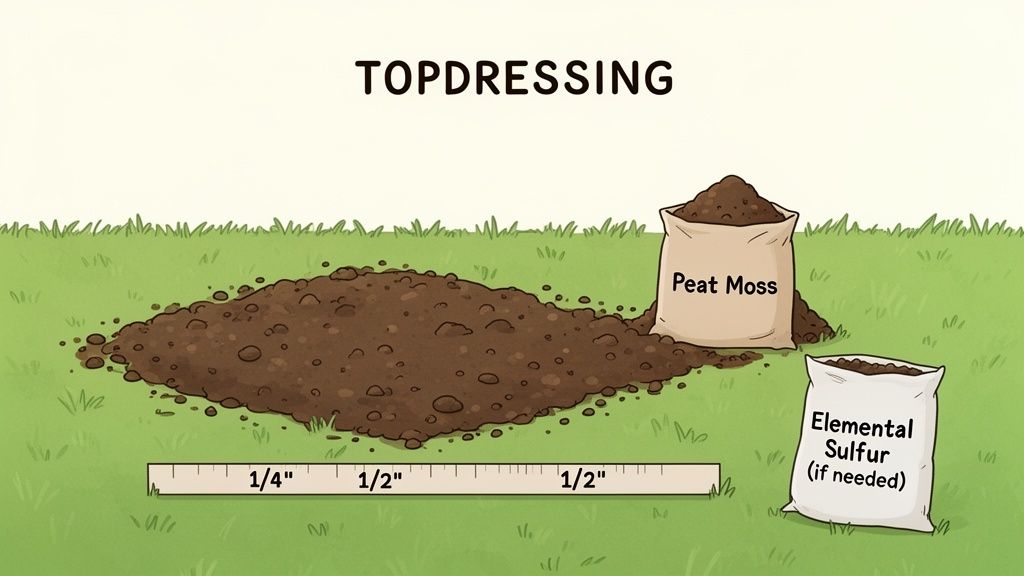
- High-Quality Compost: This is the absolute gold standard. It’s bursting with nutrients and beneficial microbes that essentially bring your soil to life. You’ll want to find a fine, well-decomposed compost that can easily work its way down into the turf.
- Peat Moss: This stuff is fantastic for improving water retention and loosening up clay. As a bonus, it’s slightly acidic, which can help gently nudge our typically high-pH soil in the right direction over time.
How much organic matter do I need to add?
This is a great question. You need to add enough to make a real impact without smothering the grass you already have.
The sweet spot is a thin layer, somewhere between a quarter-inch to a half-inch thick, spread evenly across your lawn. The absolute best time to do this is right after you’ve core aerated. All that fresh compost will fall right into the holes, getting it down to the root zone where it can do the most good.
I learned from experience that you don't have to overdo it. A consistent topdressing of compost once a year has slowly but surely transformed my own hardpan clay into a much richer, darker, and more productive soil.
How do I apply elemental sulfur without burning my lawn?
This is critical: follow the application rates on your soil test to the letter. There's a good chance your soil test came back with a high pH—that’s classic Abilene soil. Going too heavy on sulfur to fix it can seriously damage your lawn. A safe rule of thumb is to never apply more than 5 pounds of elemental sulfur per 1,000 square feet in a single application.
This is a marathon, not a sprint. You'll want to re-test your soil in about a year to see how much progress you’ve made and decide if another round is needed.
Putting these pieces together—the right amendments and balanced pH—is what creates a thriving base for your lawn. Of course, this works best when paired with a smart fertilization plan. For a deeper dive, you can learn about our approach to effective lawn fertilization in Abilene.
Helping Your Soil Breathe Through Aeration
After you've started amending your soil, it's time to tackle the biggest physical barrier to a great lawn in Abilene: compaction. If your lawn feels like concrete underfoot or you see water pooling up after a quick shower, you're dealing with compacted soil. It’s a classic issue with our heavy clay, and it’s slowly suffocating your grass.
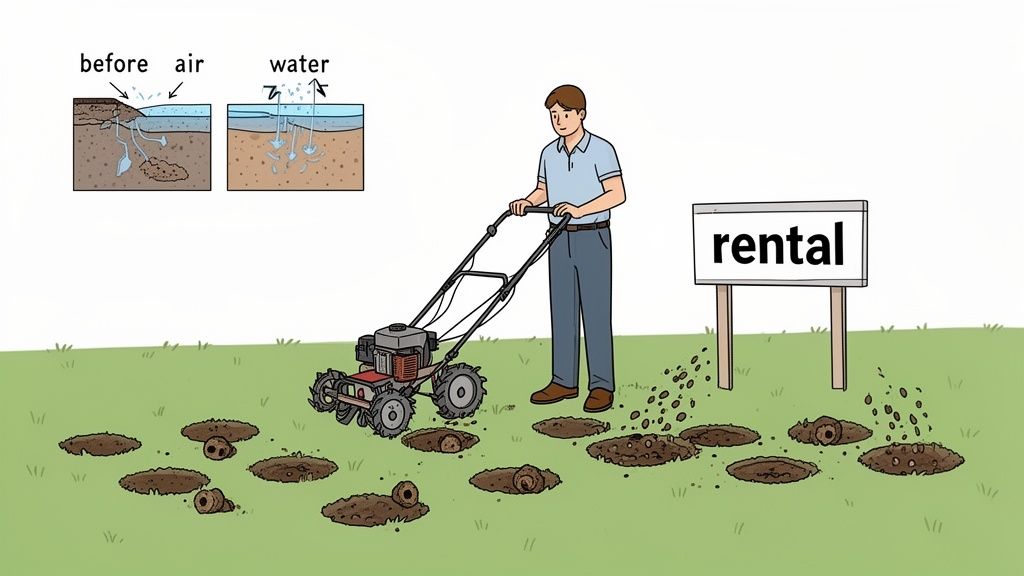
The single best way to fight back is with core aeration. This process involves using a machine to physically pull out small plugs, or "cores," of soil from your lawn. It’s not just poking holes; it's creating genuine space for your lawn's root system to finally breathe and expand.
Why is aeration so important for Abilene lawns?
I'll never forget the first time I rented a core aerator. It was a workout getting that thing across the yard, but the results were undeniable. Before, water would just run off the surface, but after I was done, you could practically watch it drink.
That’s because aeration carves out little channels for everything your grassroots crave:
- Air: Oxygen is essential for healthy roots and for the microbial life that keeps your soil productive.
- Water: Instead of running off into the street, water can now soak deep into the soil, encouraging your grass to develop a more drought-resistant root system.
- Nutrients: All that fertilizer and compost you add can finally get down to the root zone where it actually does some good.
Core aeration can relieve a whopping 60-80% of soil compaction, which in turn can double the activity of beneficial soil microbes. When you combine aeration with a good layer of mulch, the benefits stack up even more. You can regulate soil temperature, slash evaporation by 70%, and cut your irrigation needs by up to 50%. For anyone who's seen an Abilene water bill in July, that's a huge deal. You can get more details on the landscape impact of soil quality on premierturfandlandscaping.com.
What should I do right after aerating my lawn?
This is where you can get a massive return on your effort. Don't just aerate and walk away. The time immediately following aeration is a golden opportunity to topdress your lawn with compost and spread new grass seed.
Think about it—you’ve just created thousands of perfect little entryways leading directly to the root zone.
By spreading a thin layer of compost right after you aerate, you're delivering organic matter straight to the subsoil. When you add seed at the same time, you're giving it a protected, nutrient-rich pocket to germinate away from the harsh sun and hungry birds.
It's a powerful one-two punch that drastically speeds up your soil improvement journey. For warm-season grasses like Bermuda or Zoysia that we have here, the ideal time for this is late spring or early summer. That’s when the grass is growing vigorously and will recover and fill in beautifully.
Adopting Smarter Long-Term Lawn Care Habits
Improving your soil isn’t a one-and-done project. It’s really about shifting your whole approach to lawn care and adopting habits that build a healthy lawn for the long haul. A huge mistake I used to make was just following a generic schedule, tossing out fertilizers and pesticides without a second thought. I’ve since learned that this often does more harm than good.
True, lasting lawn health comes from a "less is more" philosophy that focuses on building a resilient, self-sustaining ecosystem right under your feet. It’s all about working with nature, not against it.
Why is using fewer chemicals better for my soil?
The secret to great soil is nurturing the life within it. Heavy, scheduled use of synthetic chemicals can be brutal on the beneficial microbes, fungi, and earthworms that are the true workhorses of a healthy lawn. When you back off these harsh inputs, you give that underground ecosystem a chance to thrive.
A thriving microbial population breaks down organic matter, cycles nutrients naturally, and even helps your grass fight off diseases. I saw it in my own yard—once I stopped blanket-spraying for every little weed and switched to a more targeted approach, the number of earthworms visibly shot up.
But if I stop using 'weed and feed,' won't my yard be a total mess?
This is the question I get all the time. The answer is to adopt a strategy called Integrated Pest Management (IPM). It sounds technical, but it's a pretty simple idea.
Instead of nuking your entire lawn on a schedule, you just keep an eye out for problems and treat them specifically. See a patch of dallisgrass? Spot-treat it. Notice some grubs in one area? Address that spot directly. This dramatically cuts down on the amount of chemicals you’re pouring into your soil.
This low-intensity style really works. A recent study, for example, found that lawns managed with minimal chemicals and only spot-treatments saw an increase in soil biodiversity by up to 50%. A healthier ecosystem underground creates turf that's more resilient and needs 20-30% less irrigation—a massive win for us here in Abilene. You can read more about these lawn care findings on phys.org.
Am I watering my lawn the right way?
Another critical habit is smart watering. A common mistake I see—and one I used to make myself—is watering lightly and frequently. This just encourages shallow roots, creating a weak lawn that's totally dependent on you and vulnerable to our hot, dry spells. The better way is deep and infrequent watering.
By watering for a longer duration but less often, you encourage the grass roots to grow deeper into the soil in search of moisture. These deep roots can access water reserves far below the surface, making your lawn significantly more drought-tolerant.
I switched to this method years ago, and it's one of the best things I've ever done for my lawn's health. My grass now stays greener so much longer during those brutal stretches between summer rains. To get the specifics dialed in for our local grasses, check out our detailed guide on lawn watering tips for Bermuda and St. Augustine grass.
Answering Your Top Abilene Soil Questions
Once you start digging into your lawn's soil health—literally—you're bound to have questions. It's a complex topic, and our unique West Texas climate certainly adds its own challenges. Let's tackle some of the most common questions I hear from homeowners around Abilene.
How Often Should I Be Testing My Soil Here?
This is a great question. For our specific soil conditions, I recommend testing every two to three years. Our alkaline, clay-heavy soils aren't static; they change over time, and regular testing is the only way to really know what's going on and track your progress.
When I was first trying to get my own lawn in shape, I actually tested it two years in a row. It was the best way to confirm that the compost and sulfur I was adding were actually working to lower the pH and boost organic matter. Once you get your soil balanced, you can definitely ease up.
What’s the Best Grass for Abilene Once the Soil Is Fixed?
After putting in all that effort to improve your soil, you want to plant a grass that will truly appreciate it. For Abilene's intense sun and heat, Bermuda grass is an absolute champion. It’s tough, drought-tolerant, and thrives in the conditions we have.
That said, you've got other great options too:
- Zoysia grass is another fantastic choice. It grows so dense and thick that it naturally chokes out weeds, which is a huge plus.
- If you have areas with a bit more shade, St. Augustine can perform well, but only if the soil has been properly amended to ensure it drains well.
The bottom line is that improving the soil first gives any of these grasses a fighting chance to develop the deep, resilient root system they need to survive our tough climate.
Can I Really Improve My Soil Without Tilling Everything Up?
Yes, absolutely! In fact, I often recommend against tilling. No-till methods are usually better because they don't destroy the existing soil structure and the community of beneficial microbes that are already working for you.
The secret is to combine core aeration with topdressing.
Aeration punches holes into the compacted soil, creating pathways for air, water, and nutrients to get down to the roots. If you immediately follow that up with a thin layer of high-quality compost (about 1/4 inch is perfect), all that good organic material will fall into the holes and slowly work its way down. It's a gradual process, but it improves your soil from the top down without the massive mess and disruption of tilling.
Should I Do This Myself or Hire a Pro?
This is the classic DIY-or-hire question, and it really comes down to your available time, budget, and frankly, how much you enjoy a good workout. Taking the DIY route can be incredibly rewarding, but I won't lie—renting and wrestling a core aerator across your yard is tough work.
For homeowners with busy schedules or those who just want it done right the first time, bringing in a local professional like Abilene Home Service is a smart move. We've got the commercial-grade equipment, the experience with local soil, and the know-how to get the job done efficiently and correctly, ensuring you see the best possible results.