



When to Mow Lawn?
If you’re wondering when to mow lawn for the best results, the short answer is: at the right time of day, at the right height, and at the right frequency for your grass type and season. This article breaks those factors into simple steps so you can make smarter mowing choices and spend less time fixing mistakes.
Why timing matters
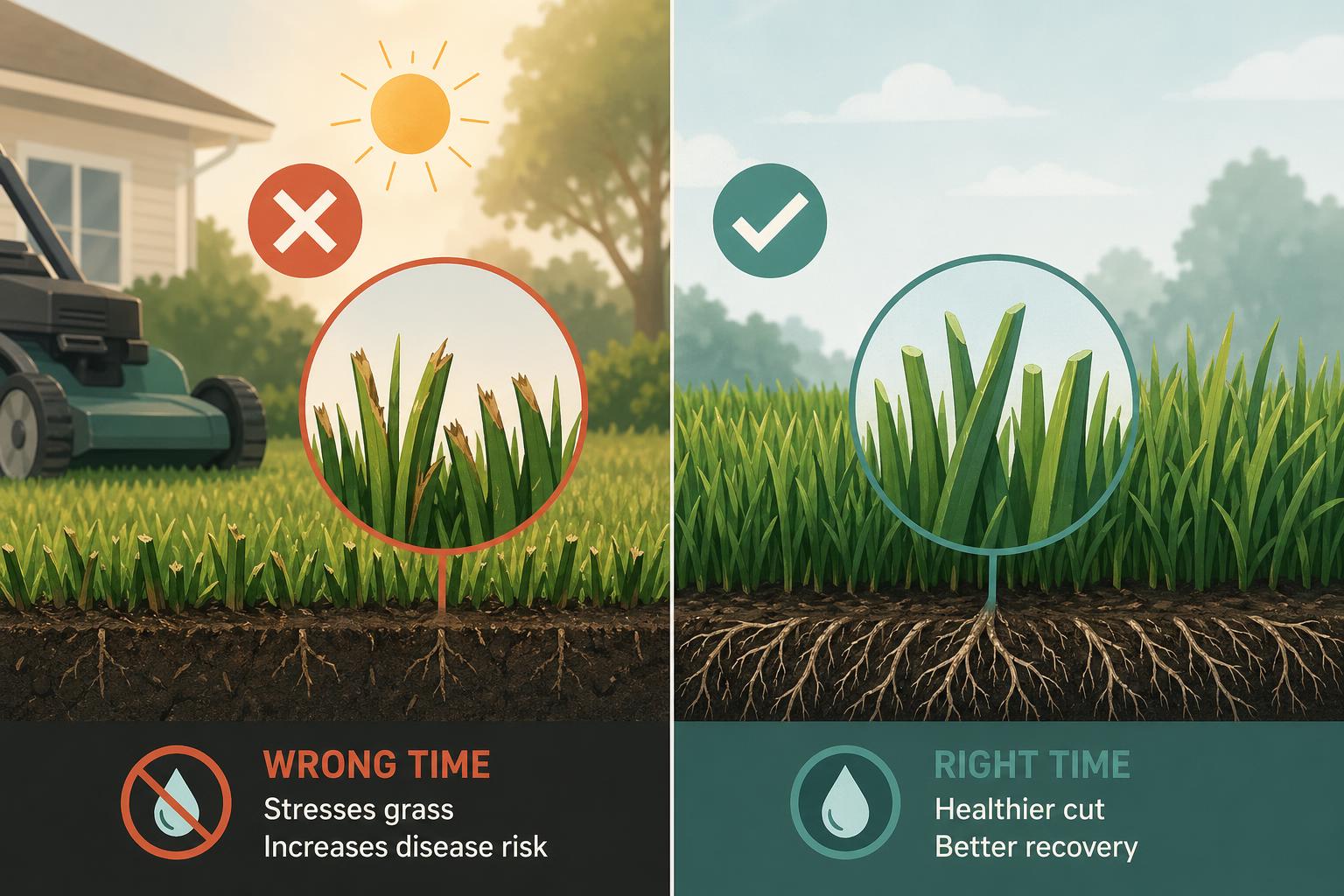
Mowing at the wrong time stresses grass, increases disease risk, and creates a less attractive lawn. Timing affects how quickly a cut heals, how much moisture is retained, and whether clippings break down smoothly. When you get timing right, your lawn recovers faster, looks fuller, and needs fewer inputs like water or fertilizer.
When to mow lawn: seasonal and daily timing
“When to mow lawn” depends on two clocks: the daily clock and the seasonal clock.
Daily timing
Mow in the late morning to early afternoon once dew has dried but before the heat of mid-afternoon. That window—roughly 9 a.m. to 3 p.m. on a typical day—lets grass blades dry so your mower cuts cleanly. Cutting wet grass clumps, and cutting during extreme heat increases stress.
Seasonal timing
Follow the season. In early spring, wait until the lawn is actively growing and the soil is not waterlogged. During summer heat, raise mowing height and reduce frequency. In fall, you can mow a bit shorter to clean up before dormancy, but avoid scalping late in the season.
How often should you mow?
The rule of thumb is the “one-third rule”: never remove more than one-third of the blade length in a single cut. How that translates to frequency varies:
- Rapid spring growth: mow every 5–7 days.
- Normal summer growth: every 7–14 days, depending on species and irrigation.
- Dormant or slow growth (late fall/winter): mow only as needed to remove debris.
Measure your grass once a week for a few weeks to learn its growth rate. That makes scheduling predictable.
How high should you cut?
Mowing height is as important as timing. Different grasses have different ideal heights, but here are the common targets:
- Bermuda grass (warm-season): 1 to 1.5 inches during peak growth; raise slightly in heat.
- St. Augustine or Zoysia (warm-season): 2 to 3 inches.
- Fescue or Kentucky bluegrass (cool-season): 2.5 to 3.5 inches.
Keeping grass a bit taller during heat or drought shades the soil, reduces water loss, and promotes deeper roots.
How to check lawn readiness (what you can safely inspect)
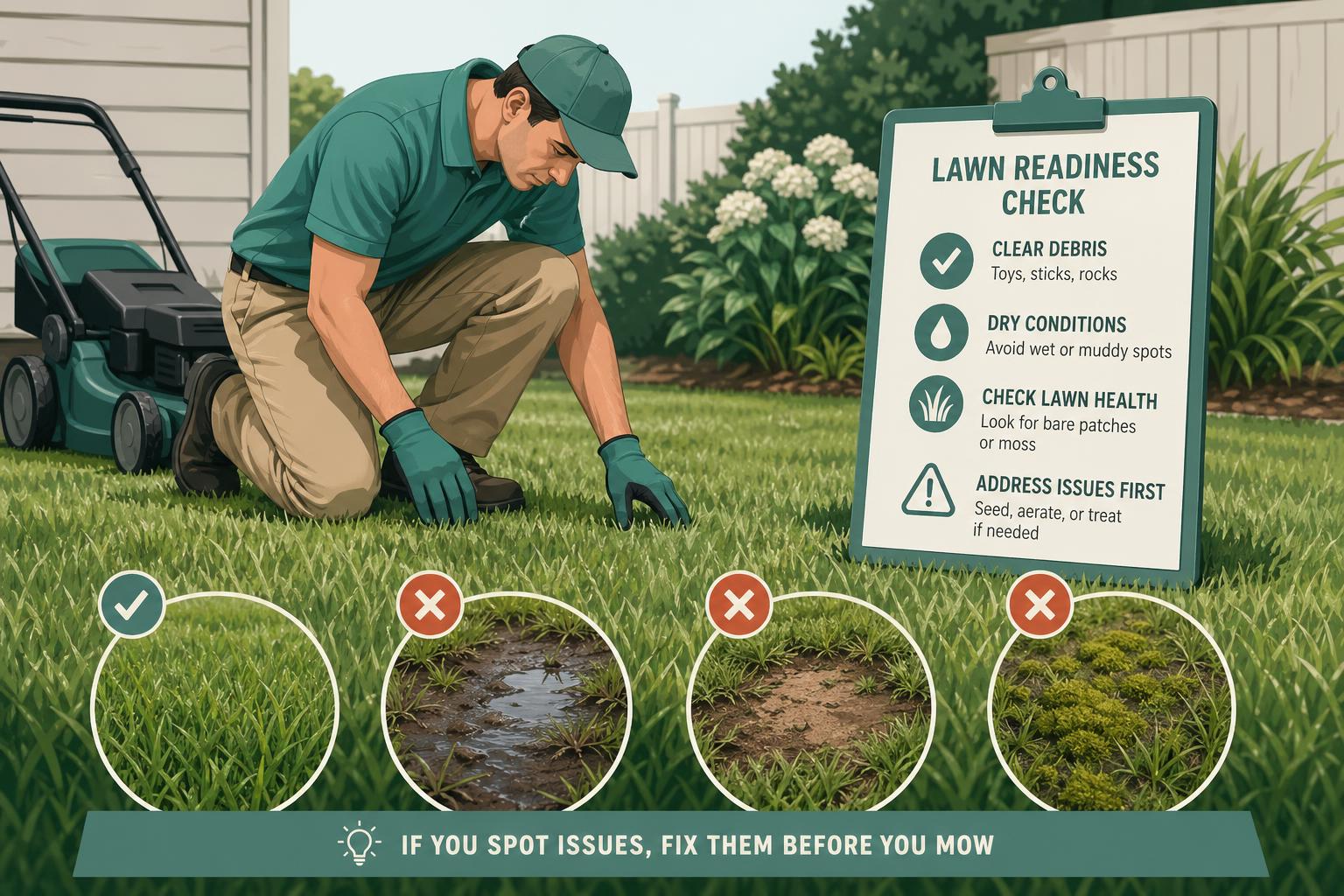
Before you mow, do a quick safety and lawn-health check:
- Pick up toys, sticks, and rocks that could damage your mower.
- Look for wet or muddy spots—don’t mow these.
- Note bare patches or moss—these may need seed or aeration rather than a low cut.
If you suspect disease (odd discoloration, slimy patches) avoid heavy mowing and consult a professional. Don’t try to diagnose serious problems without an inspection; a trained lawn technician can suggest testing or targeted treatment.
Practical mowing tips that improve results
Small changes make a big difference:
- Sharpen blades at least once a season. Dull blades tear grass and invite disease.
- Change mowing patterns weekly to prevent ruts and grained growth.
- Use a mulching mower or leave short clippings; they recycle nutrients back into the lawn.
- Avoid cutting when grass is stressed from drought or heat—either water first or wait for cooler weather.
- Adjust mower speed—slow down on tall or dense grass for a cleaner cut.
When to call a professional
Call a lawn care pro if you notice persistent thinning, unknown discoloration, pest damage, or if your lawn has extensive bare areas. A pro can test soil, recommend turf type changes, overseed, or set a seasonal mowing plan that fits Abilene’s warm-season climate.
If you decide to hire help, check references and contracts. For general guidance on hiring contractors, see the FTC’s advice on hiring a contractor. That resource explains how to evaluate bids and protect yourself when working with service providers.
Quick decision guide and cost hints
Not every lawn issue requires a full-service crew. Use this quick guide:
- Simple mowing and edging, routine care: consider a local weekly or biweekly mowing plan.
- Patchy lawn, messy clumps, or frequent weeds: schedule aeration/overseeding and a rebuild plan.
- Suspected pests or disease: get a professional inspection before applying treatments.
Cost varies by yard size and level of service. A basic mowing visit in Abilene typically falls into an affordable range for homeowners, while overseeding, aeration, and disease control add to the budget. Ask for itemized estimates and follow the FTC hiring guidance linked above before signing any long-term contract.
FAQ — Common follow-up questions
Can I mow wet grass?
It’s best to avoid mowing when grass is wet. Wet clippings clump, clogs the mower, and leaves an uneven finish. If you must mow, use a higher deck setting and go slowly.
What if I missed a week and the grass is too tall?
Don’t cut it down to the ideal height in one go. Remove no more than one-third of blade length per mowing. If it’s very tall, raise the deck and do two or three passes over several days.
When is the best time to plant grass seed?
That depends on the grass. For warm-season grasses common in Abilene, late spring to early summer is a good time. For cool-season grasses, early fall is usually best. Timing and soil prep are key—plan to seed when temperatures favor germination and you can water regularly.
How does mowing affect weed control?
Correct mowing height discourages many weeds. Short mowing can stress turfgrass and give weeds a competitive edge. Combine proper mowing with targeted herbicide use or overseeding for best results.
Conclusion
When to mow lawn depends on the time of day, the season, and how fast your grass is growing. Follow the one-third rule, keep blades sharp, and adjust height for heat and drought. These steps reduce stress on the turf and improve long-term health. For Abilene homeowners who want consistent results, consider a professional mowing plan or a seasonal care package to match local conditions.
If you want help setting a mowing schedule or need a pro to inspect your lawn, Abilene Home Services can help. See our Lawn Mowing service page for service options or explore our full lawn care packages. Call (940)235-6789 to book an inspection or get a free estimate.