


Landscaping in West Texas is a different game entirely. It’s all about working with our challenging environment, not constantly fighting against it. This means embracing drought-tolerant native plants, using smart watering strategies like drip irrigation, and designing for shade and wind protection. The goal is a yard that’s not just beautiful, but truly sustainable in our unique climate.
Thriving in the West Texas Climate
If you're an Abilene homeowner, you've probably asked the same question I did when I first started digging into my own yard. It's the big one.
Why Is It So Hard to Keep Anything Alive Here?
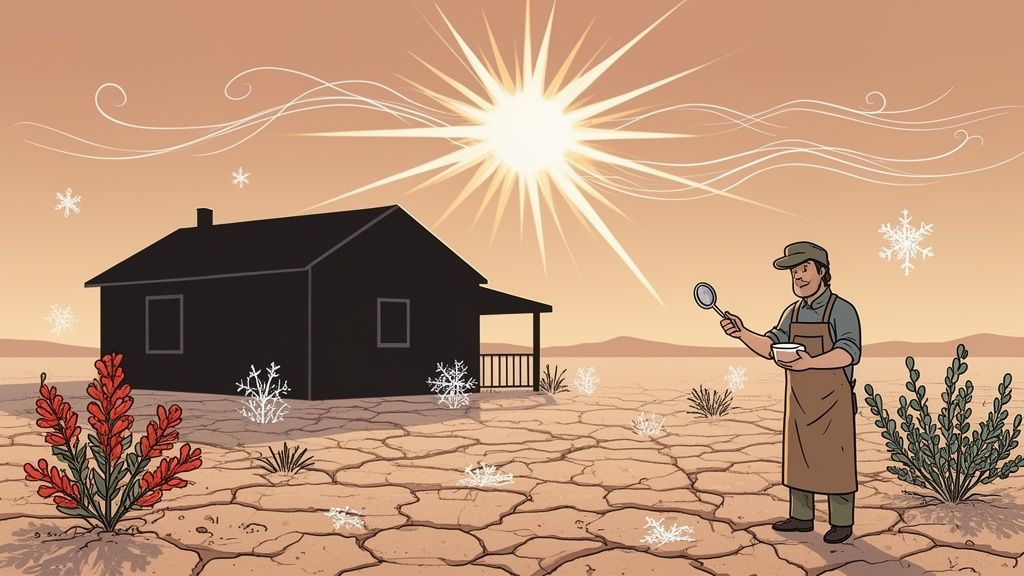
Honestly, our climate is the ultimate rulebook for your garden. The intense sun, the surprising freezes, and that relentless wind aren't just background noise—they dictate everything. I often compare it to baking at a high altitude; you can't just pull a recipe meant for sea level and expect it to work. You have to adjust.
For us, those adjustments mean rethinking our plants, soil, and watering. It’s about being smart, not just working harder. I learned this lesson the hard way with my first attempt at a perfect lawn. I planted a beautiful Kentucky Bluegrass, and it turned into a scorched, patchy disaster that drank water like it was going out of style. I was fighting a battle I was never going to win.
The secret is to stop fighting the environment. A successful West Texas landscape embraces the climate, turning its challenges into advantages through smart, informed choices.
What Makes Our Environment So Unique?
It’s more than just the heat. A few key factors gang up on us, creating a tough spot for most plants. Getting a handle on these is the first step toward creating a landscape that genuinely thrives, whether you're out near Dyess AFB or in a new subdivision.
Think of it as knowing your opponent. Here’s what we’re up against:
- Intense Sun and Heat: We get an average of 260 sunny days a year. That’s a lot of direct, scorching sunlight that can bake delicate plants and evaporate soil moisture in a flash.
- Low and Unpredictable Rainfall: Our region is lucky to see 25 inches of rain annually. Worse, it often comes in fast, heavy downpours instead of the slow, steady soaks plants really need. Water conservation isn't just a good idea; it's a necessity.
- Alkaline Soil: Unlike the rich, acidic soils you find elsewhere, ours is typically alkaline (high pH). This locks up essential nutrients, making it tough for many non-native plants to feed themselves properly.
- Sudden Temperature Swings: Nothing says "West Texas" like a warm, sunny afternoon followed by a hard freeze at night. Our plants have to be tough enough to handle these wild, unpredictable shifts, especially in the spring and fall.
Once you understand these "rules of the game," you can start building a strategy that works. This guide is all about that—helping you pick the right players for your team, design a water-wise layout, and maintain a stunning yard that feels like it truly belongs here.
Choosing Plants That Flourish in West Texas
With a handle on West Texas's tough climate, we can tackle the most exciting question I hear from homeowners: what can I actually plant that won’t immediately die?
It’s a fair question, and the answer is surprisingly encouraging. A tough, resilient yard doesn't have to be a barren one. In fact, choosing the right plants is the single most important decision you'll make. Get this part right, and you'll save yourself countless hours of work, a lot of money, and a world of frustration.
The secret is working with our environment, not against it. It's about selecting plants that are already adapted to our specific brand of heat, sun, and alkaline soil. Think of it like picking players for a sports team. You wouldn’t put a hockey player on a basketball court and expect great results. The same goes for your garden—you need plants that know our home field.
A Curated Palette of Resilient Plants
Creating a landscape that thrives here means thinking beyond a simple list of "tough plants." We're building a complete palette—a team of plants that work together to provide color, texture, and life all year long.
I've learned from years of experience that native and adapted plants are the true MVPs of any Abilene yard. The Flame Acanthus in my own backyard, for example, is a hummingbird magnet that seems to thrive on sheer neglect. After a good summer rain, the Texas Sage out front explodes with vibrant purple blooms—it’s nature’s way of celebrating the storm. These plants don't just survive; they put on a show.
To help you get started, here is a breakdown of some of the best performers for our area.
Table: Top Drought-Tolerant Plants For Abilene Landscapes
This table features some of the most reliable and beautiful plants that are perfectly suited for the Abilene climate. They've been chosen for their ability to withstand our conditions while providing wonderful seasonal interest.
| Plant Type | Plant Name | Water Needs | Sun Exposure | Key Feature |
|---|---|---|---|---|
| Perennial | Blackfoot Daisy | Low | Full Sun | Cheerful white flowers from spring to fall. |
| Perennial | Flame Acanthus | Very Low | Full Sun/Part Shade | Bright orange, tubular flowers attract hummingbirds. |
| Shrub | Texas Sage (Cenizo) | Very Low | Full Sun | Silvery foliage; bursts with purple blooms after rain. |
| Shrub | Red Yucca | Very Low | Full Sun | Tall, dramatic spikes of coral-red flowers. |
| Grass | Little Bluestem | Low | Full Sun | Fine-textured grass with blue-green to reddish-bronze color. |
| Tree | Desert Willow | Low | Full Sun | Fast-growing with beautiful, orchid-like summer blooms. |
| Tree | Cedar Elm | Low-Medium | Full Sun | A tough, adaptable, and long-lived shade tree. |
These are just a few of the stars that can form the backbone of your garden. By combining plants with different bloom times and textures, you can create a landscape that is dynamic and engaging through every season.
Groundcovers and Grasses: The Foundation
A lush, green lawn is the traditional American dream, but here, it can quickly become a high-maintenance nightmare. Thirsty grasses like Fescue or Kentucky Bluegrass simply can't handle our intense heat and alkaline soil. But that doesn't mean you have to give up on green.
- Tough Turf: If you still want a patch of traditional lawn for kids or pets, Bermuda grass is a fantastic choice. It’s a hardy, warm-season grass that stands up to our sun and requires significantly less water once established. For those starting a new lawn, our guide on how to grow Bermuda grass from seed offers easy, step-by-step instructions.
- Lawn Alternatives: A growing number of homeowners are exploring beautiful and sustainable drought resistant lawn alternatives. Spreading groundcovers like Frogfruit or Silver Ponyfoot create a gorgeous, low-growing green carpet that practically sips water.
Choosing native and climate-adapted plants is more than just a trend in West Texas—it's a necessity. These plants are genetically programmed to handle our extreme heat, alkaline soils, and periods of drought. This dramatically slashes water usage and saves you the cost of replacing plants that can't survive a harsh summer or a sudden freeze.
The Power of Shade Trees
The final, and perhaps most critical, layer of your West Texas landscape is shade. You can’t overstate the value of a well-placed tree.
Think of trees as living umbrellas for your property. A mature tree, strategically planted, can significantly lower the ambient temperature around your home, reduce your summer cooling costs, and create a comfortable outdoor oasis. It’s the difference between a patio you can only use at dawn and one you can enjoy all day long.
My favorites for the Abilene area are hardy, water-wise options like the Cedar Elm, Desert Willow, and Texas Red Oak. Once they get their roots down, they provide essential relief from the sun while asking for very little in return. They are the true cornerstones of a livable, breathable Texas yard.
Smart Landscape Design for Abilene Yards
Having the right plants is only half the battle; you also need a smart plan. Once you've picked out a palette of tough, beautiful plants that can handle our climate, it's time to think about the layout. This is where thoughtful design turns a standard yard into a personal oasis that's both beautiful and genuinely usable.
When I mention xeriscaping, a lot of folks immediately picture a barren yard with nothing but rocks and a few lonely cacti. That’s a common myth. It’s better to think of it not as "no-scape" but as a water-wise approach to gardening. A well-designed xeriscape is actually lush and full of vibrant colors and textures—it just achieves that look with plants and techniques that don't demand constant watering.
I worked with a client in Abilene just last year who was at her wit's end with a patchy, thirsty lawn that was driving up her water bill. We mapped out a new vision, tearing out a big chunk of that problem grass and putting in a gorgeous flagstone patio. For shade, we planted a fast-growing Desert Willow. We then layered in soft ornamental grasses and colorful, low-water perennials around the patio's edge.
The transformation was incredible. Her water bill dropped by more than 40%, and, for the first time, she had an outdoor space her family truly loved and used. That’s the real impact of smart west texas landscaping design.
How Can I Make My Yard Usable in the Summer Heat?
This is probably the number one question I get from Abilene homeowners. Our summer heat can be so intense that it makes being outside feel impossible. The secret is creating microclimates—small pockets in your yard that are noticeably cooler and more pleasant than the rest of the space.
You can craft these comfortable zones with a few key elements:
- Shade Structures: Pergolas, arbors, and covered patios are the quickest way to get reliable shade. They create a defined "outdoor room" and make it a comfortable spot to relax, even on a blistering afternoon.
- Fabric and Sails: For a more modern and flexible approach, shade sails are a fantastic choice. You can angle them to block the harsh sun at different times of the day, and they add a really cool architectural feel to the yard.
- Windbreaks: That relentless West Texas wind doesn't just mess up your hair; it dries out your plants and can be unpleasant. Planting a strategic row of hardy shrubs or trees can block the worst of it, creating a calmer, more sheltered environment for you and your garden.
Of course, nothing can truly replace the natural, powerful cooling effect of a mature tree. It’s like having a living, breathing air conditioner for your yard.
Using Natural Elements for a Better Design
Beyond adding structures, the way you arrange your plants and use natural materials can make a world of difference. At its core, good design involves creating distinct zones based on function and, most importantly, water needs.
This idea of grouping plants with similar water requirements is a cornerstone of xeriscaping. You put the thirstier plants (if you choose to have any) together in one spot and the drought-tolerant ones together in another. This lets you water efficiently, giving each zone exactly what it needs instead of blasting the entire yard with the same amount of water—a practice that's wasteful and can actually harm desert-adapted plants.
This mind map illustrates how different plant types—from trees to shrubs and succulents—work together to build a resilient West Texas landscape.
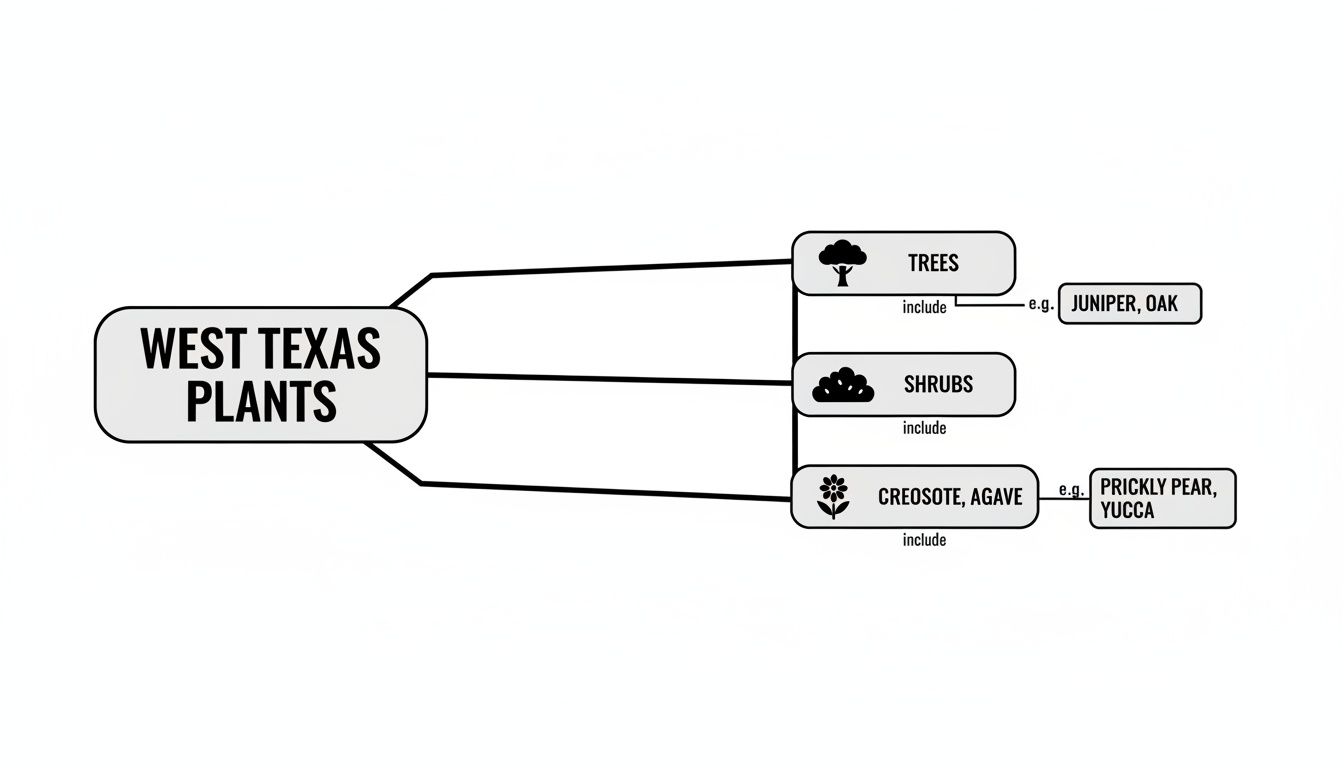
Each of these categories has a specific job. The big trees provide that crucial shade, while the perennials and succulents below add layers of color and texture throughout the year.
This move toward sustainable, climate-appropriate landscaping isn't just a local trend; it's a global shift. The industry is expected to grow from $741.53 billion in 2026 to $1,123.53 billion by 2030, largely because people want functional outdoor living spaces that are also resilient. Here in West Texas, that means embracing native plants and smart irrigation. Homeowners in Abilene who work with local experts like us at Abilene Home Service are getting ahead of the curve. You can see similar patterns emerging if you discover more insights about DFW landscaping trends for 2026.
A smart design doesn't just look good—it functions as a cohesive system. It conserves water, reduces maintenance, cools your living spaces, and gives you a yard you can truly enjoy year-round. It's about making your landscape work for you.
Your Year-Round West Texas Maintenance Plan
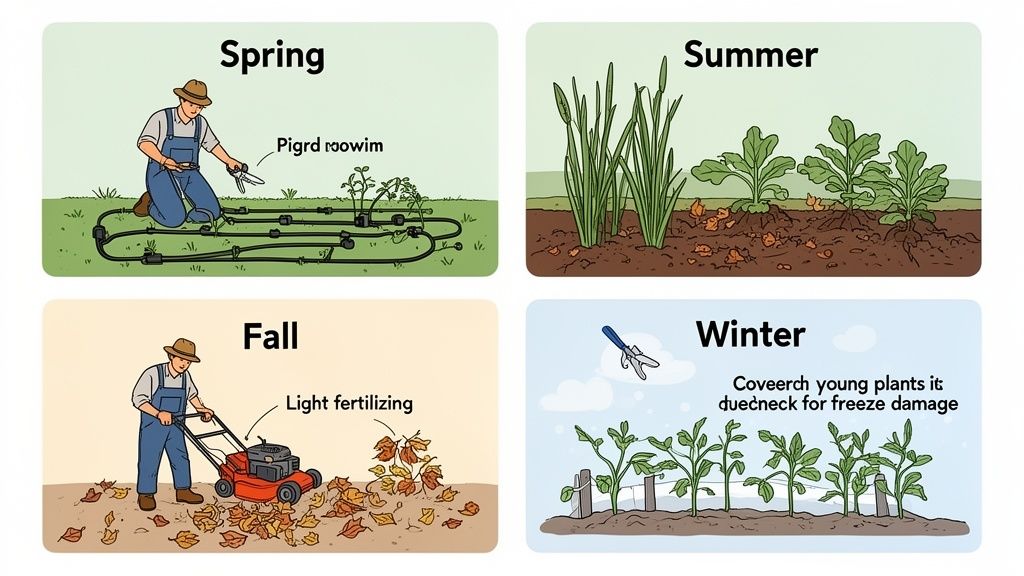
Creating a beautiful West Texas landscape isn’t a one-time project; it’s more like a relationship. It thrives on consistent, thoughtful care that rolls with our dramatic seasons. Honestly, the most common question I get is a simple but important one.
What Should I Be Doing for My Yard Right Now?
That question can feel pretty overwhelming when you're staring out at the yard. To keep things from getting out of hand, I live by a seasonal rhythm. For me, every March involves a non-negotiable walk around my entire property to check drip irrigation lines for cracks or clogs that popped up over winter. It’s also my chance to put down a pre-emergent herbicide to stop summer weeds in their tracks and trim back any perennials that got zapped by a late freeze.
This kind of proactive work is the secret sauce to a healthy landscape. It takes the guesswork out of the equation and makes professional-level care feel totally achievable for any homeowner.
"A great landscape is a partnership between good design and ongoing care. One without the other will always fall short. Your seasonal tasks are how you hold up your end of the bargain, ensuring the design thrives year after year."
When you break down the year into manageable, season-specific jobs, you can stay ahead of the curve. This approach keeps small issues from snowballing into big, expensive problems and ensures your yard looks its absolute best.
A Seasonal Maintenance Checklist for West Texas
Here's a straightforward, season-by-season guide to the essential tasks for keeping your Abilene-area landscape in top shape. Think of this as your roadmap to focusing on what matters most, right when it matters.
Spring (March – May)
- Wake-Up Call: As the weather warms up, it's time to inspect your entire irrigation system. Look for leaky drip lines and busted sprinkler heads before you're desperate for them in the summer heat.
- Weed Prevention: This is critical. Applying a pre-emergent herbicide now prevents crabgrass and other invaders from ever getting a foothold. Trust me, this single step will save you hours of back-breaking weed pulling later.
- Pruning and Cleanup: Cut back any freeze-damaged branches on your shrubs. Trim ornamental grasses down to about 6 inches to make way for beautiful, fresh growth.
- Mulch Refresh: Spread a fresh 2-3 inch layer of organic mulch across your garden beds. This locks in that precious spring moisture and smothers any early weeds that try to pop up.
Summer (June – August)
- Smart Watering: The key is to water deeply but infrequently. Do it in the early morning hours to cut down on evaporation. For specific advice on our local turf, check out our guide on lawn watering tips for Bermuda and St. Augustine grass.
- Mow High: Raise your mower blades. Taller grass provides shade for the soil, which keeps the roots cooler and dramatically reduces water loss. I always tell my clients to never cut more than one-third of the grass blade at a time.
- Pest Watch: Stay vigilant for common pests like grubs and chinch bugs, particularly in sunny, stressed areas of your lawn. Spot-treating early is the key to stopping a full-blown infestation.
Fall (September – November)
- Time to Plant: Without a doubt, fall is the absolute best time to plant new trees, shrubs, and perennials in West Texas. The warm soil gives their roots a chance to get established before winter, giving them a huge head start for next spring.
- Fertilize Wisely: This is the perfect time to feed your lawn. A good fall fertilizer application helps the grass store energy for winter dormancy and guarantees a fast green-up next year.
- Cleanup and Cutback: Once your perennials turn brown after the first freeze, go ahead and cut them back. Rake leaves off the lawn, but don't just bag them up! They make fantastic, free mulch for your garden beds or a great addition to your compost pile.
Winter (December – February)
- Protect Your Pipes: Before that first hard freeze hits, make sure you drain and winterize your entire irrigation system. This simple step prevents expensive burst pipes and cracked valves.
- Water Your Trees: Even in winter, your trees and shrubs can get thirsty, especially during those dry, mild spells. Give them an occasional deep watering, particularly if they were just planted in the fall.
- Plan Ahead: The quiet of winter is the perfect time to be a landscape architect. Walk your yard, take notes on what worked and what didn't, and start dreaming up your projects for the year ahead.
West Texas Seasonal Landscaping Calendar
To make it even simpler, here's a quick-glance table of the most important jobs for each season. Keep this handy to stay on track all year long.
| Season | Key Tasks | Pro Tip |
|---|---|---|
| Spring | Inspect irrigation, apply pre-emergent herbicide, prune freeze damage, and refresh mulch. | Do your big pruning right after the last expected freeze date for your area to avoid damaging new growth. |
| Summer | Water deeply in the early morning, mow grass high, and monitor for pests like grubs. | Don't fertilize stressed, drought-dormant lawns in high summer—it can burn them. Wait for cooler fall weather. |
| Fall | Plant new trees and shrubs, fertilize the lawn, and rake leaves for mulch or compost. | This is the #1 planting season in West Texas. The warm soil and cooler air are perfect for root growth. |
| Winter | Winterize the irrigation system, provide occasional water for trees, and plan next year's projects. | Use the downtime to sharpen mower blades and clean your tools so you're ready to hit the ground running in spring. |
Following this seasonal rhythm transforms yard work from a chore into a rewarding process. You're not just maintaining a property; you're cultivating a living, breathing space that gets better with each passing year.
Alright, let's get into the brass tacks: the budget. This is usually the first thing people ask about, and for good reason. You need to know what you’re getting into before the first shovel hits the dirt.
How Much Will My Dream West Texas Landscaping Actually Cost?
I get this question all the time, and the most honest answer I can give is, "it depends." I've seen simple, beautiful DIY projects come in under a few hundred dollars, and I've also managed complete overhauls that ran into the tens of thousands for a full-scale installation with patios and irrigation.
The final number really hinges on a few key decisions:
- Project Scope: Are we talking about a simple refresh with a few new plants, or a total tear-out and redesign of your entire yard?
- Material Choices: There's a big price difference between a simple gravel path and a custom-laid flagstone patio.
- Plant Maturity: Starting with smaller, younger plants is a great way to save money if you have the patience to watch them grow. If you want that "finished" look on day one, large, mature trees and shrubs will give you instant impact, but they come with a higher price tag.
- Labor: How much are you willing to do yourself? A weekend warrior can handle planting, but big jobs like excavation, building retaining walls, or installing a professional irrigation system are usually best left to a crew.
Can I Phase Out My Landscaping Project to Make it More Affordable?
Absolutely. In fact, this is my favorite strategy for homeowners who have a grand vision but a practical budget. Breaking a big project into manageable stages is the best way to avoid feeling overwhelmed, both financially and mentally.
I recently worked with a family in Abilene who wanted to go all-in on a full xeriscape conversion. We sat down and mapped it out into three clear phases. "Think of it this way," I told them. "Phase one is the heavy lifting: we'll get rid of the old lawn and prep all the soil. Phase two is building the bones—the new patio and the drip irrigation system. Then, phase three is the fun part: we bring in all the beautiful plants and watch it all come to life."
By tackling it in stages, they could spread the cost over a year and a half. It made their dream yard feel achievable and kept the process exciting instead of stressful.
A professional quote should do more than just give you a total number. It should break down the costs of labor, materials, and plants, giving you a clear picture of where your money is going and allowing you to make informed decisions about your budget.
What Is a Realistic Budget for Professional Landscaping?
While every project is unique, it's helpful to have some ballpark figures in mind. Nationally, the demand for professional landscaping is booming. The market is projected to grow from $668.97 billion in 2025 to $741.53 billion in 2026. A big piece of that is new home construction—privately owned home completions hit 1,518,000 in May 2023, a 5.0% increase from the year before. We're seeing that trend right here in West Texas, which means finding a reliable, high-quality service like Abilene Home Service is more important than ever. You can read the full analysis on landscaping market trends here if you want to dive deeper into the numbers.
Here’s a rough idea of what to expect for professional services:
- Initial Consultation & Design: This can run from a few hundred to over a thousand dollars. Many firms, including ours, will often credit this fee back to you if you hire them for the full installation.
- Hardscaping (Patios, Walkways): Depending on the material you choose—from concrete pavers to high-end natural stone—you could be looking at anywhere from $15 to $50+ per square foot.
- Professional Planting: A good rule of thumb for labor is to budget 50-100% of the total cost of the plants themselves.
The only way to get a truly accurate number is to have a pro come out, walk the property with you, and draw up a detailed quote. That's how you can plan effectively and feel confident that you're investing in an outdoor space you'll be proud of for years to come.
When to Call a Landscaping Professional
Let's be honest, knowing your own limits is one of the most important parts of any big project. I see it all the time with landscaping. People get a brilliant idea over the weekend, but figuring out whether to tackle it yourself or call in some help is a huge question.
Can I Do This Myself or Should I Hire Someone?
There's no shame in asking for backup. In fact, it's smart. So many well-intentioned DIY projects start with a ton of enthusiasm but quickly grind to a halt. The sheer physical work, the need for specialized tools, or just a simple lack of time can turn that exciting vision into a half-finished eyesore in your yard.
I once met a homeowner who got a great start on ripping out his water-guzzling lawn. He tore up about a third of it, but then he hit a wall. That pile of sod sat there for weeks, and the thought of renting a tiller and hauling in tons of new soil was just too much. He had the right idea but stalled on the execution. We came in, handled all the heavy lifting, and brought his project across the finish line in a couple of days.
What Are the Benefits of Hiring a Local Pro?
Bringing in a local expert like Abilene Home Service is about more than just getting the job done—it's about making your life easier. You're not just hiring muscle; you're gaining a partner who understands the bigger picture.
Think about it: instead of juggling a mower, a fertilizer company, and someone to haul away that junk pile, you have one team that handles it all. It means one phone call, not three. Everything is coordinated, so the left hand always knows what the right is doing.
For busy families and property owners here in Abilene, hiring a professional service isn't giving up. It's a strategic move to buy back your weekends and get the peace of mind that the job will be done right—guaranteed.
Our deep knowledge of the West Texas climate is built into every service we offer. We know the challenges of the soil and sun here, from the grounds around Abilene Christian University to the neighborhoods bordering Dyess Air Force Base. Our team is vetted and reliable, which is why so many people trust us with their homes.
At the end of the day, it's about having one resource you can count on to help create the west texas landscaping you've envisioned and keep it looking great for years to come.
Common West Texas Landscaping Questions
Even with the best-laid plans, a few questions always seem to surface during a West Texas landscaping project. Getting the details right makes all the difference, so I've put together answers to some of the most common queries I hear from homeowners right here in Abilene.
How Often Should I Really Water My Lawn During an Abilene Summer?
This is probably the number one question I get. The trick is to water deeply just 1-2 times per week, not lightly every day. Think of it as giving your lawn a huge, satisfying gulp of water instead of a few tiny sips. This simple change encourages the grass to grow deep, tough roots that can handle our brutal summer heat.
On my own property, I have the sprinklers set to run around 4 AM. Watering in the pre-dawn hours is a game-changer because it dramatically cuts down on how much precious water simply evaporates once the sun comes up.
Is It Better to Use Rock or Wood Mulch in My Garden Beds?
I see this debate all the time, and the truth is, the right answer depends entirely on what you're planting. Both rock and wood mulch are fantastic tools for west texas landscaping when you know where to use them.
- Wood Mulch: This is my go-to for the vast majority of garden beds. As it slowly decomposes, it enriches our often-alkaline soil with organic matter and is a champion at holding in moisture. It’s the perfect companion for perennials, shrubs, and trees.
- Rock Mulch: I tend to reserve rock for very specific plants. It’s the ideal choice for succulents and cacti that thrive in warmer, drier soil. While it’s a permanent, one-and-done material, remember that it can get incredibly hot in the direct sun.
Can I Have a Green Lawn in West Texas Without a Huge Water Bill?
Absolutely, but you have to be smart about it. That dream of a lush, green lawn isn't out of reach, but it takes a three-pronged strategy to get there without breaking the bank on your water bill.
First, you have to choose a drought-tolerant grass like some of the heartier Zoysia or Buffalo Grass varieties. Second, consider shrinking the overall footprint of your lawn. And third, investing in a modern, efficient irrigation system will pay for itself. This combination gives you that beautiful green space without the guilt of excessive water use.
A common challenge in our area is finding space for water storage. When planning your West Texas landscape, questions about rainwater harvesting are common; you can find answers in polyethylene tank FAQs.
Of course, keeping a lawn healthy means keeping the weeds out. Fighting them effectively is a non-negotiable part of maintaining a beautiful yard. For more specific advice, you can learn all about the common weeds in Abilene and how to kill them in our detailed guide.