


Bermuda grass is the king of West Texas lawns for a reason. It's tough, resilient, and absolutely loves our intense sun. But even the hardiest turf can run into trouble, and when it does, it can be incredibly frustrating. The most common Bermuda grass problems I see around Abilene usually fall into a few categories: fungal diseases like brown patch, pests like chinch bugs, and foundational issues like soil compaction.
Your Guide to a Healthy Bermuda Grass Lawn in Abilene
I'll never forget one summer when my own lawn started looking patchy and just plain sad. I was stumped. Was it the blistering heat? Was I watering too much or not enough? It turned out to be a mix of issues that were actually pretty simple to fix once I knew what I was looking at. This guide is the roadmap I wish I'd had, built from years of professional lawn care experience right here in Abilene.
Think of this first section as your lawn's triage station. We'll start with a quick overview of the top issues so you can get a head start on figuring out what's going wrong with your grass.
What's the First Step to Fixing My Lawn?
Before you do anything else, you have to play detective. The single most important step is getting an accurate diagnosis. You simply can't treat a problem if you don't know what it is.
Throwing random treatments at your lawn is like taking headache medicine when your foot hurts—a total waste of time and money.
The biggest mistake I see homeowners make is guessing. They see brown spots and immediately assume it's a lack of water. So, they water more, which can take a minor fungal disease and turn it into a full-blown disaster. A correct diagnosis is 90% of the battle.
To help you get started, here is a quick-reference table. Just match the symptoms you're seeing in your yard to find the most likely culprit.
Quick Diagnosis for Your Abilene Bermuda Grass Lawn
Use this table to quickly identify the potential problem with your Bermuda grass based on the symptoms you're seeing in your Abilene lawn.
| Symptom | Potential Problem | What to Check First |
|---|---|---|
| Circular brown or yellow rings | Brown Patch or Dollar Spot | Look for fuzzy, web-like growth in the morning dew. |
| Spongy feel, grass is thinning | Thatch Buildup | Dig up a small plug of turf to see if there's a thick layer of dead material above the soil. |
| Yellow or brown patches, especially in hot, sunny spots | Chinch Bugs or Drought | Part the grass at the edge of the affected area and look for tiny black bugs. |
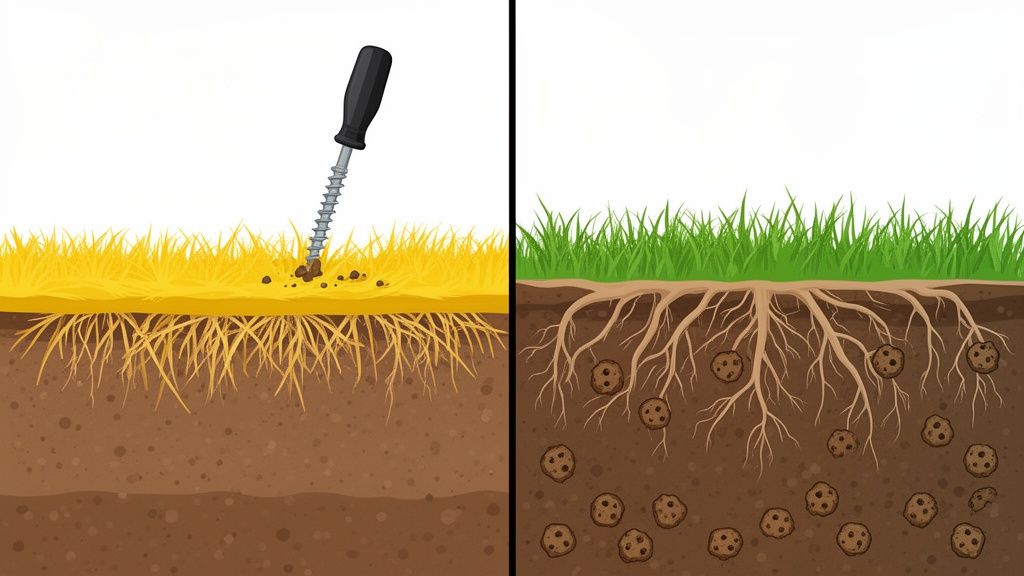
| Thin, weak grass with shallow roots | Soil Compaction | Try to push a screwdriver into the soil. If it’s difficult, the ground is likely compacted. |
| Pale green or yellowish blades | Nutrient Deficiency | Consider when you last fertilized. An iron or nitrogen deficiency is common. |
| Weeds are taking over healthy grass | Weed Infestation | Identify the types of weeds present (e.g., crabgrass, nutsedge) to choose the right treatment. |
This table gives you a great starting point, but a visual guide can also help you trace the problem from start to finish.
This flowchart below walks you through the process, starting with the most obvious symptom and leading you toward a probable cause and solution.
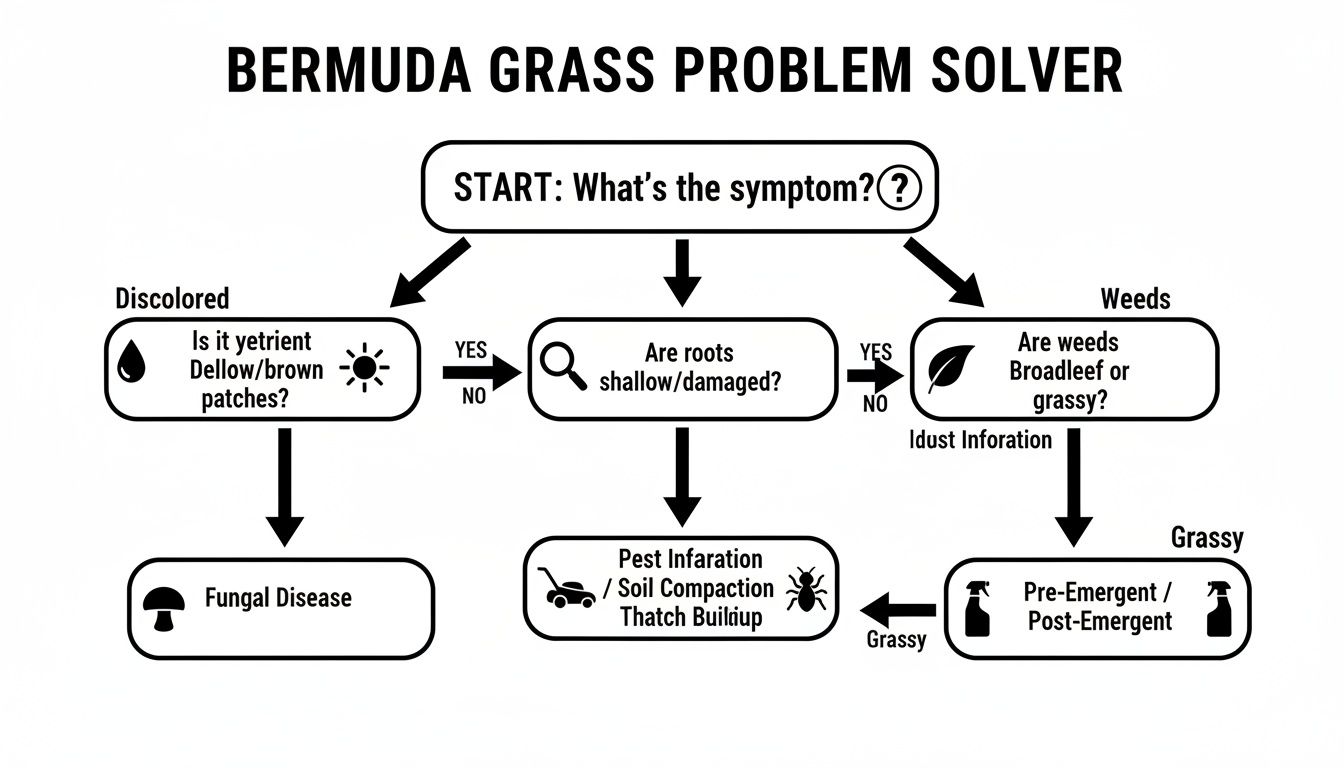
As you can see, the path to a healthy lawn starts with simple observation. Is your grass discolored, thinning, or being overrun by weeds? From there, you can start to narrow down the suspects.
Often, fixing these issues begins with getting the fundamentals right. If you're just starting out or reseeding a problem area, our guide on how to grow Bermuda grass from seed is a fantastic resource. In the rest of this article, we’ll dive much deeper into each of these problems.
Tackling Common Fungal Diseases in Your Bermuda Grass
There's nothing more frustrating than watching strange, discolored patches take over a lawn you’ve worked so hard to keep green. Fungal diseases are notorious for this, and here in Abilene, they can pop up with surprising speed, especially when the weather gets a little unpredictable.
I've been there myself. One spring, I noticed these perfectly round, bleached-out circles that just wouldn't green up with the rest of my Bermuda. I initially wrote it off as damage from a hard freeze, but the patches persisted. That was my first real battle with Spring Dead Spot, a sneaky fungus that does its dirty work while your grass is dormant in the winter.
What is this fungus in my lawn?
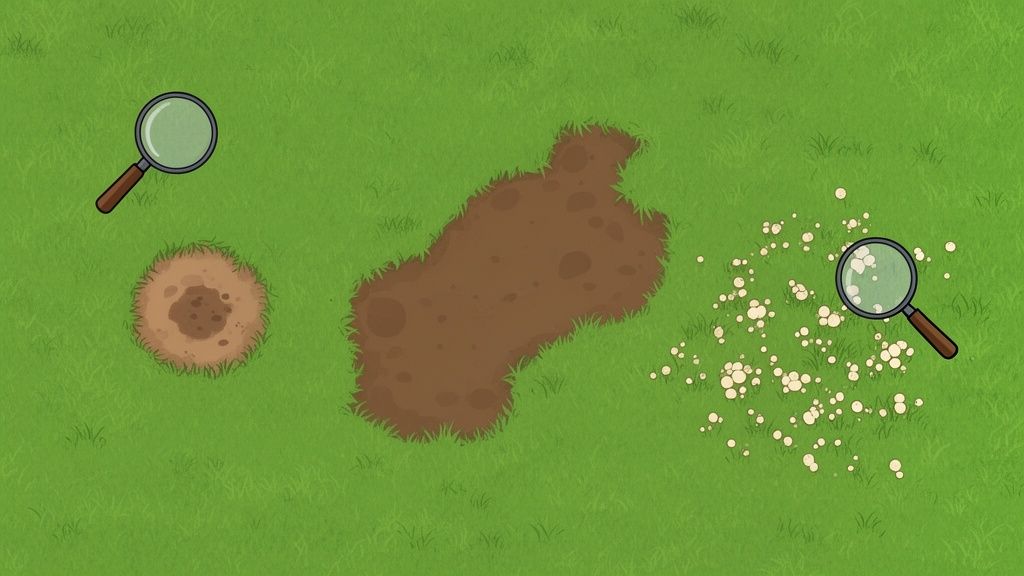
The first challenge is figuring out if you're even dealing with a fungus. Many issues can cause brown spots, but fungi often leave behind tell-tale clues. Spring Dead Spot is probably the most destructive one we see on Bermuda grass around here. Caused by the Ophiosphaerella fungus, it thrives when our winters dip below freezing. It attacks the roots and stolons during dormancy, so the damage isn't visible until your lawn is supposed to be waking up in the spring. What you see are those distinct, yellowish-brown circles that can be a few inches or several feet across. In bad cases, it can wipe out 20-50% of a lawn. If you want to get into the weeds on the science, you can read more about the lifecycle of this fungus and its impact on turfgrass.
Is this a fungus or just a dry spot?
Two other common culprits are Brown Patch and Dollar Spot, and homeowners often ask me, "Is this a fungus or just a dry spot?" With Brown Patch, look for large, irregular brown areas. If you're out early in the morning when there's dew on the ground, you might spot a grayish, smoky ring around the edge of the patch. You may even see fine, web-like threads of fungus called mycelium.
Here’s a little trick I use for diagnosis: Go to the edge of a suspicious brown patch and gently tug on the grass blades. If they slide right out because the base is dark and rotten, that’s a classic sign of Brown Patch fungus, not just drought.
Dollar Spot, on the other hand, shows up differently:
- Size: It creates small, straw-colored spots roughly the size of a silver dollar that can merge into larger, uglier patches.
- Blades: You'll see distinct tan lesions with reddish-brown edges on the individual grass blades themselves.
- Cause: It tends to appear in lawns that are low on nitrogen and have stayed wet for too long.
How do I treat and prevent fungal problems?
When it comes to fungus, an ounce of prevention is truly worth a pound of cure. Your best defense starts with good cultural practices. The most important one is watering correctly—water deep, but not too often, and always in the early morning so the blades have all day to dry out.
Once a fungus has already set up shop, you’ll need to step in. Granular fungicides from the big box store can sometimes work if you catch the problem very early. But for something as aggressive as Spring Dead Spot or a widespread Brown Patch invasion, a professional-grade liquid fungicide is a much better bet. These products are designed to provide complete coverage and are formulated to stand up to our tough West Texas conditions.
For a guaranteed fix, it's often best to call in a local professional. A service like Abilene Home Service will know exactly what fungus you have and use the right product at the right time to knock it out for good.
Combating Common Lawn Pests and Insects
Are you watering your lawn consistently, but it still looks parched and brown? If your Bermuda grass seems perpetually thirsty, the problem might not be drought or disease at all. You could be dealing with tiny invaders causing major damage right under your nose. Pests like chinch bugs and grub worms love to feast on grass blades and roots, quickly turning a beautiful lawn into a patchy, straw-colored mess.
I learned this lesson the hard way. Last summer, I was convinced a patch of my front lawn was a goner, and I kept blaming the brutal West Texas heat. I poured more and more water on it, but the brown spot just kept spreading. It wasn't until I got down on my hands and knees at the edge of the dying grass that I actually saw them—hundreds of tiny black chinch bugs. My lawn wasn't thirsty; it was being eaten alive.
How do I spot lawn pests in my grass?
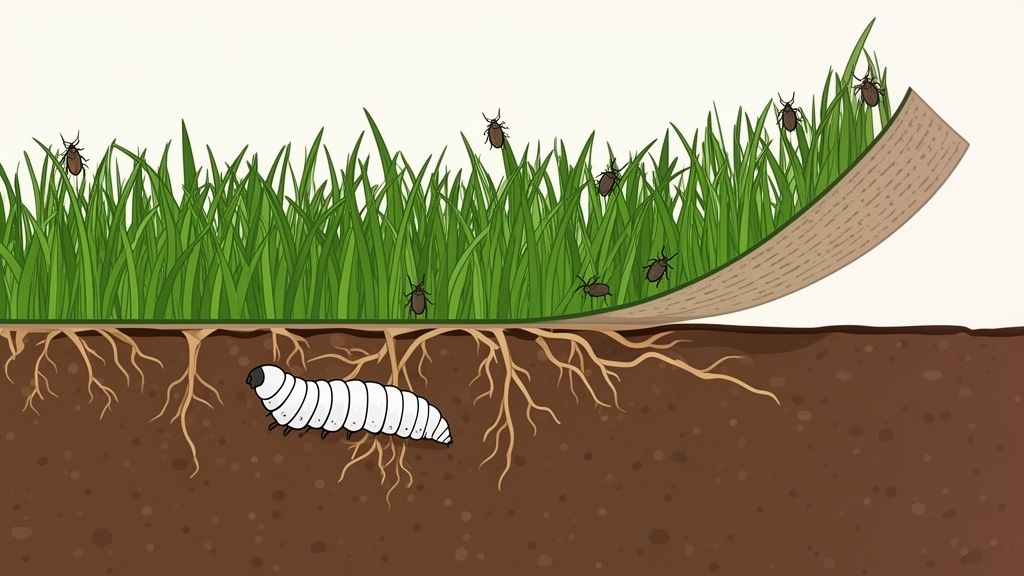
This is a question I get all the time from folks here in Abilene. Since pest damage often mimics the look of drought stress, you have to play detective and look for very specific clues. One of the most common culprits is the grub worm, which is the larval stage of various beetles. They live just under the soil and chew through the roots of your grass. The first sign you might notice is that your lawn feels oddly spongy or soft when you walk across it.
Here’s a simple trick I share with all my clients to confirm a grub problem: Go to a damaged area and grab a handful of turf. If it rolls back like a loose piece of carpet with no roots holding it in place, you’ve found your culprit.
How can I tell if I have chinch bugs?
Chinch bugs are another big problem, especially in the hottest, sunniest parts of the yard where Bermuda grass typically thrives. These pests are really small, so you have to look closely. Get down and part the grass blades right at the border where the healthy green turf meets the damaged brown area. You'll often see them scurrying around the base of the stems near the soil. If you're not sure, try the "can test": cut the top and bottom off a large can, push it an inch or two into the soil at the edge of a damaged patch, and fill it with water. Wait a few minutes, and if chinch bugs are present, they will float to the surface.
What's my action plan for getting rid of lawn pests?
Once you’ve figured out which pest you’re dealing with, you need to act fast to minimize the damage. Different bugs require different strategies and, most importantly, different timing.
- Chinch Bugs: These insects love the heat and are most destructive during the peak of summer. You'll need an insecticide specifically labeled for chinch bug control. Granular products are effective, but you have to water them in thoroughly to carry the treatment down to where the bugs are feeding.
- Grub Worms: The best time to treat for grubs is in the late summer or early fall. This is when the young, newly hatched grubs are small and actively feeding near the surface, making them more vulnerable. An even better approach is applying a preventative grub control product earlier in the season before they have a chance to hatch.
For many busy homeowners, trying to keep track of pest life cycles and application schedules is a huge chore. If you're facing a widespread infestation or just want the peace of mind that comes with prevention, calling a professional lawn care service can be a real lawn-saver. They have access to commercial-grade products that offer longer-lasting control, stopping these common Bermuda grass problems well before they can get started.
Tackling Soil Compaction and Heavy Thatch
Sometimes, the real culprit behind a struggling Bermuda lawn isn't a pest or disease you can see. The problem is often buried right under your feet. Here in Abilene, our heavy clay soil is prone to becoming rock-hard, literally squeezing the life out of your grass roots and blocking them from getting the water and nutrients they desperately need.
On top of that, you might be dealing with thatch buildup. Thatch is that dense, spongy mat of dead grass stems, clippings, and roots that collects right at the soil line. When it gets too thick, it forms a nearly waterproof barrier, effectively smothering the lawn it's supposed to be a part of.
Do I have compacted soil or too much thatch?
It’s a common question, and figuring out the answer is the first step to reviving your turf. Luckily, a couple of quick, low-tech tests can tell you everything you need to know.
To check for soil compaction, I always recommend what I call the "screwdriver test." Grab a regular screwdriver and try pushing it into the soil. If it slides in with little resistance, your soil is in good shape. But if you have to lean on it just to get an inch or two deep, you’ve definitely got compaction.
As for thatch, you might wonder how much is too much. A thin layer—less than half an inch—is actually healthy. To see where you stand, use a spade to cut out a small wedge of your lawn. Look for the brown, springy layer between the green blades and the dark soil. If that layer is thicker than half an inch, it’s time to intervene.
What is the best way to fix these soil problems?
For these foundational soil issues, core aeration and dethatching are your two best solutions. Think of them as hitting the reset button for your lawn’s entire root system.
Core Aeration: This is the gold standard for fixing compaction. A core aerator pulls up small plugs of soil, creating thousands of small holes. This instantly opens up channels for air, water, and fertilizer to penetrate deep into the root zone. For our clay-heavy soil in West Texas, this isn't just a good idea—it's essential.
Dethatching (or Verticutting): This process uses a machine with vertical blades that slice right through that thick thatch layer. It breaks up the mat and pulls the dead material to the surface so you can rake it away, finally letting your lawn breathe.
I’ll be honest, the first time I rented a core aerator, I thought my yard looked awful afterward—like a flock of geese had a party on it. But just a few weeks later, the results were incredible. The grass was greener, thicker, and far more resilient. Now, I aerate my Bermuda every single spring.
Regular aeration isn't just about appearances; it's a powerful preventative tool. It helps fend off sneaky problems like Take-all root rot, a disease that can cause 50-70% root loss before you even notice significant thinning up top. As you can learn from these in-depth turfgrass disease profiles from PennState Extension, routine aeration is a key cultural practice for disease management.
Putting it all together in a solid maintenance plan makes all the difference. For tips on how to time your aeration with your mowing schedule, check out our guide on how often you should mow Bermuda grass. Aerating while the grass is actively growing ensures it recovers quickly, filling in those holes and creating the dense, beautiful turf you're aiming for.
8. Weeds and Nutrient Deficiencies: An Unwelcome Partnership
A dense, thriving Bermuda lawn is its own best defense. It naturally crowds out weeds before they can even get a foothold. But when your lawn starts looking a little thin or off-color, it’s an open invitation for invaders like crabgrass and pesky broadleaf weeds to move in.
Often, these two problems—weeds and a hungry lawn—go hand-in-hand. A well-fed lawn has the vigor to choke out weeds, while a starved lawn leaves plenty of bare ground for them to take over.
Think of it as a competition. If your Bermuda is strong, it wins. If it's weak, the weeds do. For a deep dive into fighting back, check out this excellent A Homeowner's Guide to Weed Control for Lawns.
Why is my Bermuda grass turning yellow?
One of the most common questions I hear from folks in West Texas is, "Why is my Bermuda grass turning yellow?" That yellowing, technically called chlorosis, is your lawn's way of telling you it's hungry. It's a classic sign of a nutrient deficiency, usually a lack of nitrogen or iron.
I learned this the hard way myself years ago. My lawn looked pale and tired, and no matter how much I watered, it wouldn't green up. It turns out I had fallen behind on my fertilizing schedule, and the grass was desperate for nitrogen.
The N-P-K ratio on a bag of fertilizer stands for the three main nutrients your lawn craves: Nitrogen (N) for that deep green color and leafy growth, Phosphorus (P) for building strong roots, and Potassium (K) for overall resilience against heat and drought. A balanced diet is absolutely critical for a healthy lawn.
What is the best plan for dealing with weeds and a hungry lawn?
Weeds aren't just ugly; they're storytellers. They tell you what's going on beneath the surface. Crabgrass, for example, loves thin turf and compacted soil. See a lot of clover? That’s a good sign your soil is low on nitrogen. The first step is always to figure out what you're dealing with. Our guide to common weeds in Abilene and how to kill them is a great resource for identifying the culprits.
Once you know the enemy, it’s time to act. You need to get rid of the weeds currently in your yard and, just as importantly, fix the problem that let them grow in the first place.
A quality post-emergent herbicide made for Bermuda grass will take care of the existing weeds. Then, getting on a consistent fertilization schedule will give your lawn the strength it needs to keep them from coming back. For my own Bermuda here in the Big Country, I stick to a simple feeding calendar:
- Late Spring (May): I apply a balanced, slow-release fertilizer to kickstart the growing season.
- Mid-Summer (July): Another feeding helps the grass power through the brutal Texas heat.
- Early Fall (September): One last meal helps it store energy before it goes dormant for the winter.
Keeping your grass well-fed also helps it fight off other problems. Fungal diseases like Bermuda grass leaf spot, for example, love the late summer heat and can make a lawn look ragged. Studies have shown that severe fungal outbreaks can reduce a lawn's health and appearance by 15-30%, which is why proper fertilizing and mowing are your best tools for prevention.
When to Call a Lawn Care Professional
There’s a special kind of pride that comes from taking care of your own lawn, no doubt about it. But even the most dedicated DIY-er eventually runs into a problem that just won’t quit. A question I get all the time is, “How do I know when I’m in over my head and it’s time to call for backup?”
For me, the answer comes from experience. If you’ve thrown everything you can at the same problem more than once and it keeps coming back, it’s time. I’ll never forget one summer fighting a stubborn dollar spot outbreak. I must have gone through half a dozen bags of fungicide from the local store, but the patches just laughed at me and returned. That’s when I knew the issue was beyond what I could solve with off-the-shelf products.
When is DIY not enough for my lawn?
Sometimes, the problem isn't just stubborn; it's the sheer scale of it. Once an issue—whether it's a fungus or a pest—has taken over more than 30% of your yard, you’re no longer doing simple spot treatments. You're fighting a full-blown invasion that calls for a much bigger, more strategic plan.
Here are a few classic signs that you’re fighting an uphill battle and could use a pro’s help:
- You're Playing Whack-a-Mole with Fungus: If brown patch or dollar spot seems to be a permanent resident in your lawn, showing up year after year, it's time to stop reacting. A professional can set up a preventative schedule with treatments that are far more effective than anything available to homeowners.
- The Bugs Are Winning: When you realize chinch bugs or grubs aren't just in one spot but have established themselves across large areas, it's a sign you need more firepower. Professional-grade insecticides provide better knockdown and longer-lasting control.
- You Fix One Thing, Another Breaks: If you finally get the weeds under control only to see a new fungus appear, you’re likely just treating symptoms. An expert can step back and figure out why these things are happening, creating a single, integrated plan to fix the root causes.
Think of it this way: A good lawn care pro isn't just there to spray your yard. They're there to diagnose it. They have the experience to see how your soil’s pH, your watering schedule, and that weird dry patch are all connected.
That ability to connect the dots is what saves you time, money, and a ton of frustration in the long run. They have the right tools, the right products, and the know-how to solve these big problems correctly the first time, getting you the healthy, tough lawn you’ve been working so hard for.
Your Top Bermuda Grass Questions Answered
Over the years, I've heard just about every question you can imagine when it comes to keeping Bermuda grass looking its best in West Texas. It's a tough grass, but it has its quirks. Here are the answers to a few of the questions that come up time and time again.
How Often Should I Water My Bermuda Grass in the Texas Heat?
This is the big one, and my advice always surprises people: think "deep and infrequent." Bermuda grass is built for survival, but you have to train its roots to go deep where they can find moisture and escape that baking topsoil.
The best way to do this is to give it a long, slow drink of about 1 inch of water, all in one go, once a week. Get it done early in the morning to minimize evaporation. When those brutal Abilene heatwaves roll in and we're stuck above 100°F for days, you'll likely need to add a second, shorter watering mid-week just to help it cope with the stress.
What Is the Best Mowing Height for Bermuda Grass?
People always want to know how low they can go with their Bermuda. For a really lush, dense turf that naturally crowds out weeds, you want to keep the height between 1 and 2 inches.
The golden rule here is to never, ever cut off more than one-third of the grass blade in a single mowing. Scalping the lawn like that sends it into shock. During the peak growing season, this means you'll probably be mowing every 5-7 days. It sounds like a lot of work, but this frequent cutting is precisely what keeps the lawn thick and prevents a heavy thatch layer from forming.
Can I Get Rid of Weeds Without Killing My Bermuda Grass?
You absolutely can, and it’s easier than you think. The key is to find a selective herbicide that is specifically labeled as "safe for Bermuda grass." It's crucial to read the label—some products target broadleaf weeds like dandelions, while others go after grassy weeds like crabgrass. Make sure you get the right tool for the job.
For the best results, hit the weeds with the herbicide while they're young and actively growing. But remember, your best long-term defense against weeds is a thick, healthy lawn. Consistent watering, mowing, and feeding make it nearly impossible for weeds to get a foothold in the first place.